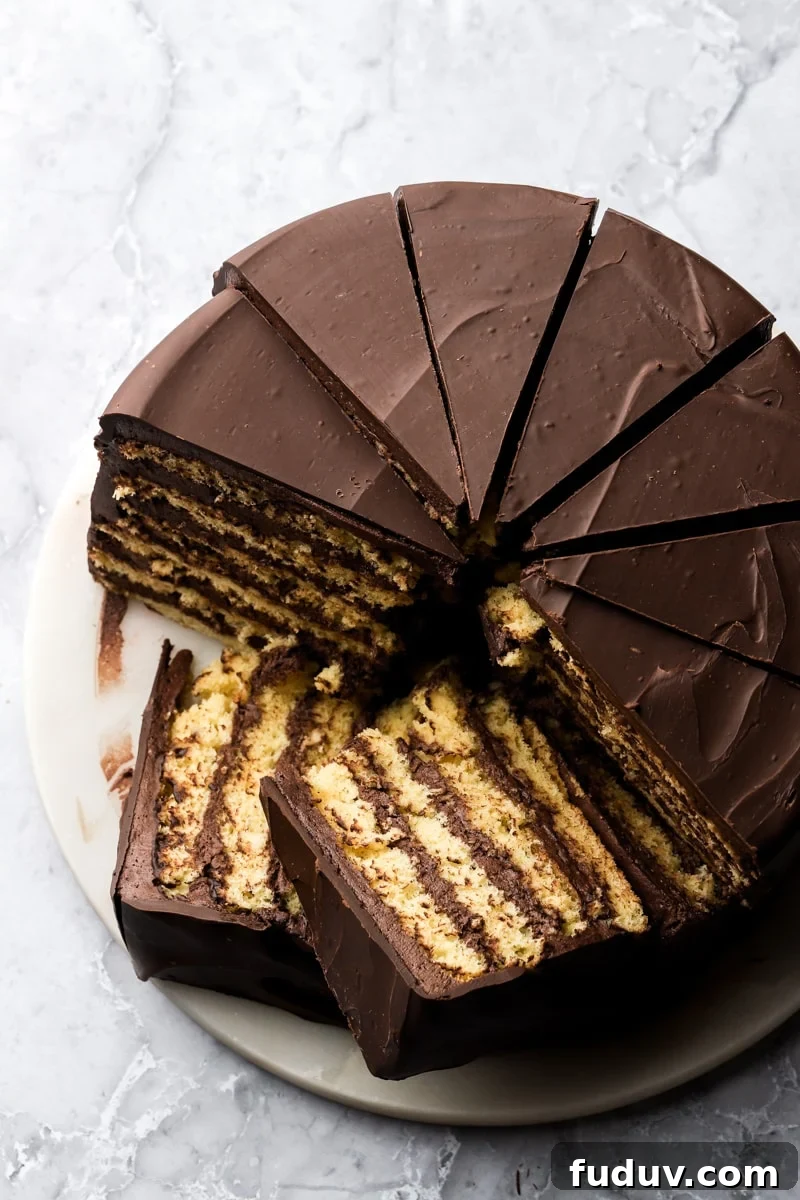
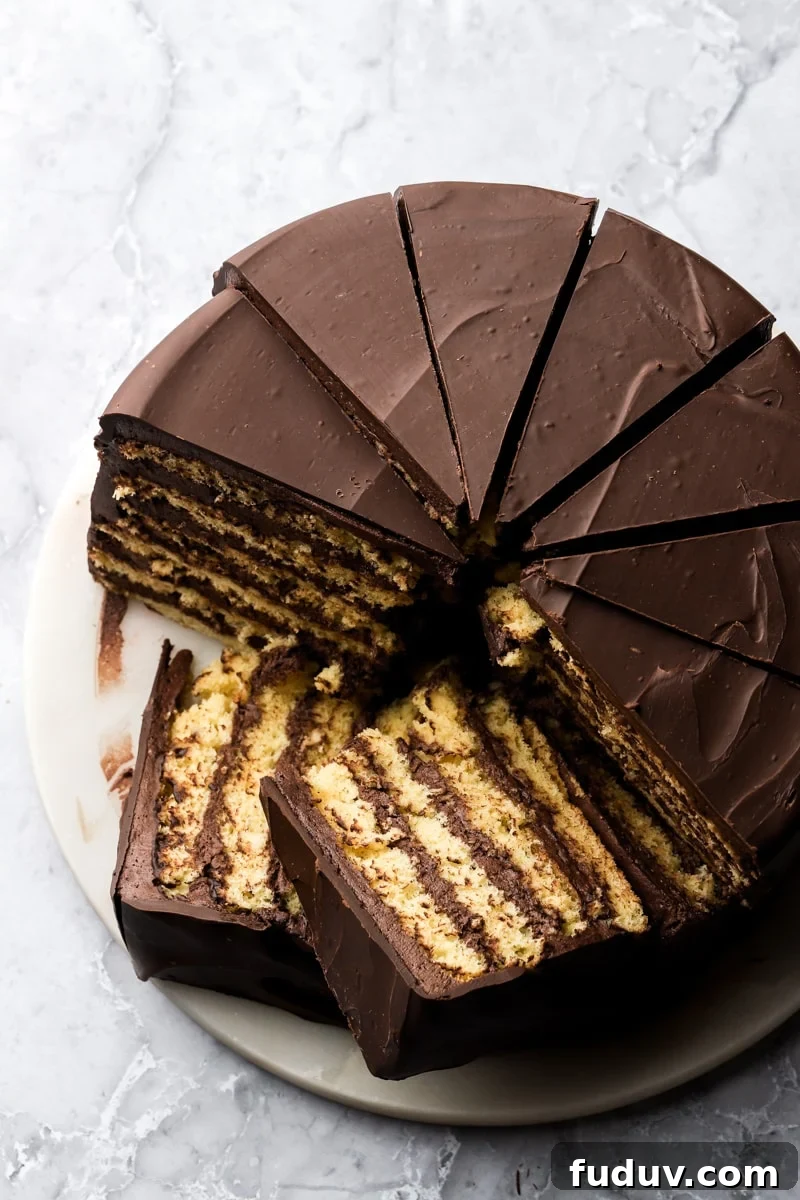
Prinzregententorte is a classic Bavarian torte built from thin genoise sponge layers and finished with a dark chocolate crème mousseline. Traditionally glazed in chocolate, this version uses a chocolate “magic shell” for a contrasting texture.
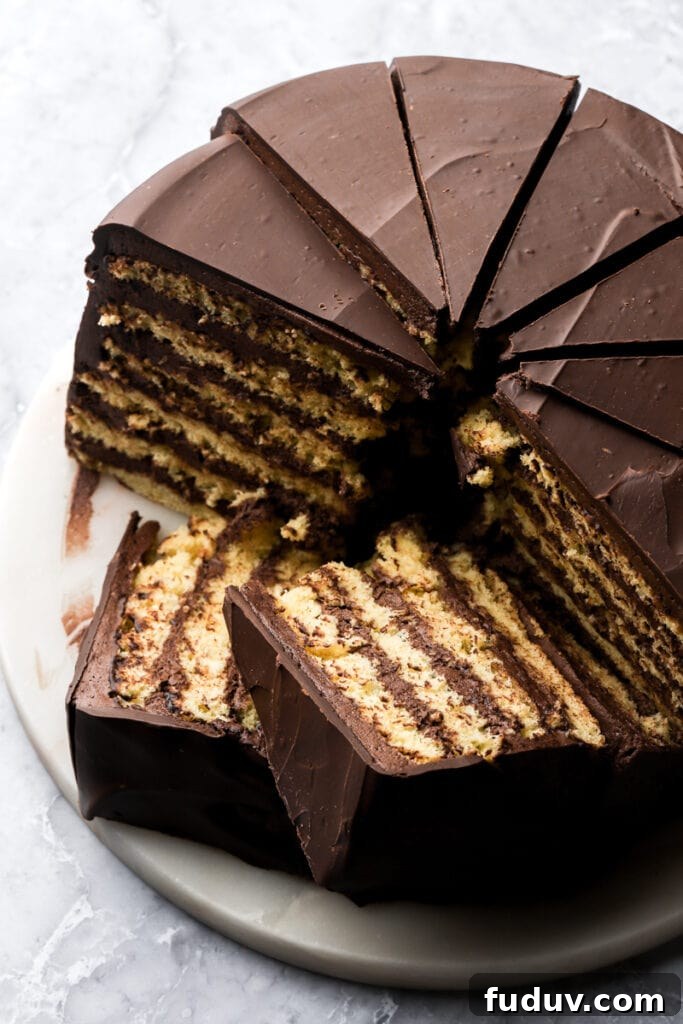
Why you’ll love this recipe
- Deceptively simple flavors: the genoise is light and airy while the crème mousseline is a deep, dark chocolate custard-like buttercream.
- Not overly sweet — ideal if you prefer European-style desserts with restrained sweetness.
- Flexible and forgiving: the recipe adapts well to substitutions and dietary needs.
For more on genoise sponge, see my genoise sponge cake recipe. I also use genoise for my fraisier cake, which features a vanilla crème mousseline.
If you enjoy desserts that are not too sweet, you might also like my tiramisu cake or chocotorta, which both favor balanced sweetness and rich flavor.
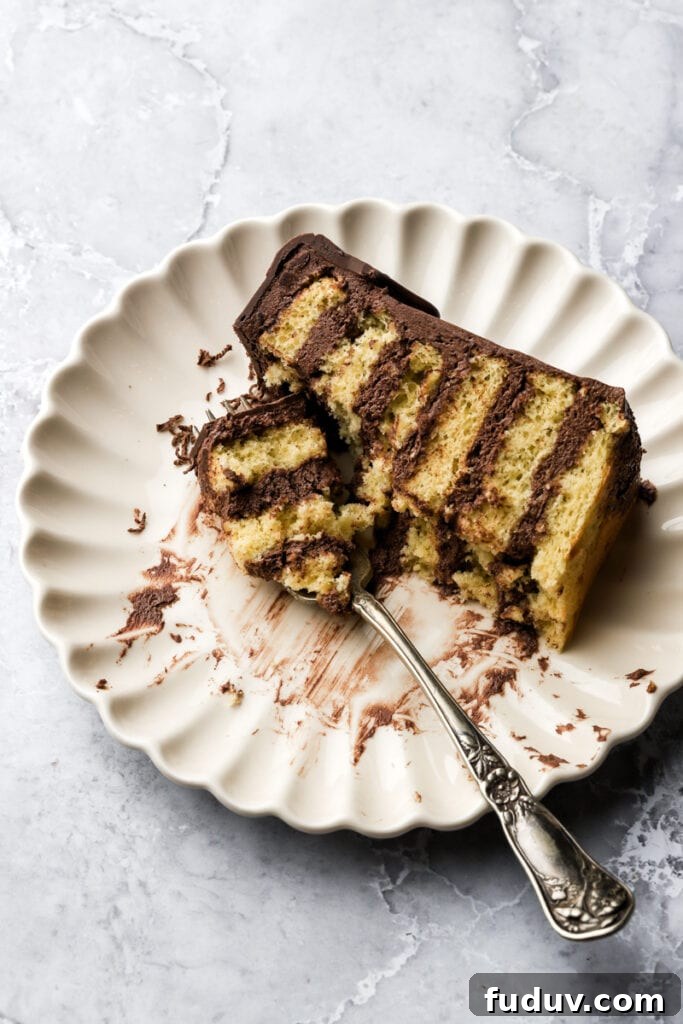
What is Prinzregententorte?
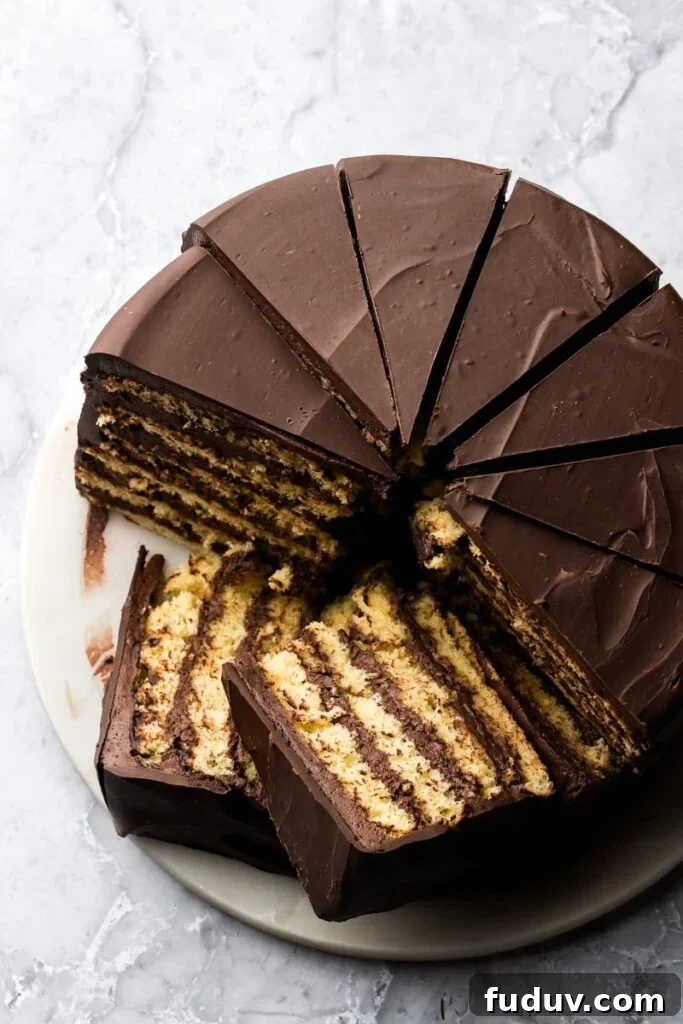
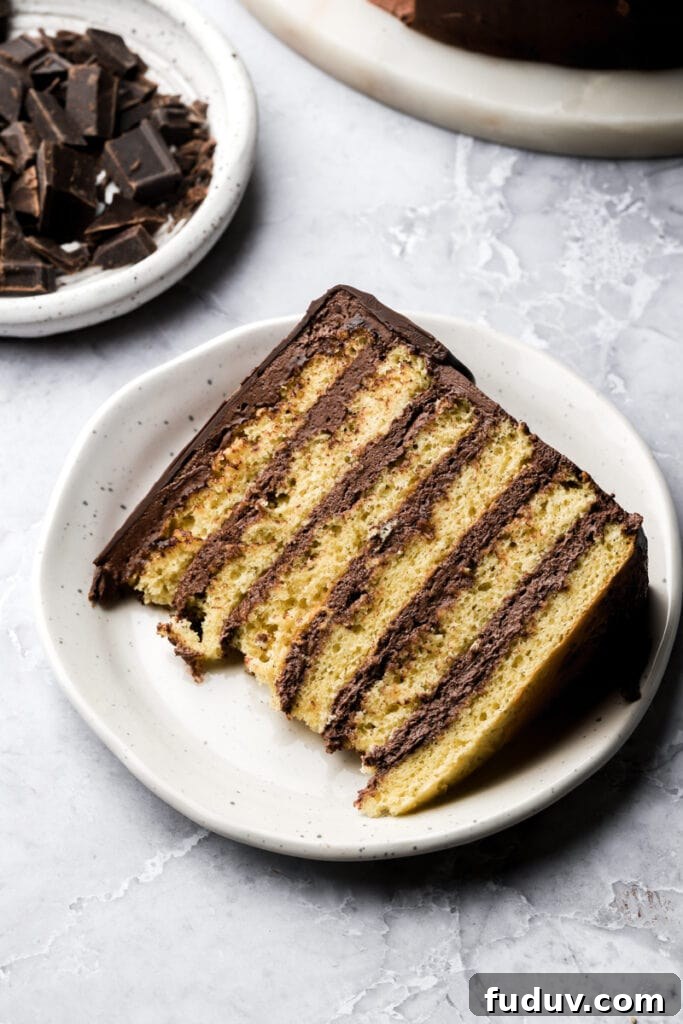
Prinzregententorte is a celebrated Bavarian torte made of six to seven thin genoise sponge layers filled and coated with dark chocolate crème mousseline (a chocolate-enriched buttercream made from pastry cream). The torte is traditionally finished with a glossy chocolate glaze.
The cake is associated with Prince Regent Luitpold of Bavaria and dates to the late 19th century. Historically it was sometimes made with eight layers to represent administrative districts; some later recipes use seven or six layers. This recipe uses six layers for easier trimming and assembly.
Some versions include apricot jam beneath the glaze for a hint of fruitiness. That step is optional — you can spread a thin layer before glazing or serve jam on the side.
Ingredients & Substitutions
- Flour: All-purpose is used here; cake flour also works. A digital scale yields the most consistent results.
- Sugar: Granulated sugar is recommended; the cake is not overly sweet and I haven’t tested alternatives in this recipe.
- Butter: Salted or unsalted are both fine for the sponge; unsalted is used in the buttercream. Dairy-free butter substitutes also work.
- Eggs: Use large eggs at room temperature. If cold, place them in warm water for a few minutes to warm through.
- Cocoa Powder: Dutch‑processed cocoa yields a darker, rounder chocolate flavor. If you use natural cocoa, adjust leavening (substitute baking powder with a portion of baking soda) — this recipe uses Dutch process.
- Vanilla: Pure vanilla extract is fine for the batter; vanilla bean paste or extract works well in frostings.
- Milk: Whole milk is used in the pastry cream; 2% or dairy-free milk can substitute.
- Cornstarch: A small amount helps thicken the pastry cream, especially with the cocoa added.
- Chocolate: Use good-quality dark or semi-sweet chocolate for the glaze; chopped chocolate melts more evenly than chips.
- Coconut oil: A little coconut oil in the glaze keeps the finished chocolate slightly tender and glossy.
Step-by-step instructions
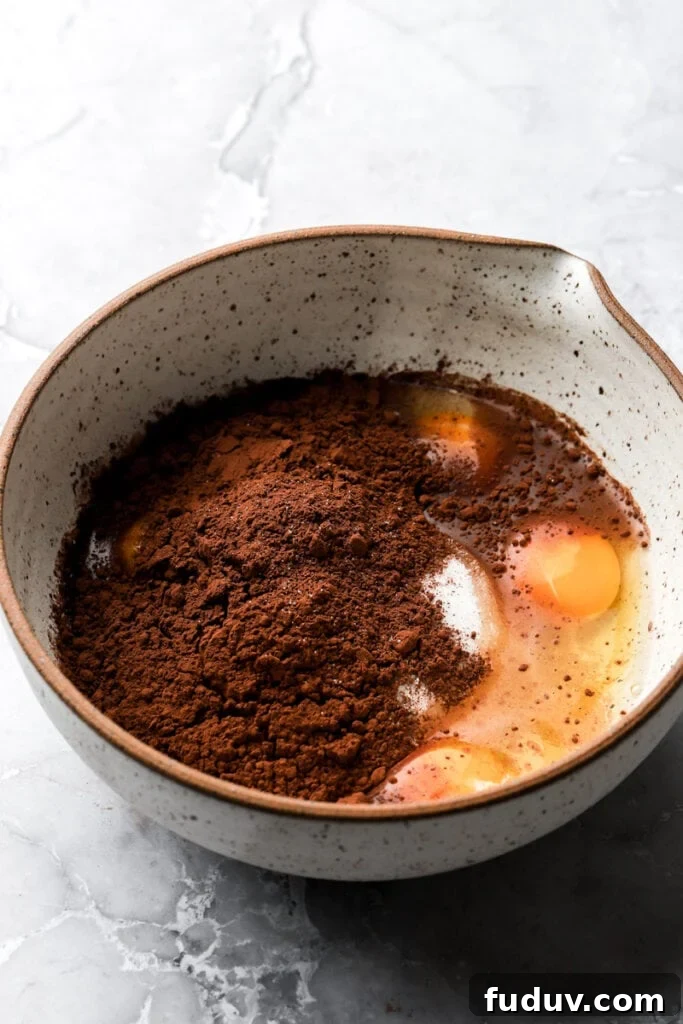
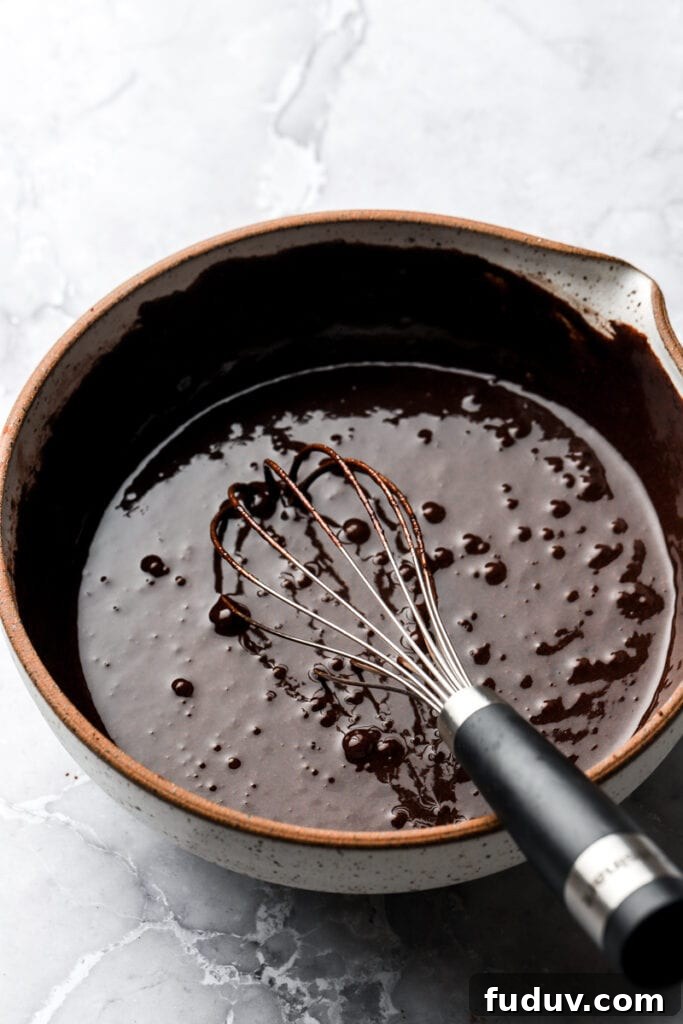
Step 1 — Make the chocolate pastry cream: Whisk together eggs, sugar, cocoa powder, cornstarch and salt until smooth.
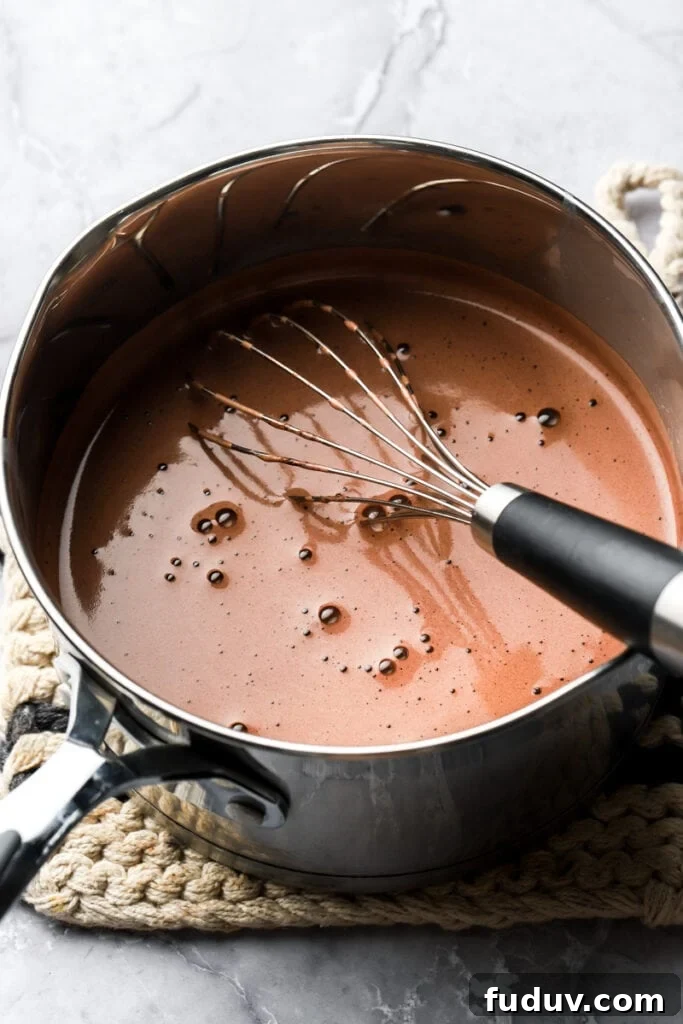
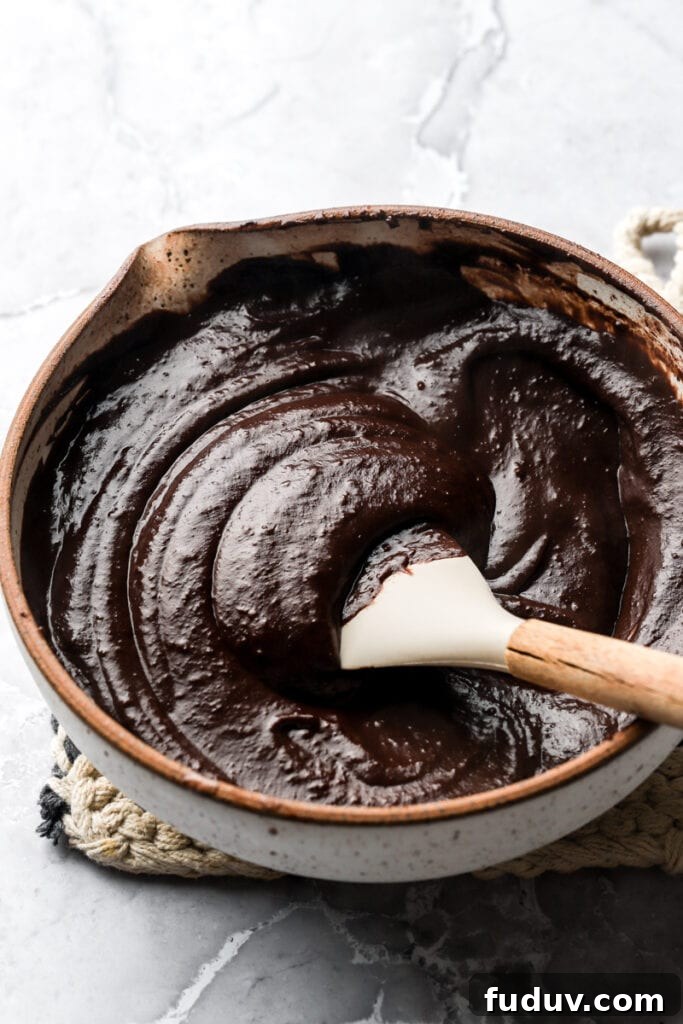
Step 2 — Temper and cook: Heat the milk until simmering, slowly whisking it into the egg mixture to temper. Return everything to the saucepan and whisk over medium heat until the cream thickens and leaves a streak on the whisk. Stir in butter and vanilla, then cool quickly by covering the surface with plastic wrap.
Step 3 — Make the genoise: Separate eggs and beat the whites with sugar until glossy and holding stiff peaks.
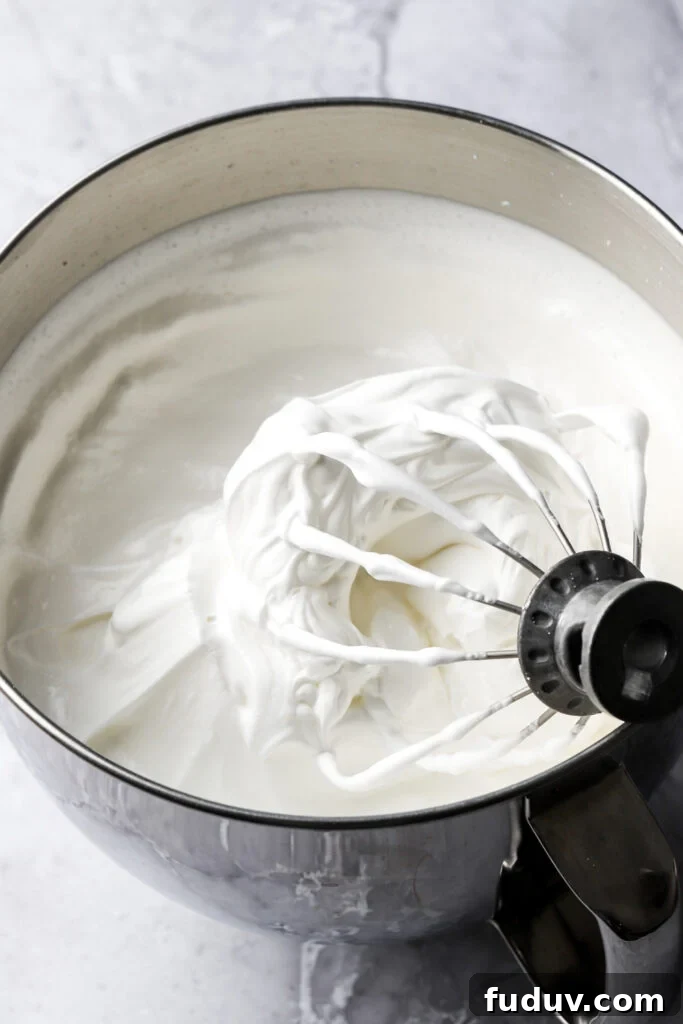
Step 4 — Combine: Add yolks, vanilla and melted butter to the whipped whites and mix briefly on medium speed until combined.
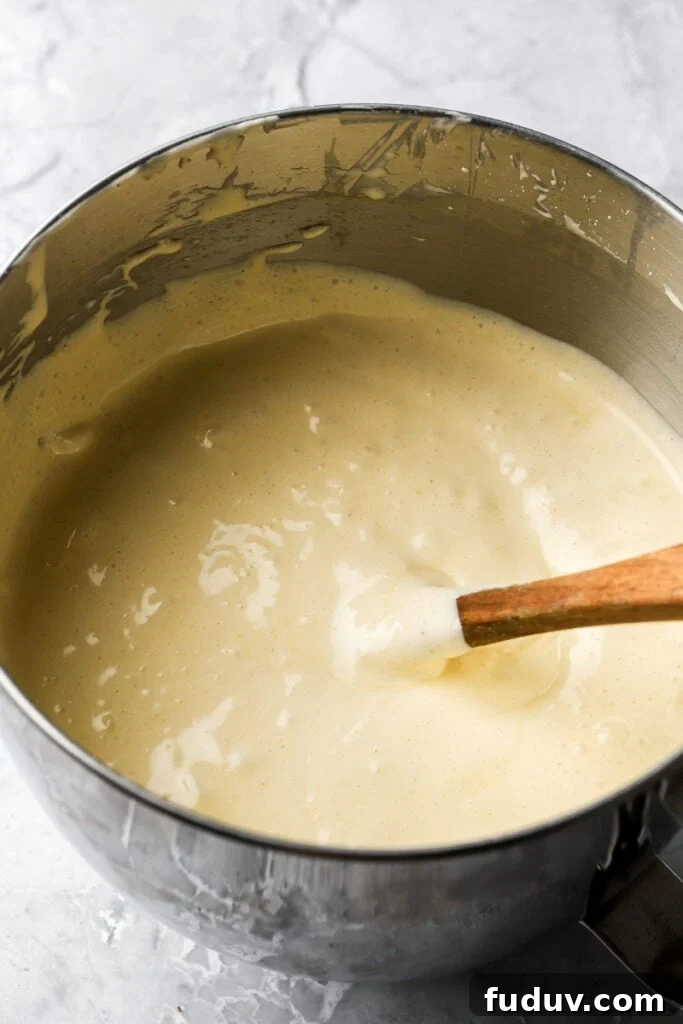
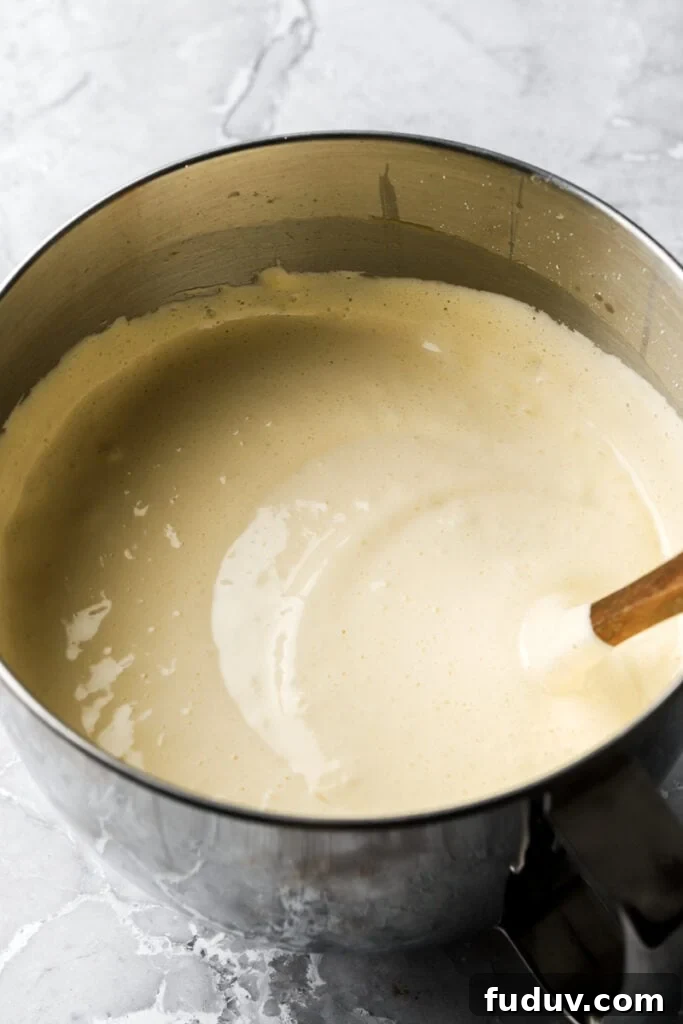
Step 5 — Fold in flour: Sift the flour and salt, then fold gently with a spatula until just combined to preserve the batter’s volume.
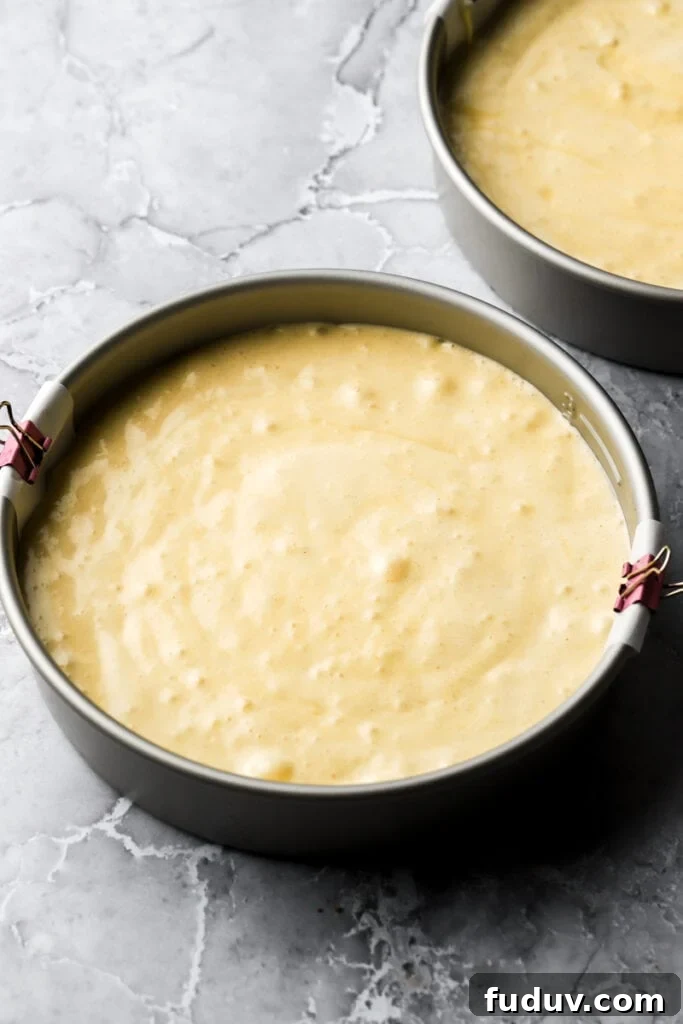
Step 6 — Bake: Divide batter evenly between ungreased pans lined with parchment (about 10 oz per pan) and bake ~20 minutes until golden and springy.
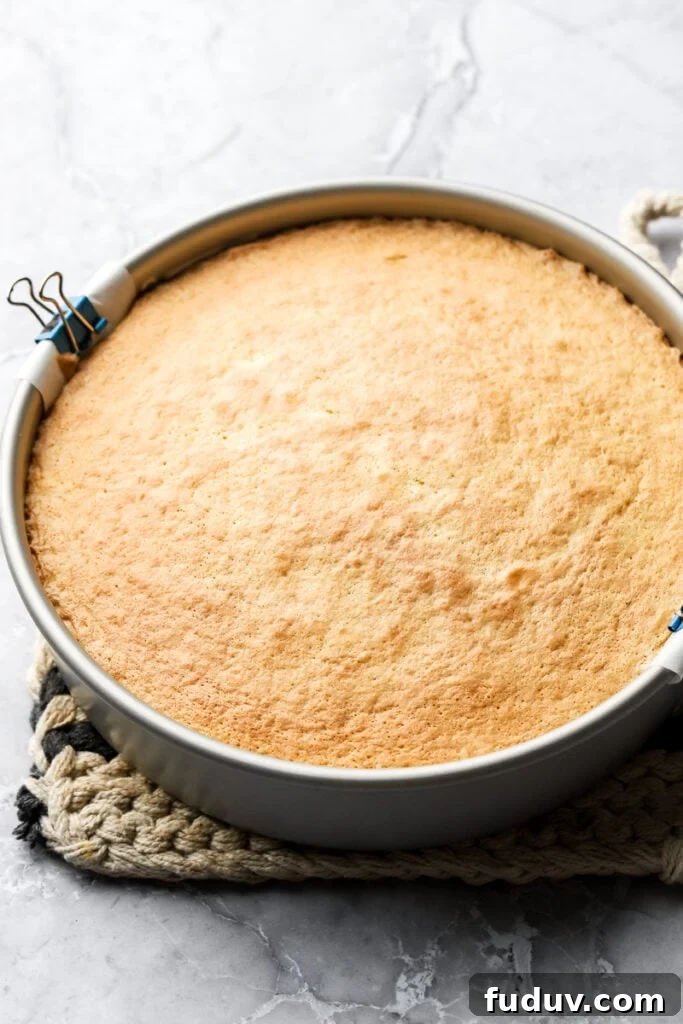
Step 7 — Cool and slice: Cool the cakes in the pans, then remove and cool completely. Use a serrated knife or cake leveler to slice each cake into thin layers (about 1/2 inch) so you end up with six layers total.
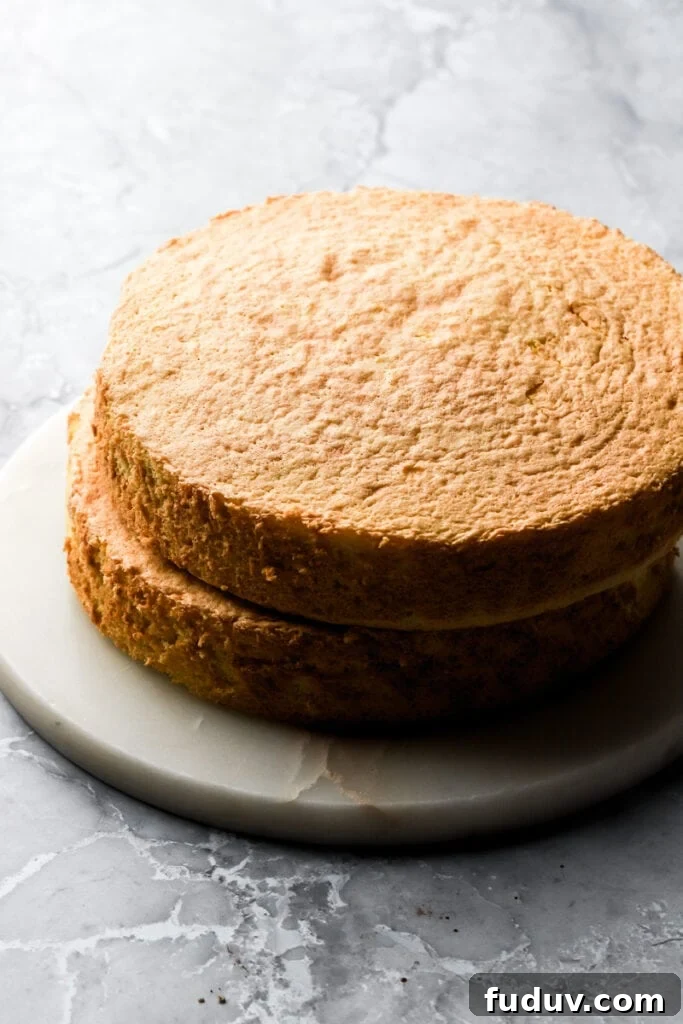
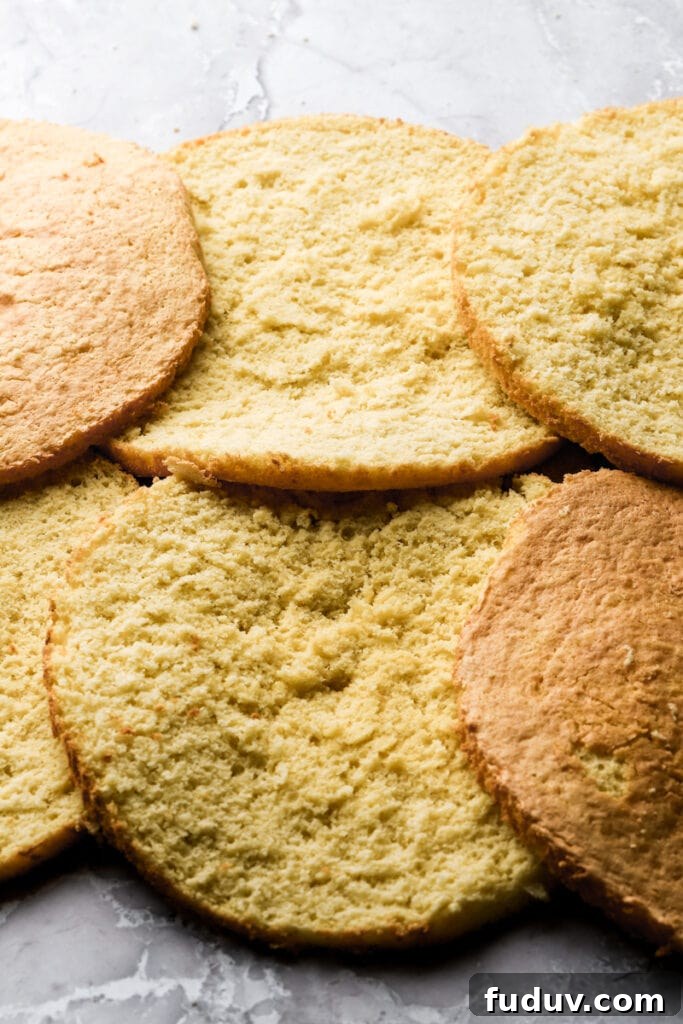
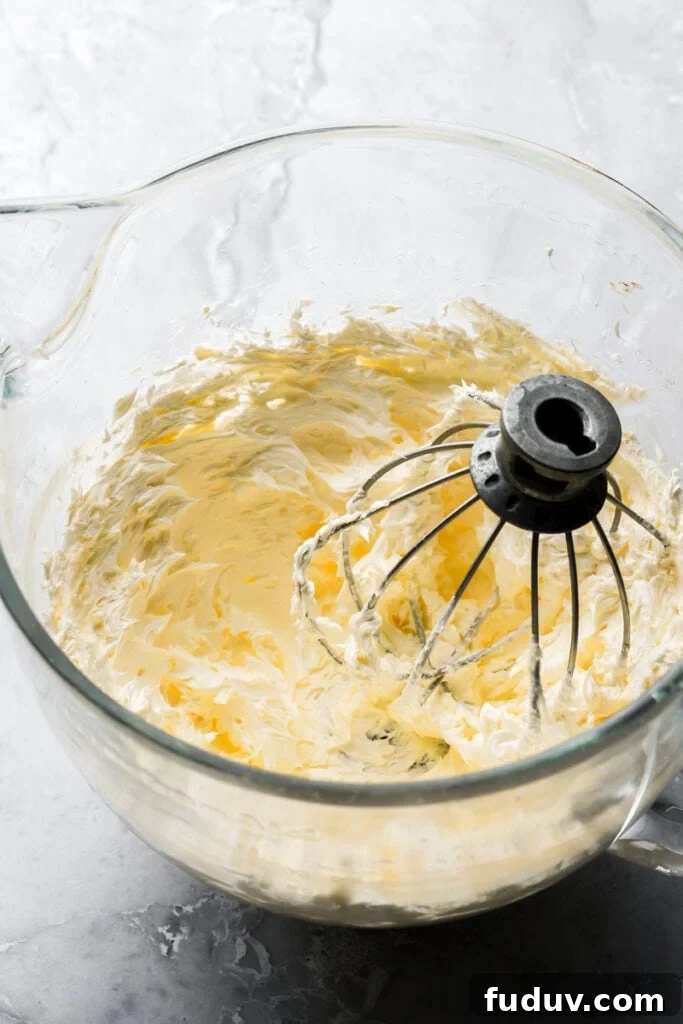
Step 8 — Make the crème mousseline: Beat room-temperature unsalted butter at high speed until pale and fluffy, then add the chilled pastry cream in 4–5 additions, mixing well between each. Finish by smoothing the cream with a spatula.
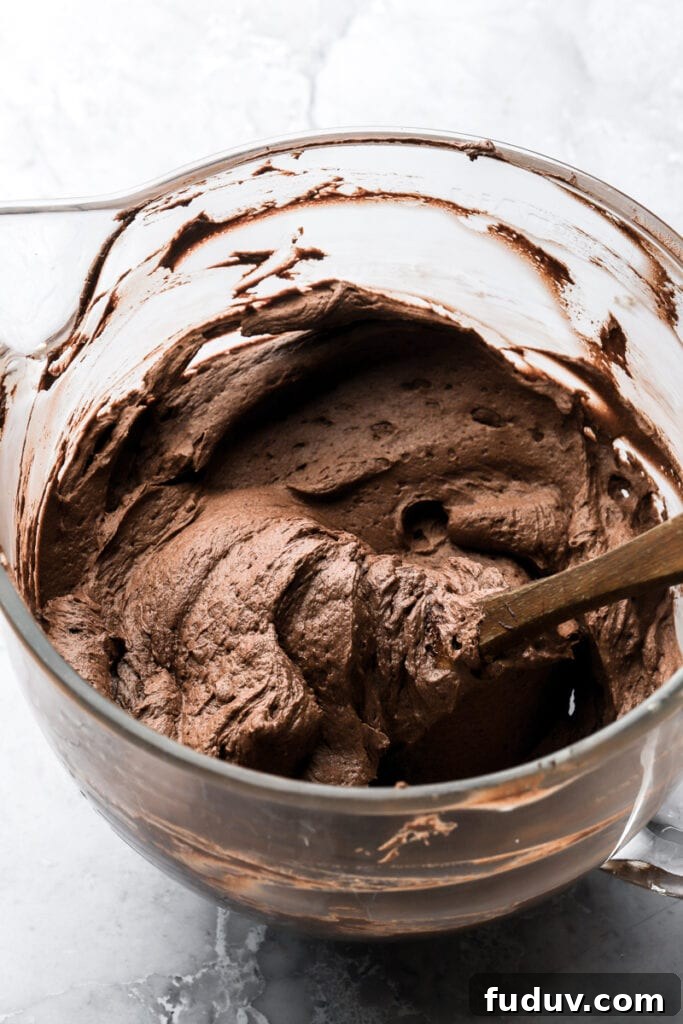
Step 9 — Assemble: Stack the first cake layer and spread a thin layer of crème mousseline, repeat with remaining layers. Chill 30–60 minutes, then crumb-coat and frost the outside. Chill until the buttercream firms before glazing.
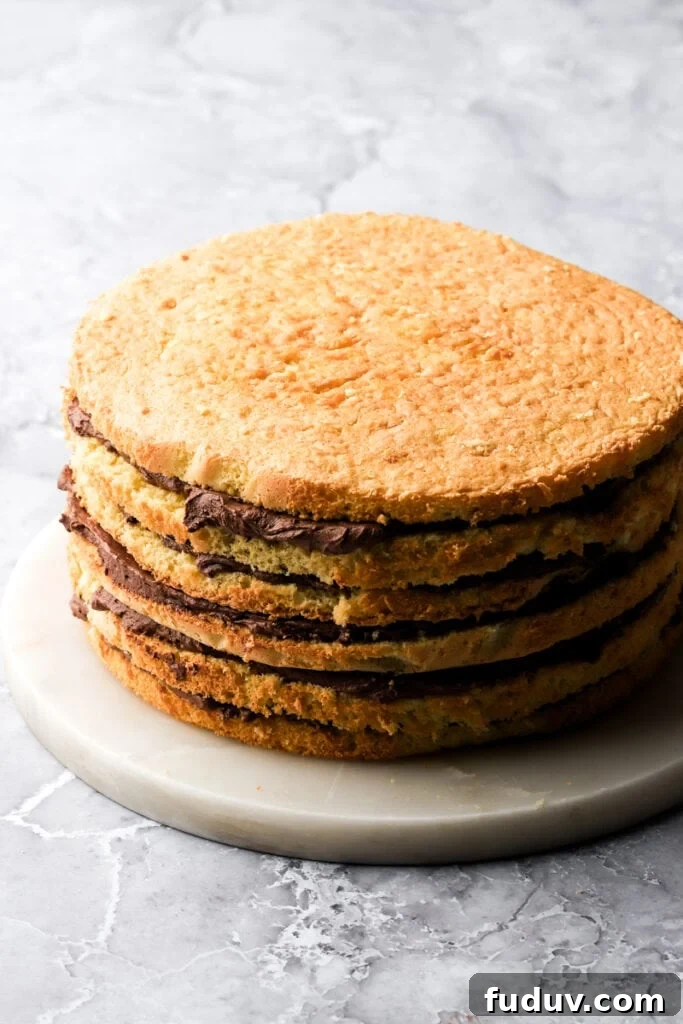
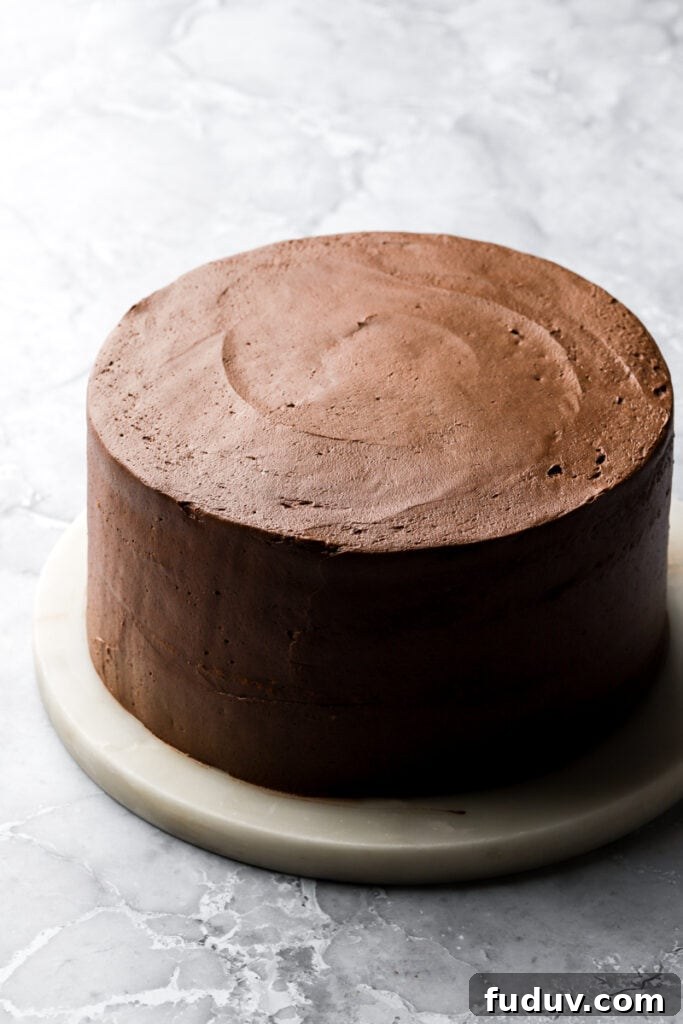
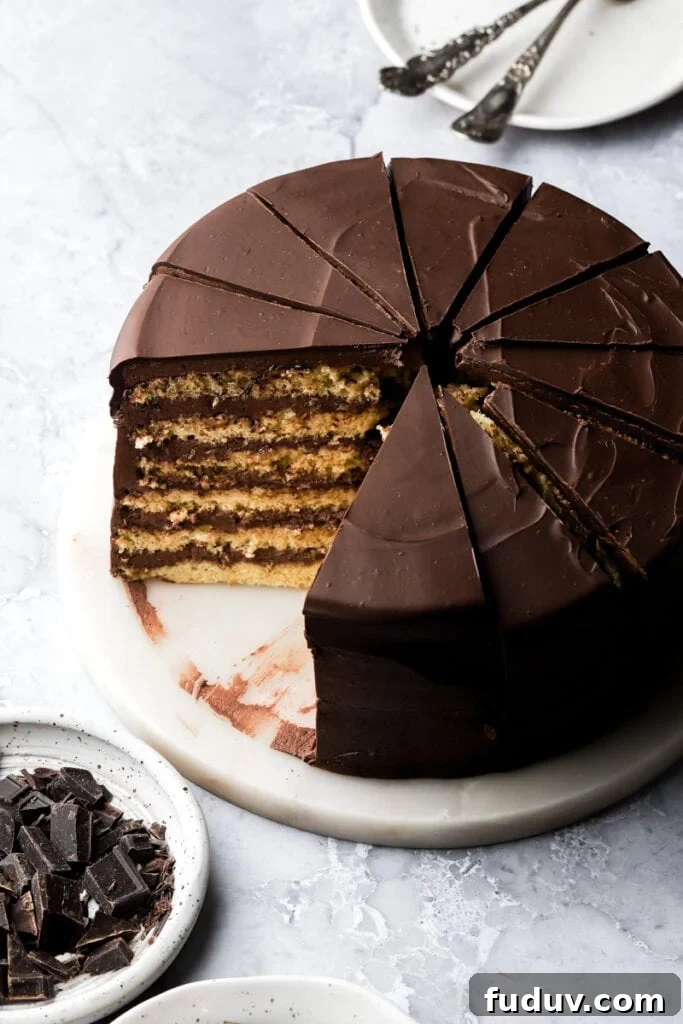
Step 10 — Glaze options: Option 1: Melt dark chocolate with coconut oil (double boiler or short microwave bursts) until smooth, let cool slightly, then pour over the chilled cake. Score the surface lightly before it fully sets for easier slices. Option 2: Make a ganache by heating cream and pouring it over chopped chocolate, stirring until smooth, then pour over the cake.
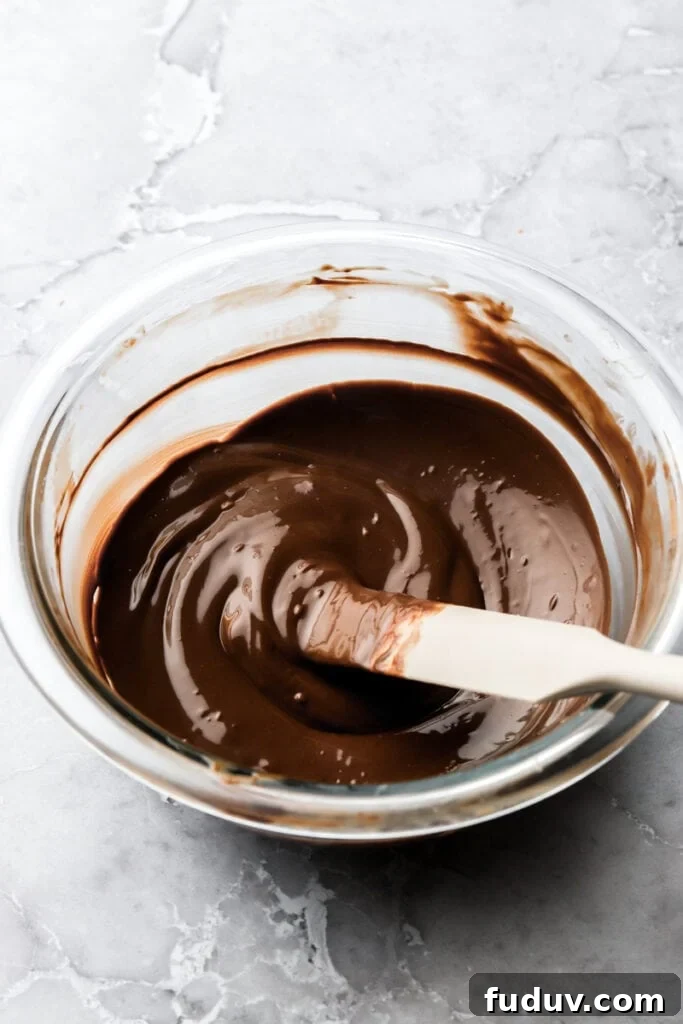
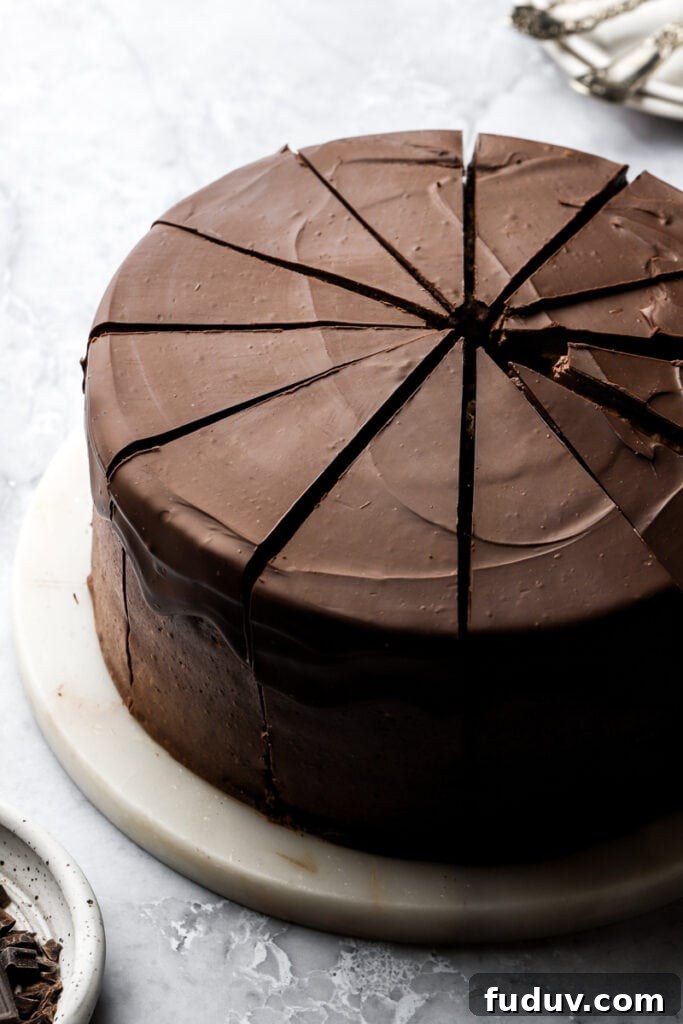
Pro tip: Pour the glaze evenly and let it drip naturally for a glossy finish. Spreading with a spatula will dull the shine.
Frequently asked questions
Yes. Use dairy-free butter in the sponge and in place of the butter in the crème mousseline, and substitute dairy-free milk and dairy-free chocolate for the pastry cream and glaze.
You can try a 1:1 gluten-free flour blend in place of the all-purpose flour. Results vary by blend, so measure by weight and follow manufacturer recommendations for best texture.
Yes. After chilling the assembled cake, you can use extra crème mousseline or a separate decorating buttercream. For piping or detailed decorating, make additional buttercream or Swiss meringue buttercream.
How to make ahead
Bake the sponges a day or two in advance and trim them before assembling. You can freeze baked layers for longer storage; brush with simple syrup if they seem dry after thawing. The buttercream can be stored at room temperature overnight, refrigerated for a few days (bring back to room temperature before using), or frozen for weeks.
How to store the finished cake
Store the finished torte at room temperature for 1–2 days or refrigerated for up to a week.
To freeze the whole cake: Chill until firm, wrap tightly in plastic wrap and then foil, and freeze. Thaw in the refrigerator or at room temperature before serving.
To freeze slices: Place slices in an airtight container, then into a freezer bag with excess air removed. Thaw to room temperature for a few hours before serving.
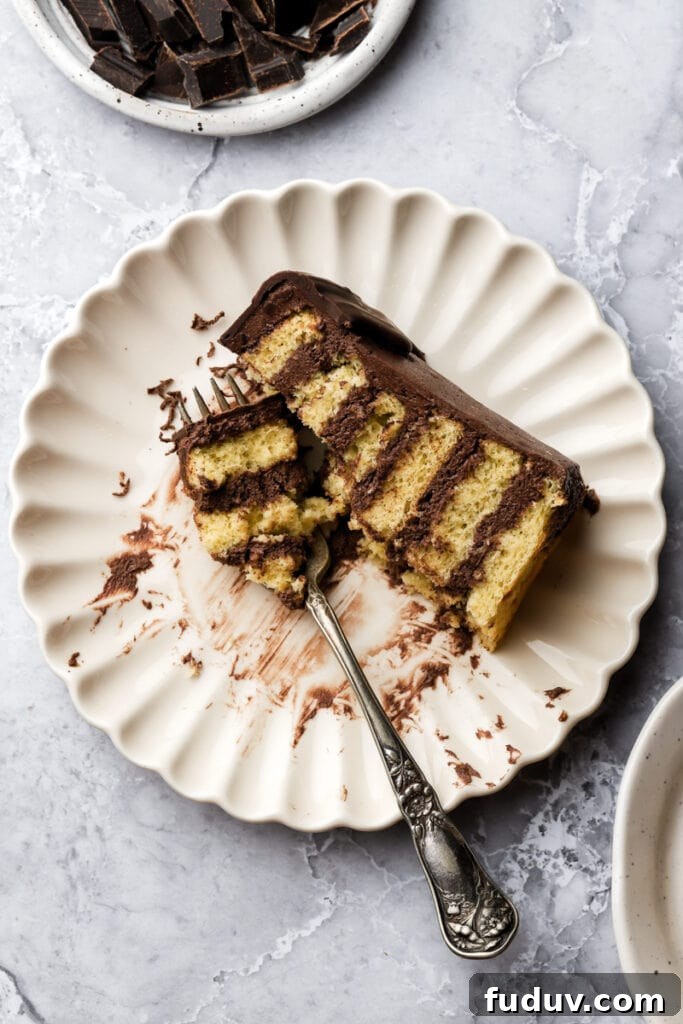
Thank you for reading. If you have questions, please leave them in the comments. If you make this Prinzregententorte, a rating is appreciated — and if anything wasn’t perfect, I welcome feedback so I can improve the recipe.
Happy baking!
Love, B
Layer Cakes
Prinzregententorte Recipe
3 hours
Pin Recipe
email recipe