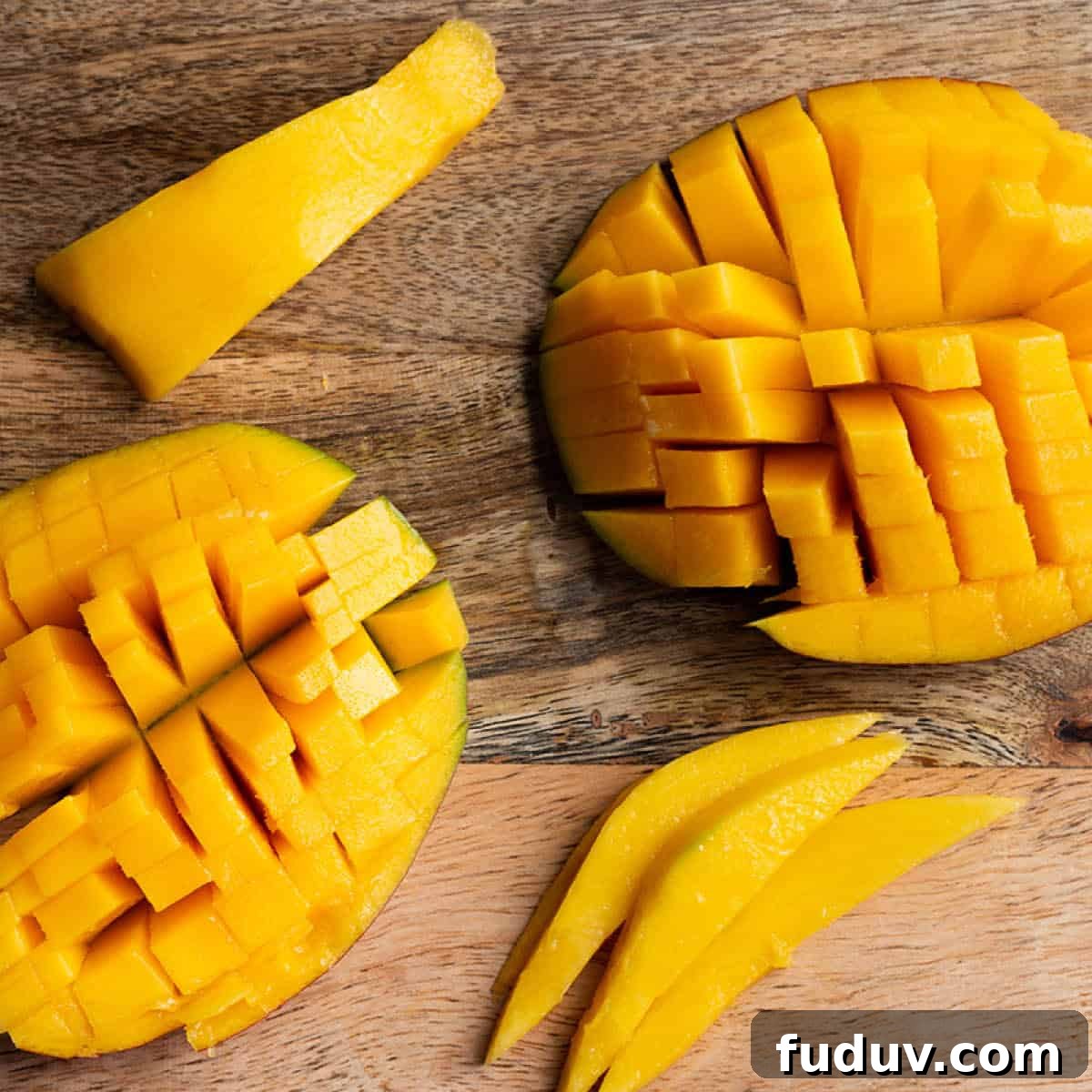
How to dice a mango for fresh mango-pineapple salsa or to freeze. Mangos can feel intimidating at first, but once you learn the basics and practice a few times, you’ll dice mango like a pro.
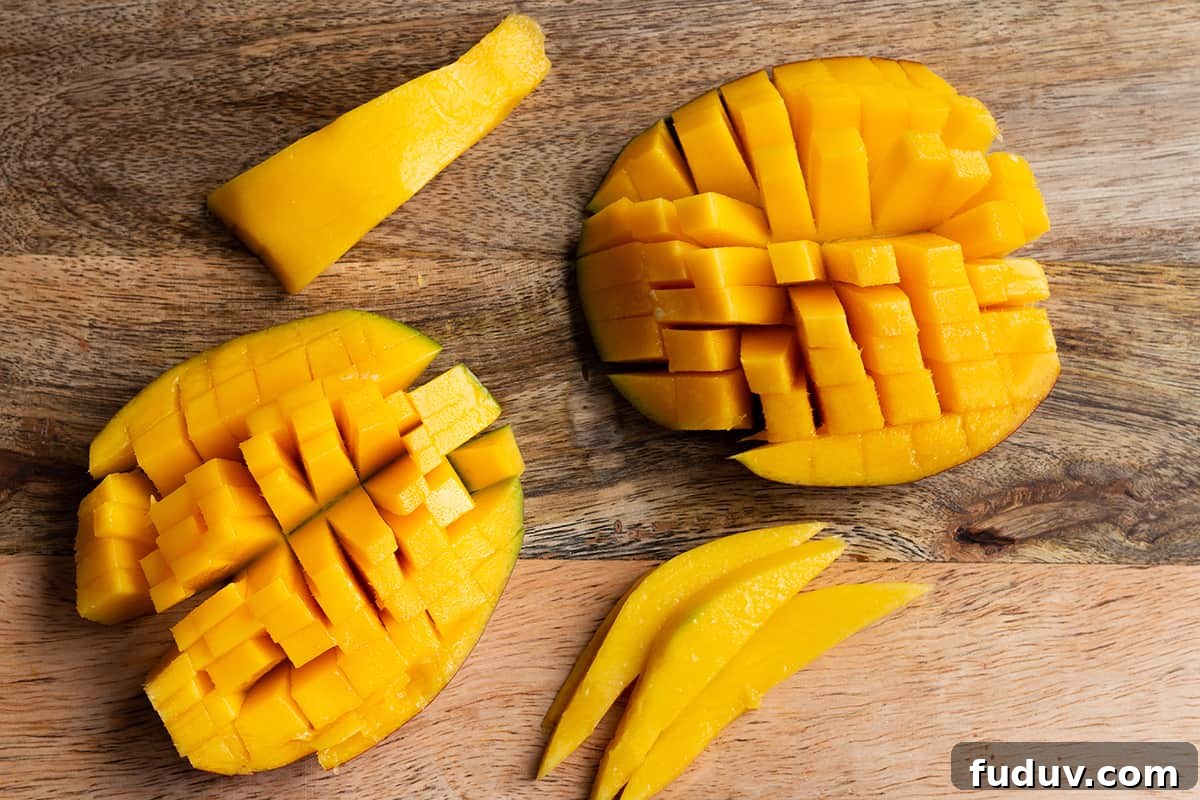
Fresh mango is delicious in smoothies, salsas, salads, and desserts, but many people hesitate because the pit and shape can be confusing. Follow these simple steps to choose a ripe mango and cut it into neat dice for eating or freezing.
How to know a mango is ripe
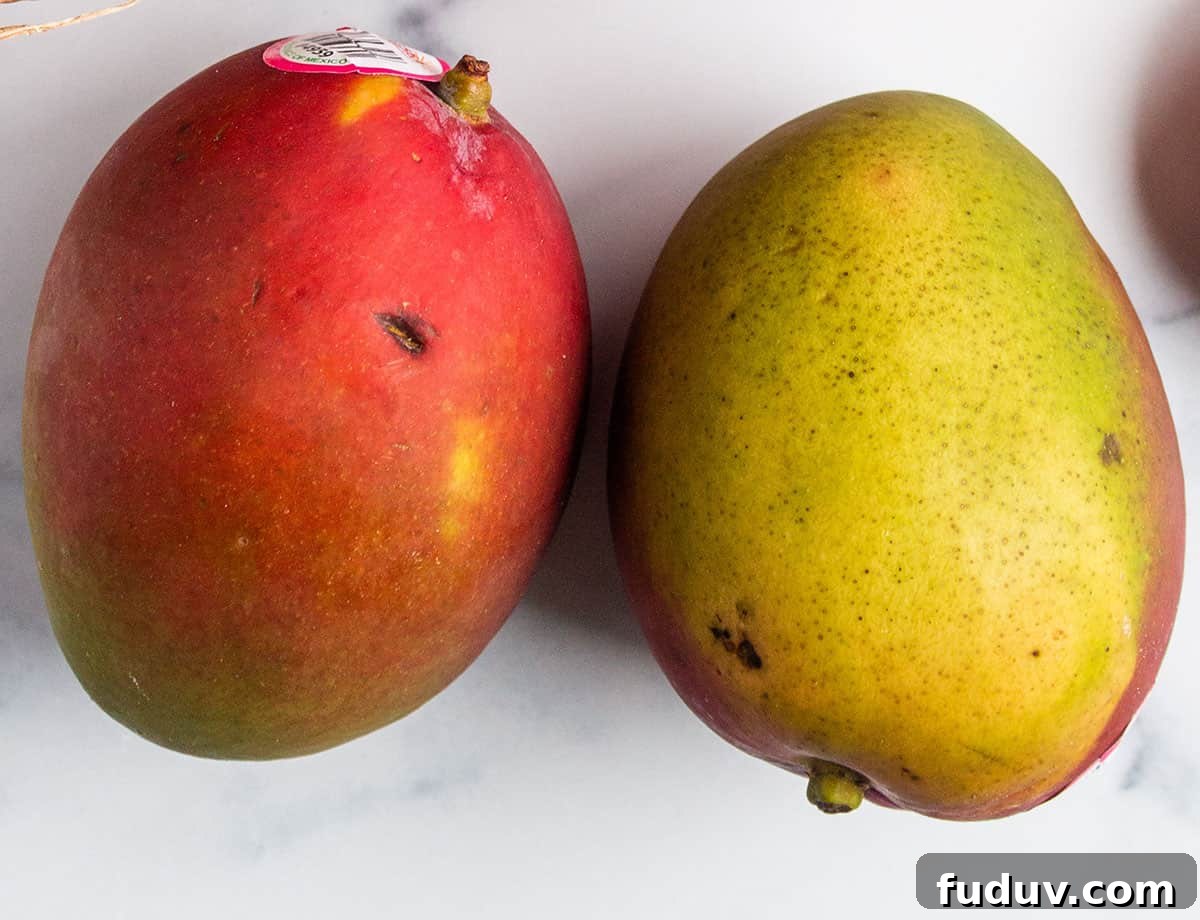
Pick a mango that yields slightly to a gentle squeeze but remains firm. If it feels hard, it needs more time to ripen; if it is very soft or mushy, it is overripe and better for purees or smoothies. Color can help—ripe mangoes often show more red or orange hues—but texture is the best guide. Think of the feel of a tennis ball with a little give.
Parts of a mango
Mangos are stone fruit with a large, flat pit running down the center. The edible flesh surrounds this pit. The fruit is oblong, with longer flatter sides and shorter rounded ends—this shape determines where to make your initial cuts. Mango skin is not typically eaten and should be discarded or composted after peeling.
Step-by-step with photos
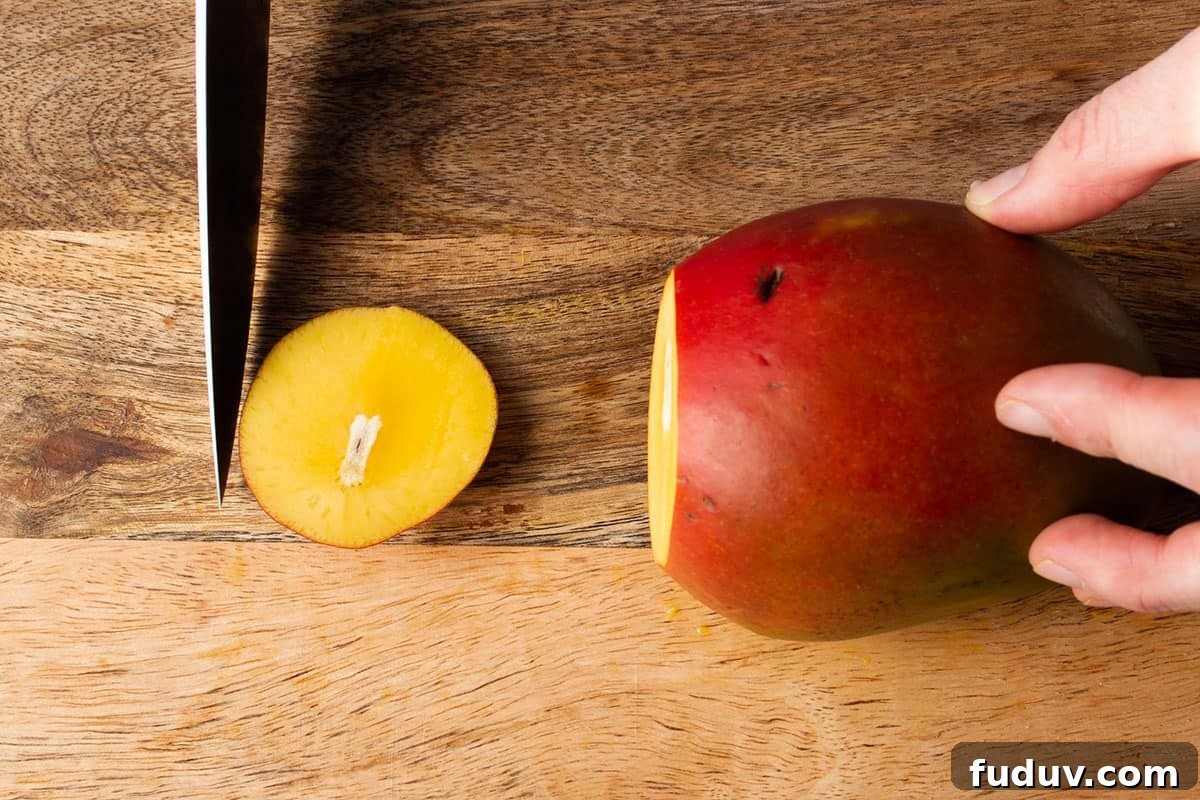
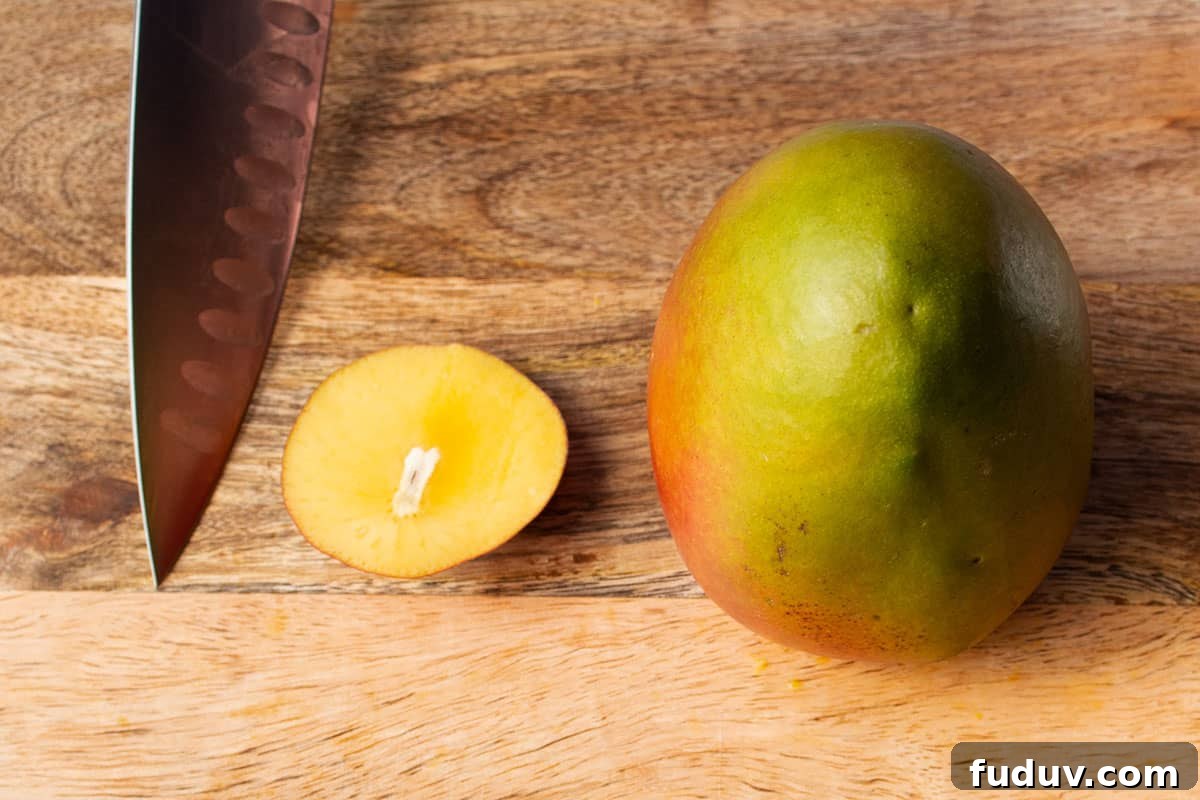
Trim a small slice from the bottom (usually the flatter end) so the mango can stand upright on a cutting board. This stabilizes it for the next cuts.
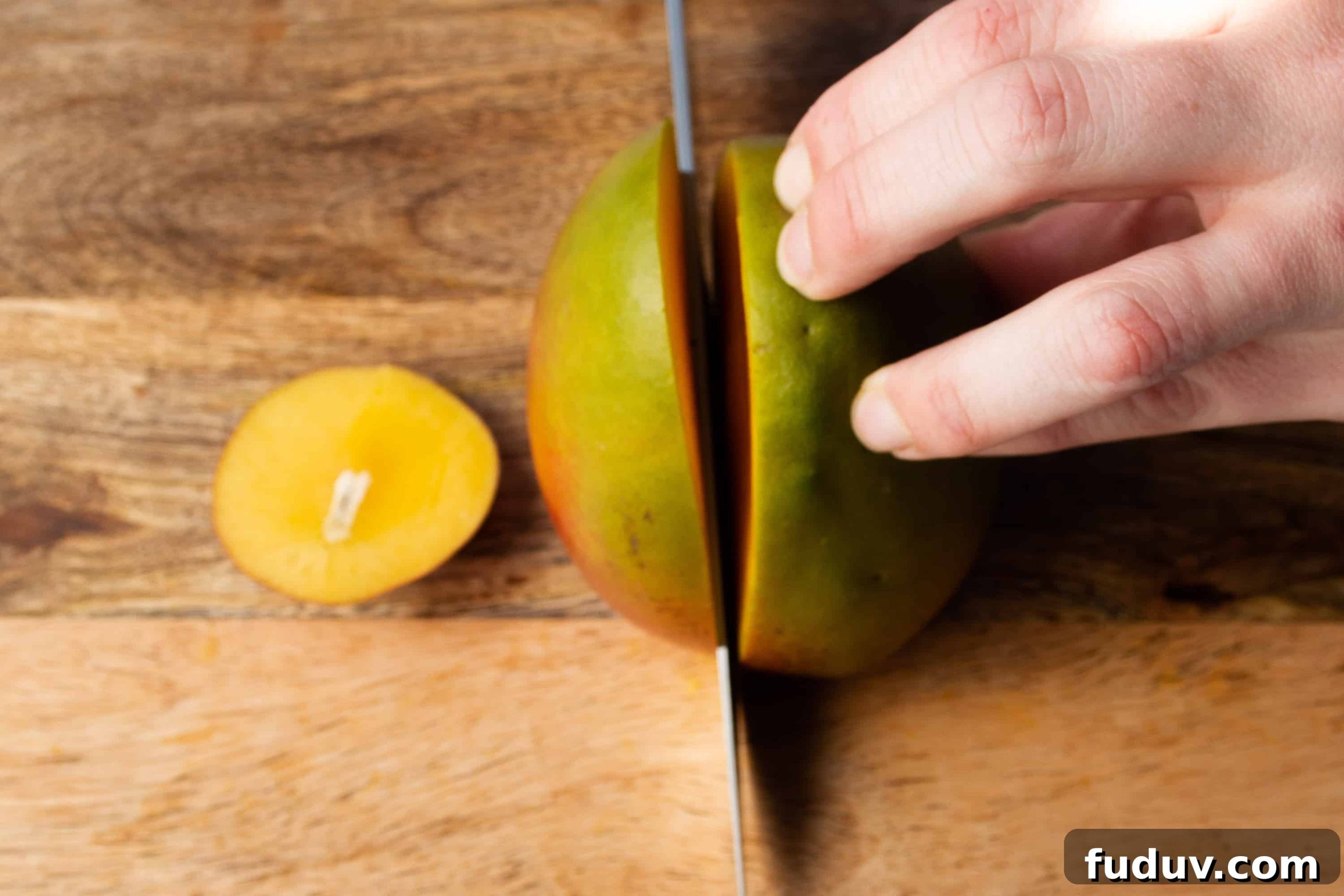
Identify the two long, flat sides of the mango—these are the cheeks. Using a sharp knife, slice down from the top, staying close to the pit to remove one cheek.
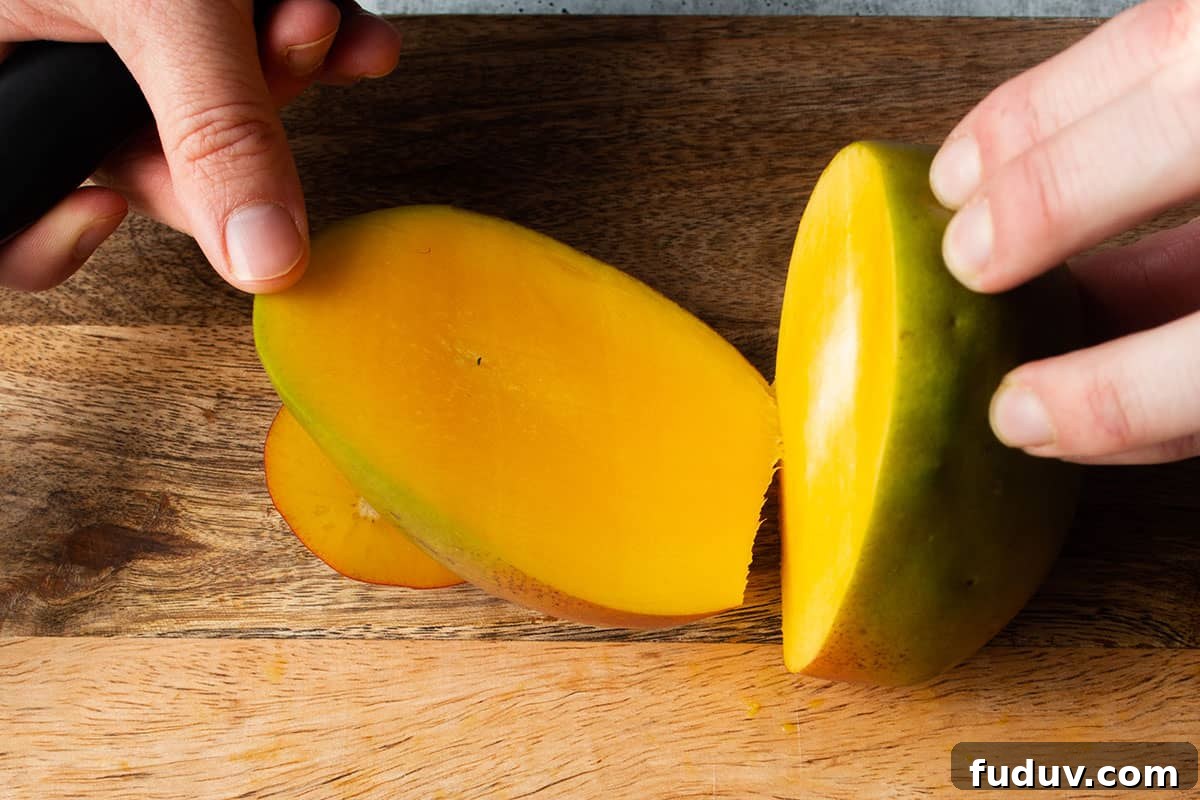
This takes practice—adjust how close you cut to the pit as needed. Repeat on the other long side to remove the second cheek.
After removing both cheeks you will often have two smaller strips of flesh along the edges of the pit. Carefully slice these away using the pit as a guide.
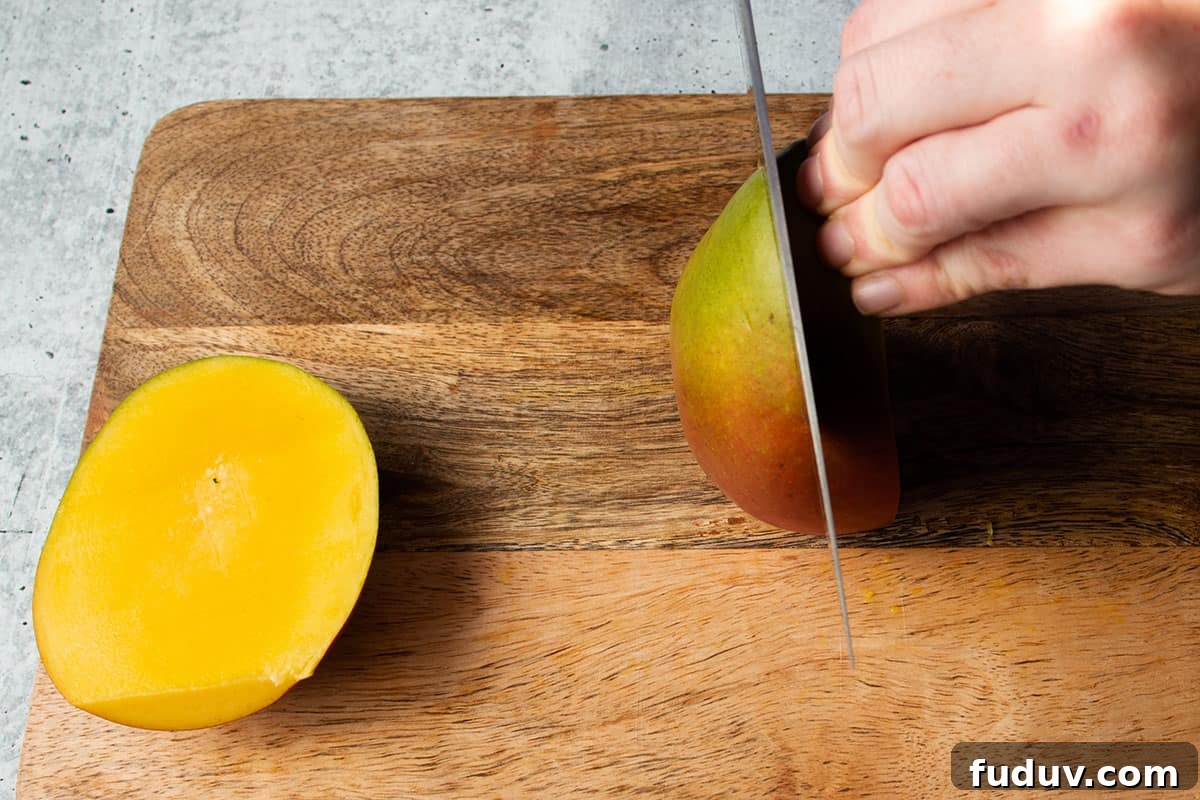
Repeat on the other side and you’ll have two large cheeks and two smaller pieces.
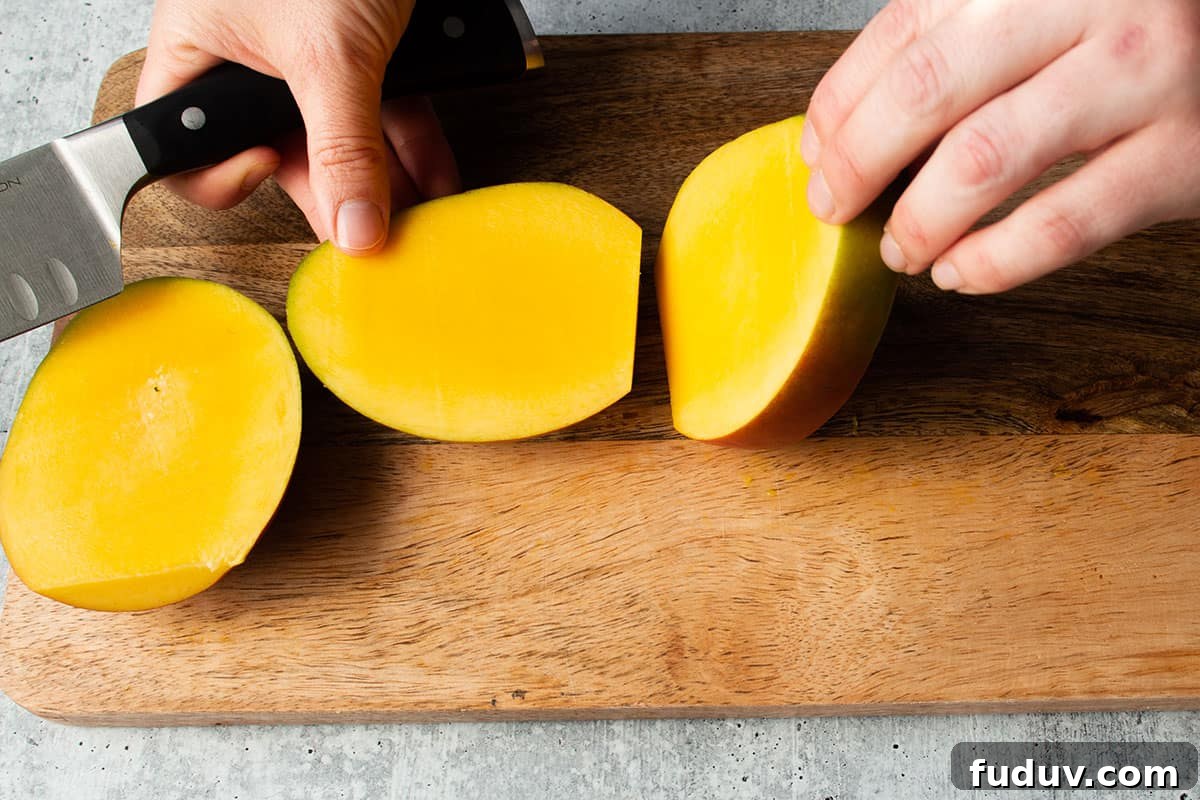
The large pieces are often called the cheeks.
If there’s still good flesh clinging to the pit, use a small paring knife to carefully remove as much as you can. It’s normal to leave a little behind—mango pits don’t release flesh as cleanly as some other stone fruits.
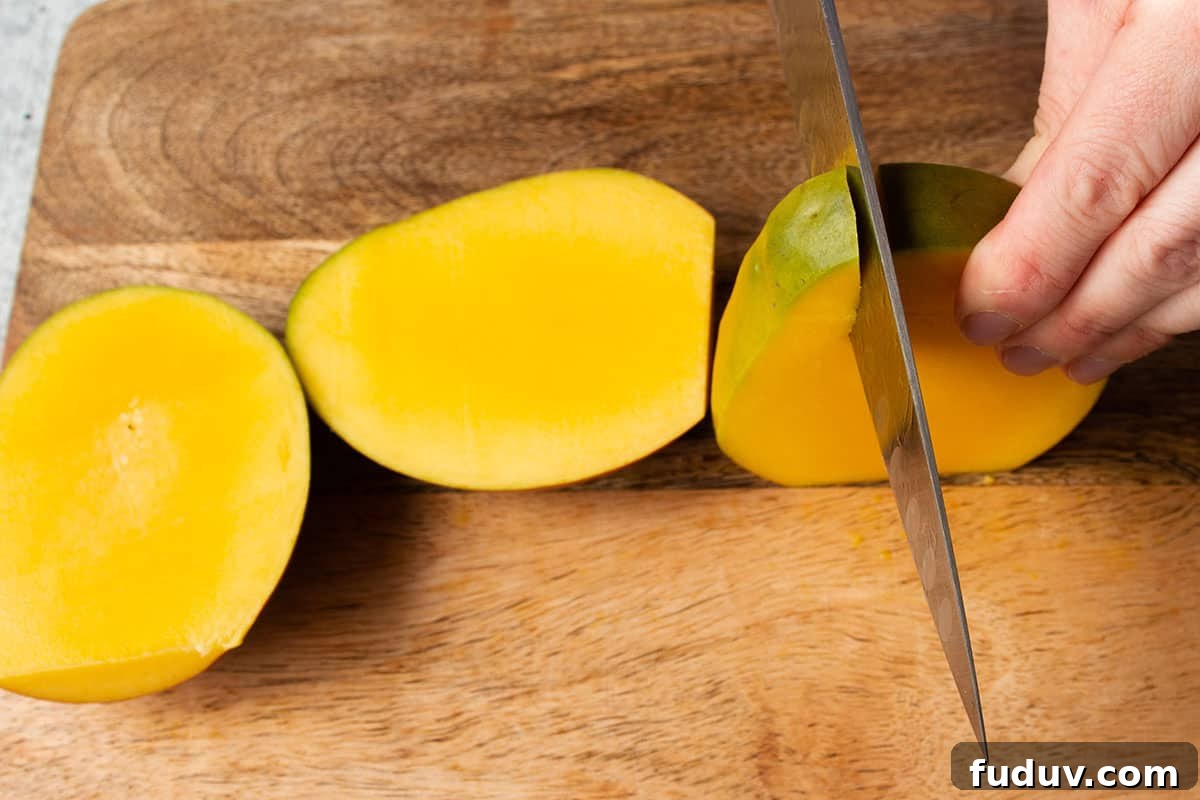
Peel the smaller strips and dice them to your preferred size.
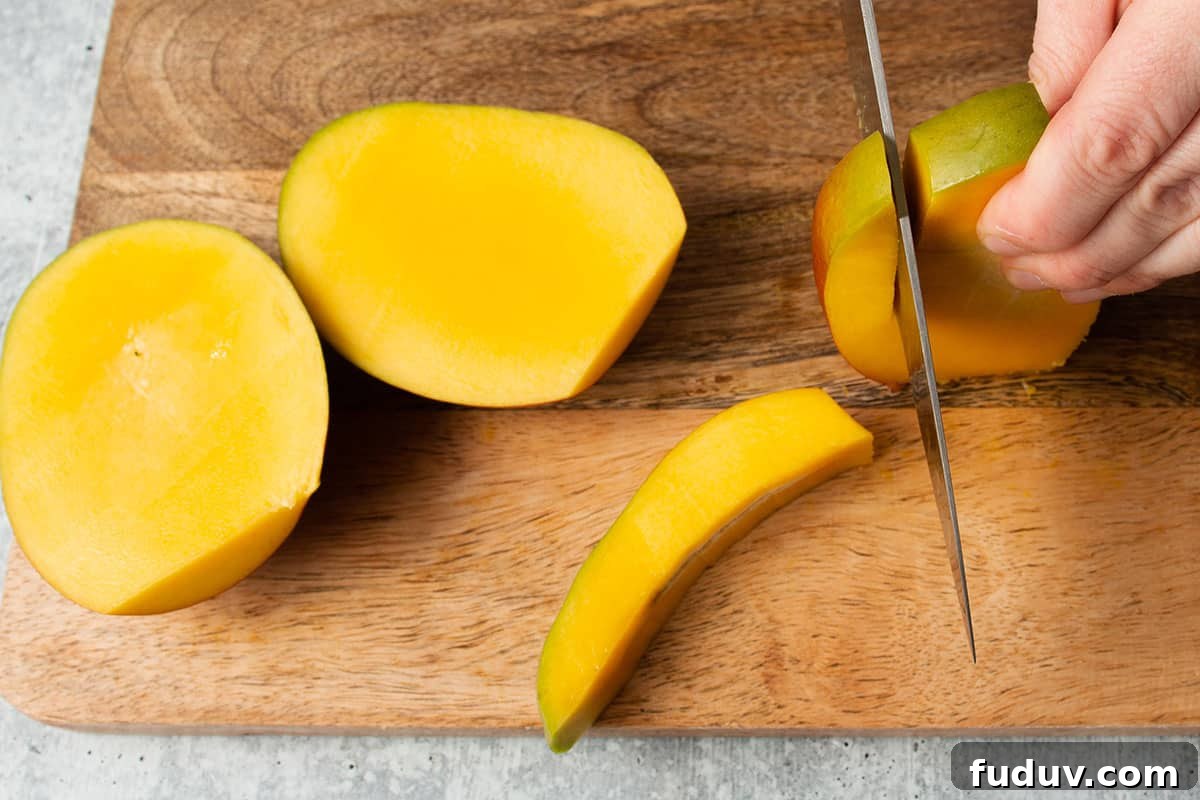
Slice off and peel any remaining pieces, then dice.
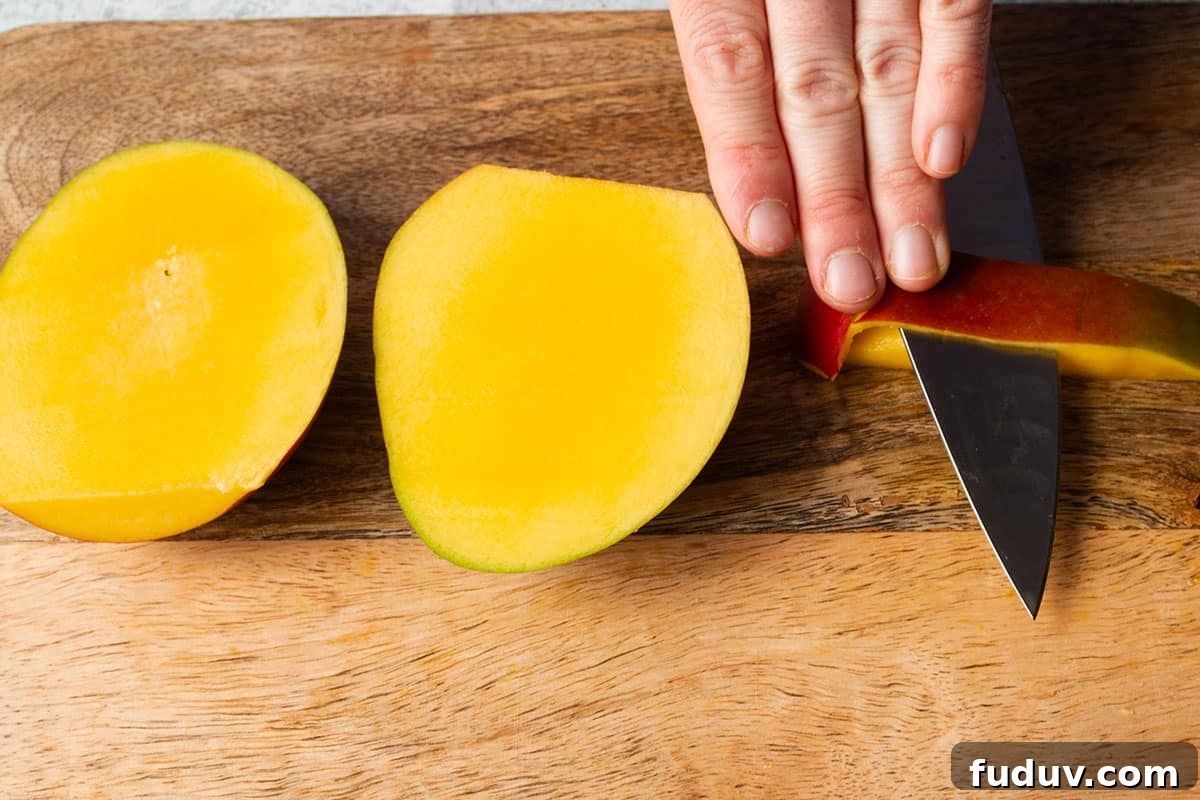
On the larger cheeks, score a crosshatch pattern—cut down to the skin but not through it.
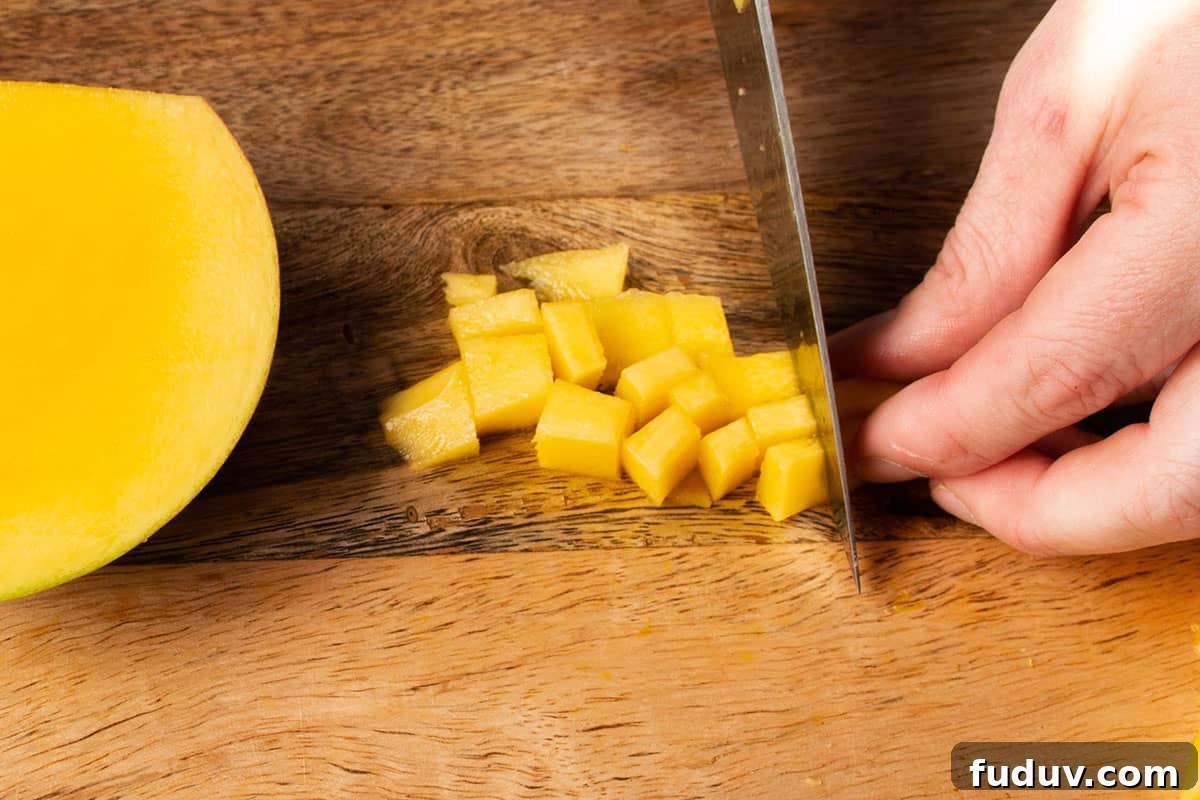
This is similar to dicing an avocado. Once scored, use your thumb or a spoon to run along the skin and scrape out the diced pieces.
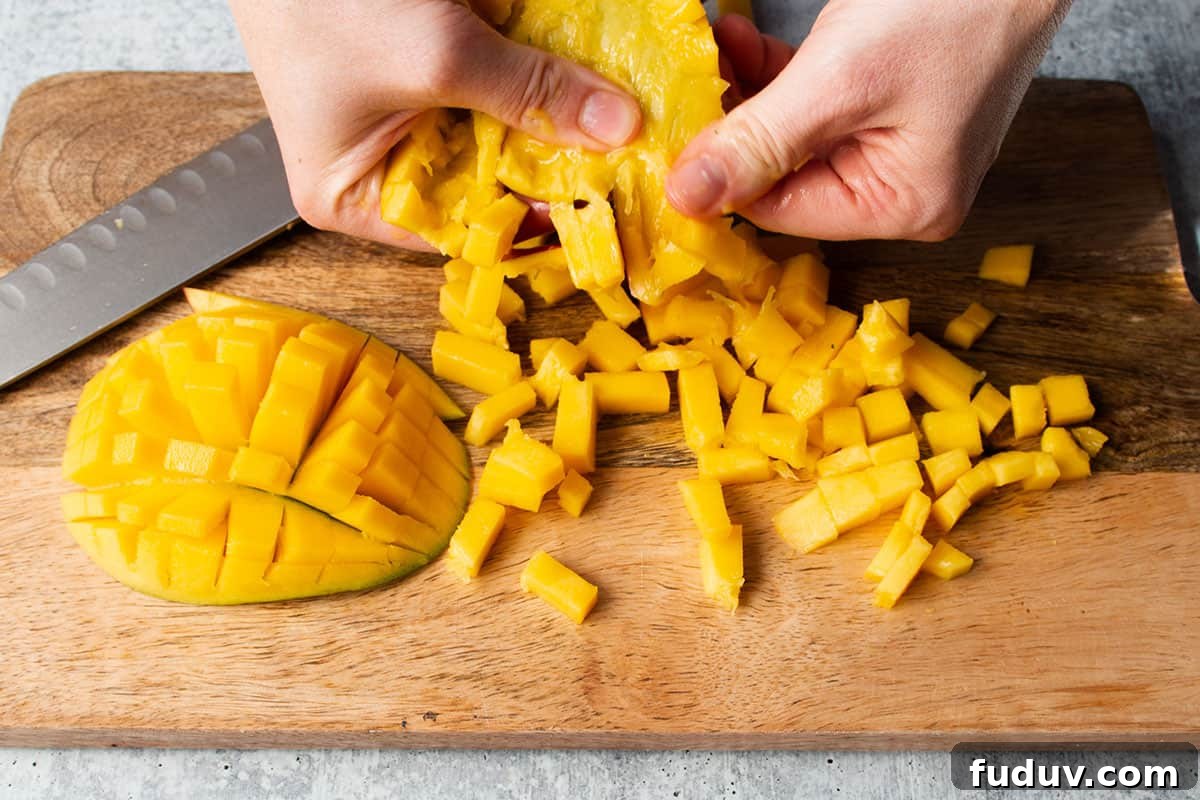
That’s it—your mango is diced and ready to use. If your first attempts aren’t perfect, don’t worry; cutting mango takes a bit of practice.
Other tips for dicing a mango
- Keep your knife sharp. A sharp blade makes it easier to cut close to the pit and produce clean slices.
- Switch to a paring knife for the smaller pieces and for removing skin—it’s often easier to control on small sections.
- If a mango is ripe but you’re not ready to use it, refrigerate it for a few days to slow the ripening process.
Storing fresh mangos

Store diced mango in an airtight container in the refrigerator for 3–4 days. Mango also freezes well: when you have a lot on hand, peel and dice the fruit, spread pieces on a tray to flash-freeze, then transfer to freezer bags for smoothies, salsas, or baking. Proper freezing prevents the pieces from clumping into a solid block.
With a little practice you’ll gain confidence—your mangoes will be ready for smoothies, salsas, salads, or snacks in no time.
Frequently asked questions
Yes. Mangoes have a single, large, flat pit in the center.
You don’t have to peel it before slicing the cheeks; you can score the flesh while the skin is on and scoop out the cubes. For the smaller strips, peeling first is often easier.
A ripe mango feels slightly soft when gently squeezed but is not mushy. Use texture rather than color as your main guide.
📋Recipe

How to Dice a Mango
Equipment
- Knife
Ingredients
- 1 Ripe Mango
Instructions
- Cut a small piece off the bottom so the mango sits flat and won’t roll.
- Locate the two long, flat sides (the cheeks).
- Using a sharp knife, cut the first cheek away from the pit, starting at the top and slicing downward close to the pit.
- Repeat on the other side to remove the second cheek.
- Cut the remaining flesh off the sides of the pit in smaller strips.
- Peel and dice the smaller pieces to the desired size.
- Score a crosshatch pattern into each cheek, cutting to the skin but not through it.
- Run your thumb or a spoon along the skin to scrape out the diced mango.
Notes
Other tips for dicing a mango
- Use a sharp knife for cleaner, safer cuts around the pit.
- A paring knife is helpful for scoring and peeling small pieces.
- Refrigerate ripe mangoes if you need to slow ripening for a few days.