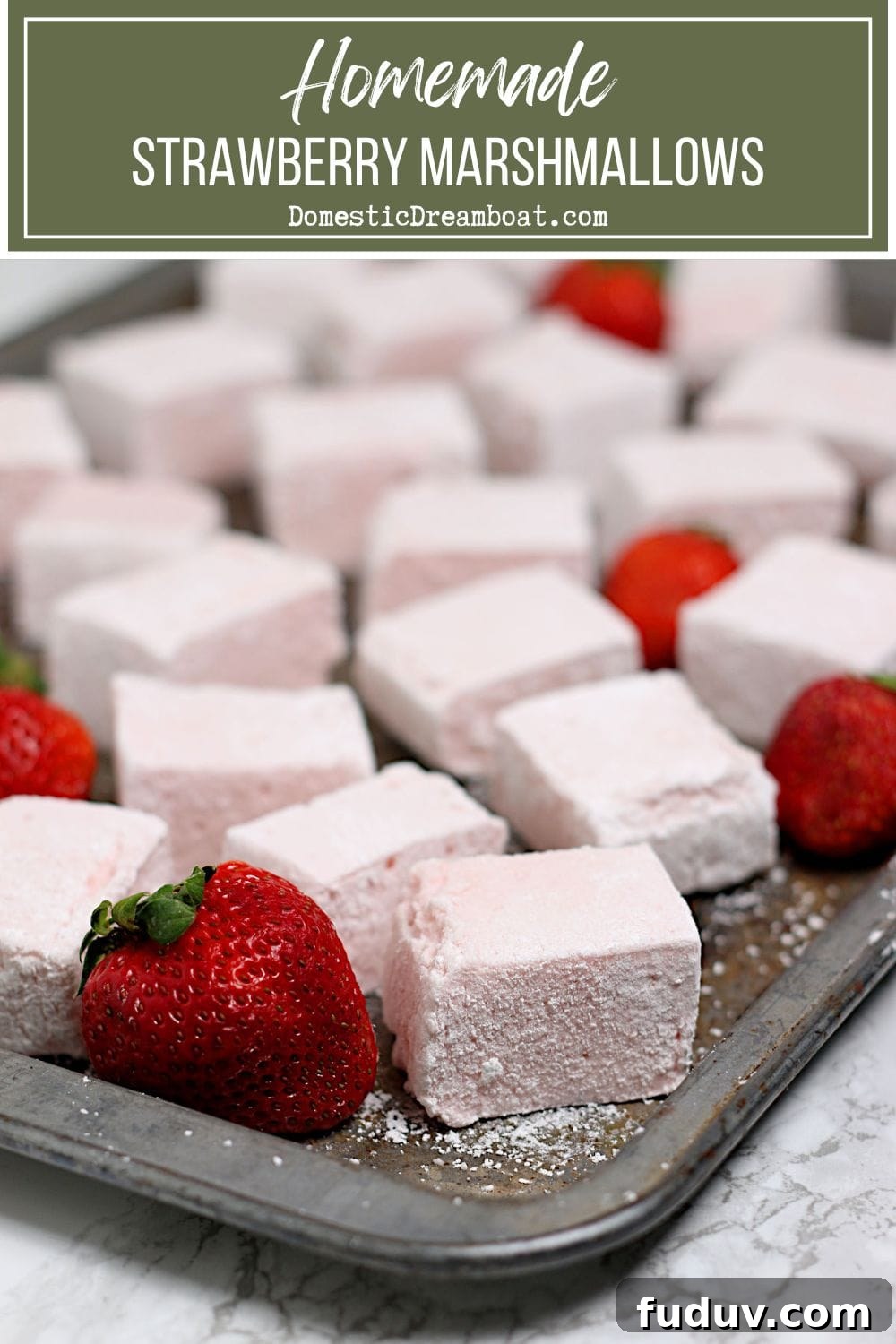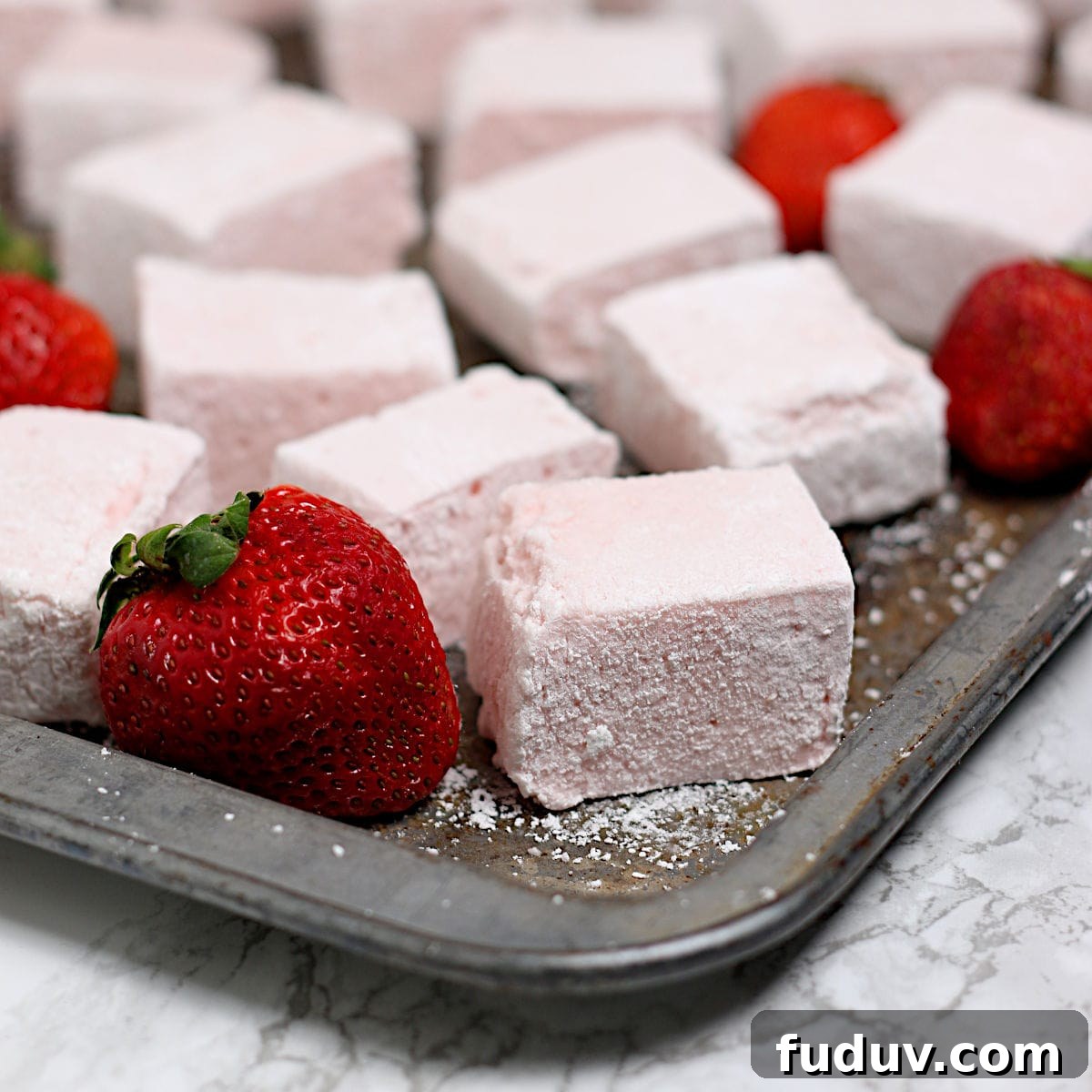
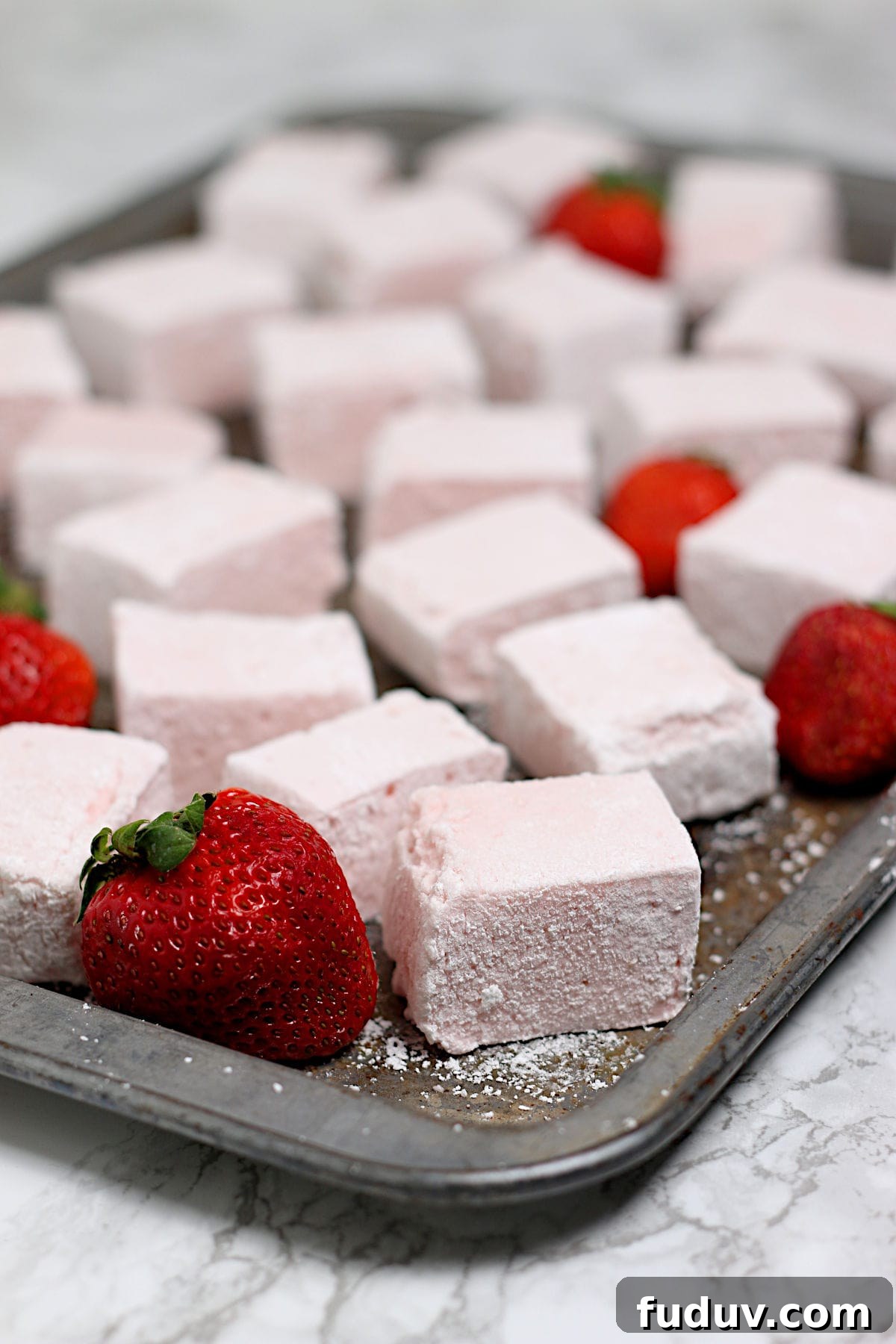
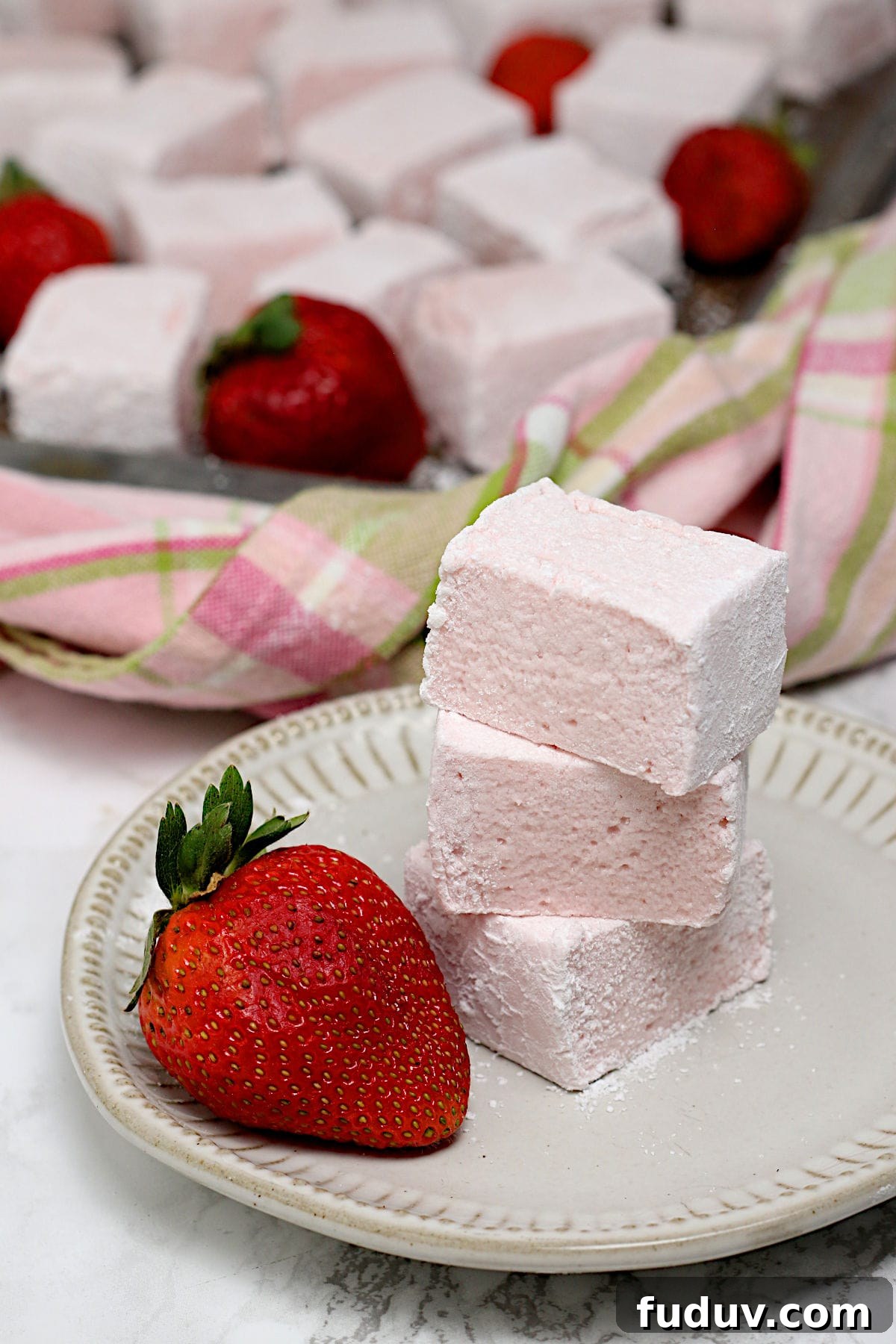
Homemade strawberry marshmallows use no artificial colors or flavors — just real strawberries for a naturally pink, fruity treat.
I’ve made marshmallows many times before, including classic vanilla marshmallows and a version made with sweetened condensed milk. Until recently I hadn’t tried a flavored variety, but with Valentine’s Day approaching I wanted something pink and festive. I found a strawberry marshmallow idea I loved and adapted it to use fresh strawberries and a smooth puree so the marshmallows are seed-free and silky.
How to Make Strawberry Marshmallows
Start by making a simple strawberry puree. Combine fresh or frozen strawberries with a bit of granulated sugar in a small saucepan. Cover and bring to a boil over medium heat, then turn the heat off and let the strawberries sit for about 5 minutes to soften.
Blend the strawberries until smooth using an immersion blender or a food processor. For seed-free marshmallows, press the puree through a fine-mesh strainer, stirring and pressing to extract as much liquid as possible. Discard the seeds and chill the puree in the refrigerator until it reaches room temperature. (If you don’t mind seeds or tiny fruit pieces, you can skip the straining or simply mash the berries with a fork.)
While the puree cools, prepare a 9×13″ pan. Whisk together equal parts cornstarch and powdered sugar. Lightly grease the pan with a neutral-flavored oil, sprinkle in some of the cornstarch–powdered sugar mix, and tilt the pan so the bottom and sides are coated. Tap out any excess.
When the strawberry puree is cool, add it to the bowl of a stand mixer with half the cold water and a pinch of salt. Sprinkle the gelatin over the mixture and let it bloom while you prepare the sugar syrup.
In a medium saucepan, combine the remaining granulated sugar, the other half of the cold water, and the light corn syrup. Attach a candy thermometer (or use an instant-read thermometer) and bring the mixture to 240°F (the soft-ball stage), cooking over medium-high heat. This usually takes 10–15 minutes.
With the mixer on low, carefully pour the hot sugar syrup into the mixer bowl—pour near the bowl’s edge to avoid splattering the whisk. After all the syrup is added, increase the mixer speed gradually to medium-high.
Whip until the mixture becomes glossy, fluffy, and pale pink and the bowl feels only slightly warm on the bottom — about 10–12 minutes. Add a small amount of vanilla extract and beat for another minute.
Quickly scrape the marshmallow mixture into the prepared pan and smooth the top with a spatula. Sprinkle more of the cornstarch–powdered sugar mix over the surface and loosely cover with a clean dish towel. Let the marshmallows set at room temperature for at least 4 hours (ideally 5 hours) until firm.
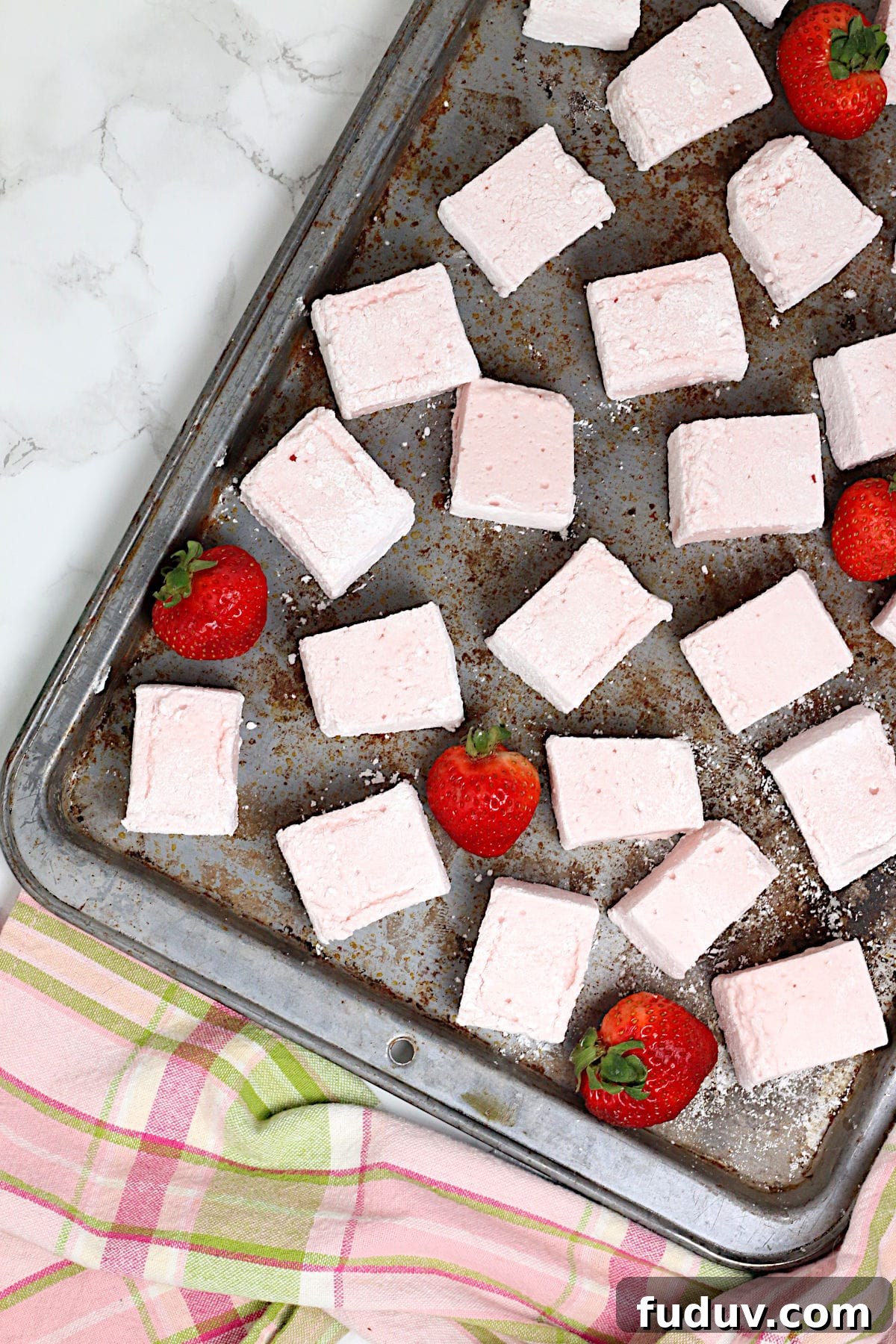
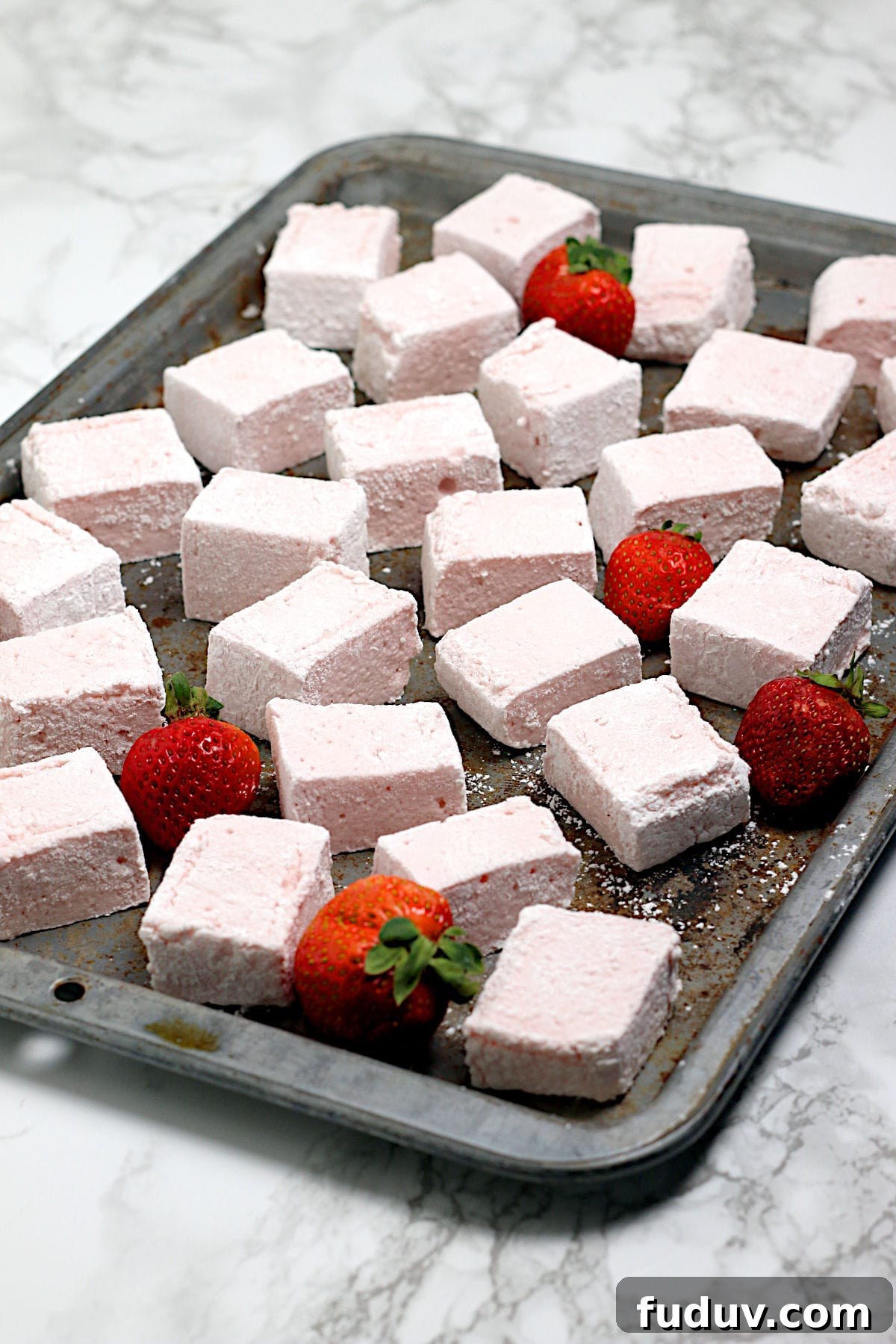
Once set, invert the slab onto a cutting board, dust with the powdered mixture as needed, and cut into squares with a large knife (lightly oiling the knife helps prevent sticking). Toss the squares in the remaining coating to keep them from sticking together. If you like, dip or drizzle the marshmallows with melted chocolate and allow it to set on parchment.
Store finished marshmallows in an airtight container at room temperature.
Ingredients
- Strawberries – fresh or frozen; choose deep-red berries for a stronger color and flavor.
- Granulated sugar – used both in the strawberry puree and in the sugar syrup.
- Cornstarch – combined with powdered sugar to dust the pan and coat the marshmallows so they don’t stick.
- Powdered sugar – mixed with cornstarch for the coating.
- Neutral-flavored cooking oil – a light coating for the pan so the powder sticks evenly.
- Cold water – used to bloom the gelatin and make the sugar syrup.
- Table salt – a pinch to balance sweetness and enhance flavor.
- Plain gelatin – powdered gelatin (about 3 packets or 21 g) for structure.
- Light corn syrup – makes the sugar syrup smooth and stable. Avoid substituting golden syrup.
- Vanilla extract – optional; a small amount complements the strawberry flavor without overpowering it.
Notes, Tips and Nutrition
For a smooth, seed-free texture, strain the puree through a fine-mesh sieve. If you prefer a more rustic marshmallow with fruit bits, skip the straining.
Coating: mixing cornstarch with powdered sugar prevents excess sweetness on the surface and keeps the marshmallows from sticking. Some of this coating may remain in the pan or fall off during handling, so nutrition values that include the full coating are slightly conservative.
Storage: keep marshmallows airtight at room temperature for several days. They are gluten-free and dairy-free as written, but not vegan due to the gelatin.
Nutrition: approximate values for a medium marshmallow (recipe yields about 60 pieces) — roughly 41 kcal each; carbohydrate and sugar content will vary with portion size.