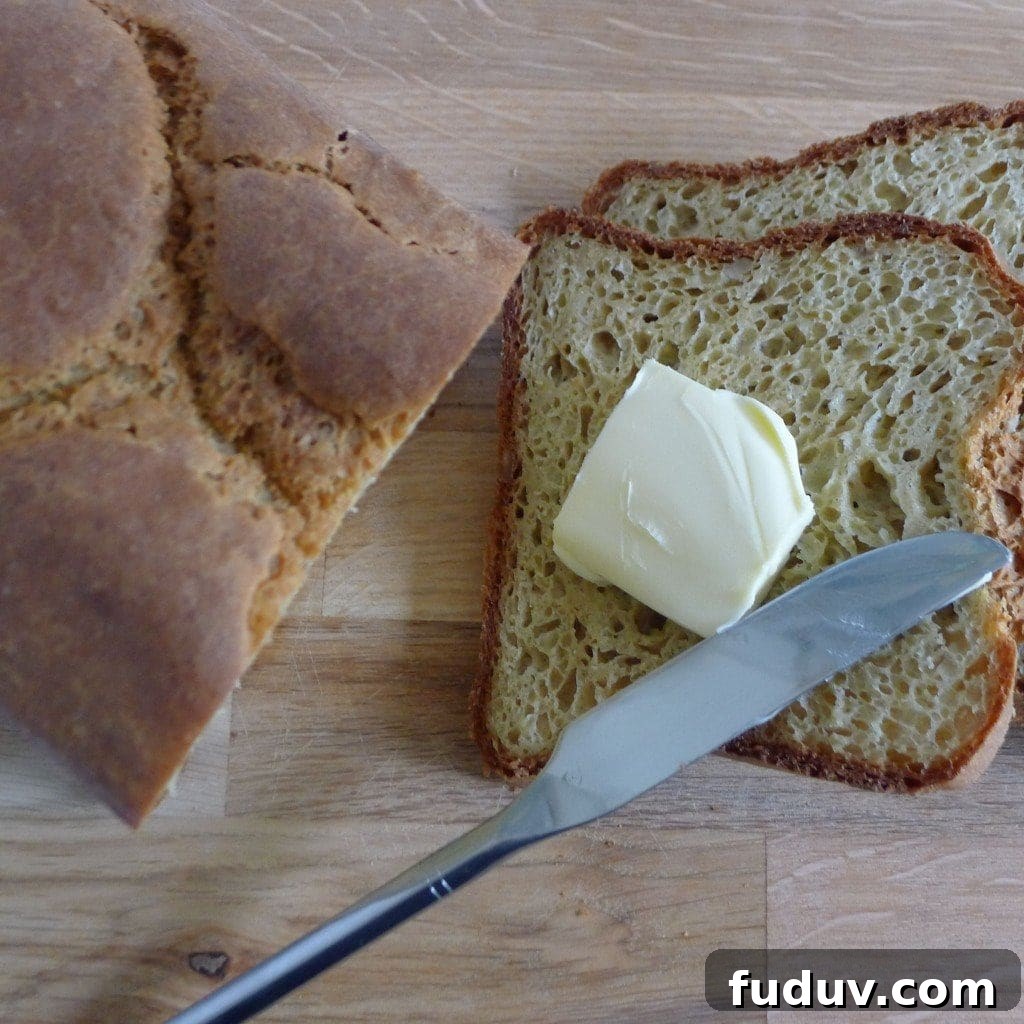
As a scientist by training, I’ve spent recent weeks experimenting to create my ideal gluten-free loaf. My goals were practical: use flours available on prescription, include familiar ingredients I can buy, achieve a moist and tasty crumb, and avoid the excessive sugar and salt found in many store-bought gluten-free breads.
After years without wheat I tried many recipes and repeatedly concluded that most gluten-free breads were disappointing. Determined to improve matters—especially for my daughter’s health—I dove into research and testing. I gathered tips from a number of helpful sources and then adapted and experimented until I developed a loaf that met my criteria. The best part: my daughter loved it.
My main piece of advice when making gluten-free bread is to treat it more like cake than traditional bread. The method is familiar and straightforward: weigh ingredients carefully, mix into a smooth batter, and avoid overcomplicating the process. In my experience this loaf is actually simpler to make than a conventional wheat loaf—less fiddly and more forgiving.
White flax seed loaf (gluten, dairy, soya, nut free)
White flax seed loaf
Pin Recipe
Ingredients
- 400 g Innovative Solutions pure gluten free blended flour
- 50 g white teff flour – I used Innovative Solutions
- 2 and a half tsp dried active yeast
- 1 and a half tsp xanthan gum
- 1/8 th tsp vitamin c powder – optional
- 1 tsp salt
- 1 tbsp ground flax seeds
- 2 tbsp runny honey
- 350 ml water – use cold tap water warmed briefly to reach the right temperature
- 3 medium eggs – straight from the fridge
- 4 tbsp olive oil
Instructions
-
Place all the dry ingredients in a large bowl and mix thoroughly.
-
Warm the water and whisk in the honey, eggs and olive oil until combined.
-
Combine the wet and dry ingredients and beat with a handheld whisk (or stand mixer) until you have a smooth batter, similar to cake batter. Mix for about 2 minutes to incorporate air.
-
Grease a large bread tin (a breadmaker pan works well). Pour the batter into the tin and smooth the top. Leave in a warm place for 35–50 minutes until doubled in size.
-
Preheat the oven to 180°C while the batter proves. Be careful when moving the tin—any sudden knocks can deflate the batter and create holes.
-
Bake for 50–55 minutes until the loaf is golden and sounds hollow when tapped.
-
Allow the loaf to cool in the tin for 5 minutes, then transfer to a wire rack to cool completely before slicing.