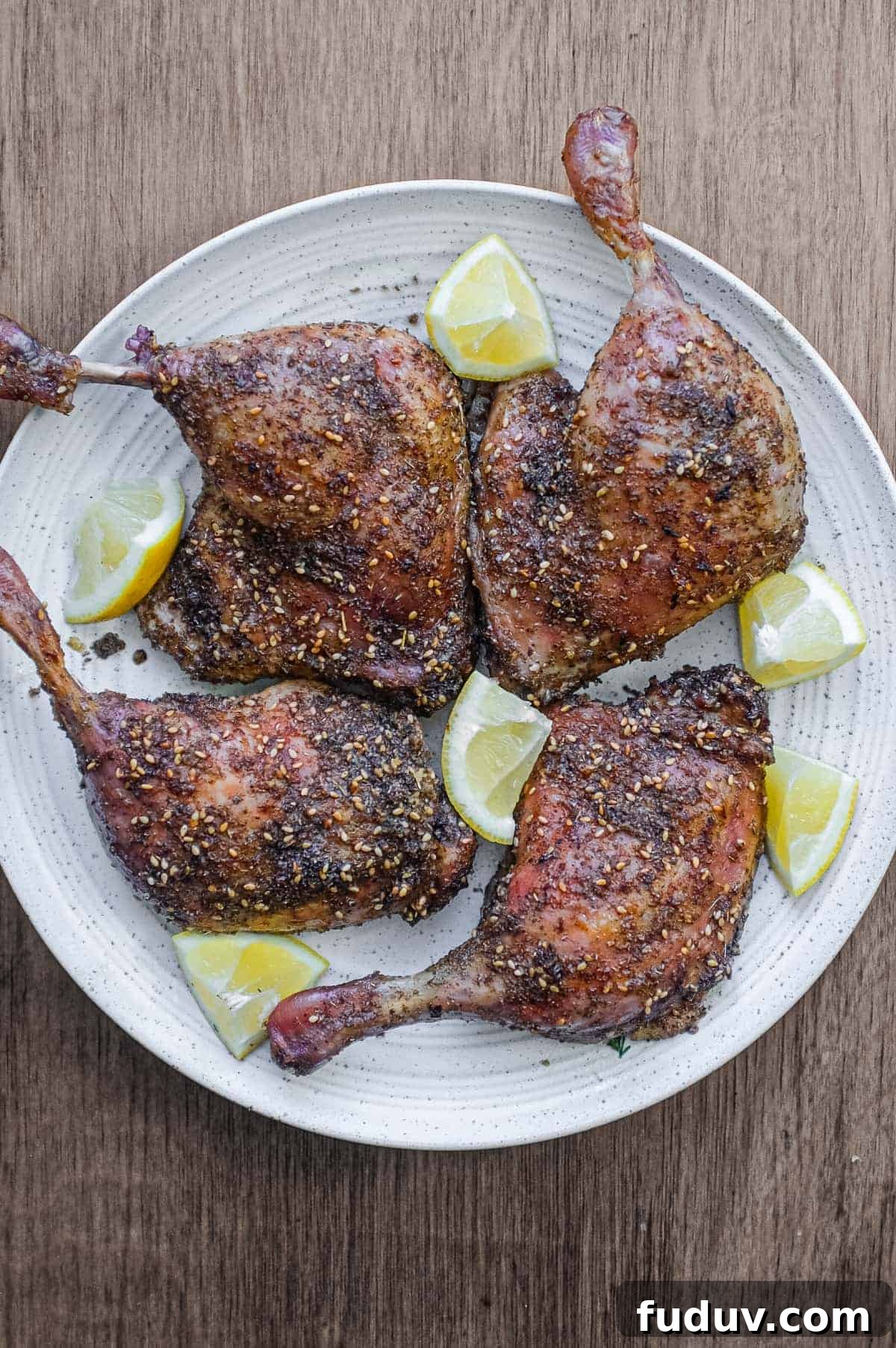
Roast Duck with Zaatar
By Lee Jackson ↣ Published on: July 15, 2011
This slow-roasted duck brushed with zaatar brings together the warm, herbaceous flavours of the Middle East and the rich succulence of duck. The result is tender, juicy meat with a crisp, flavorful skin.
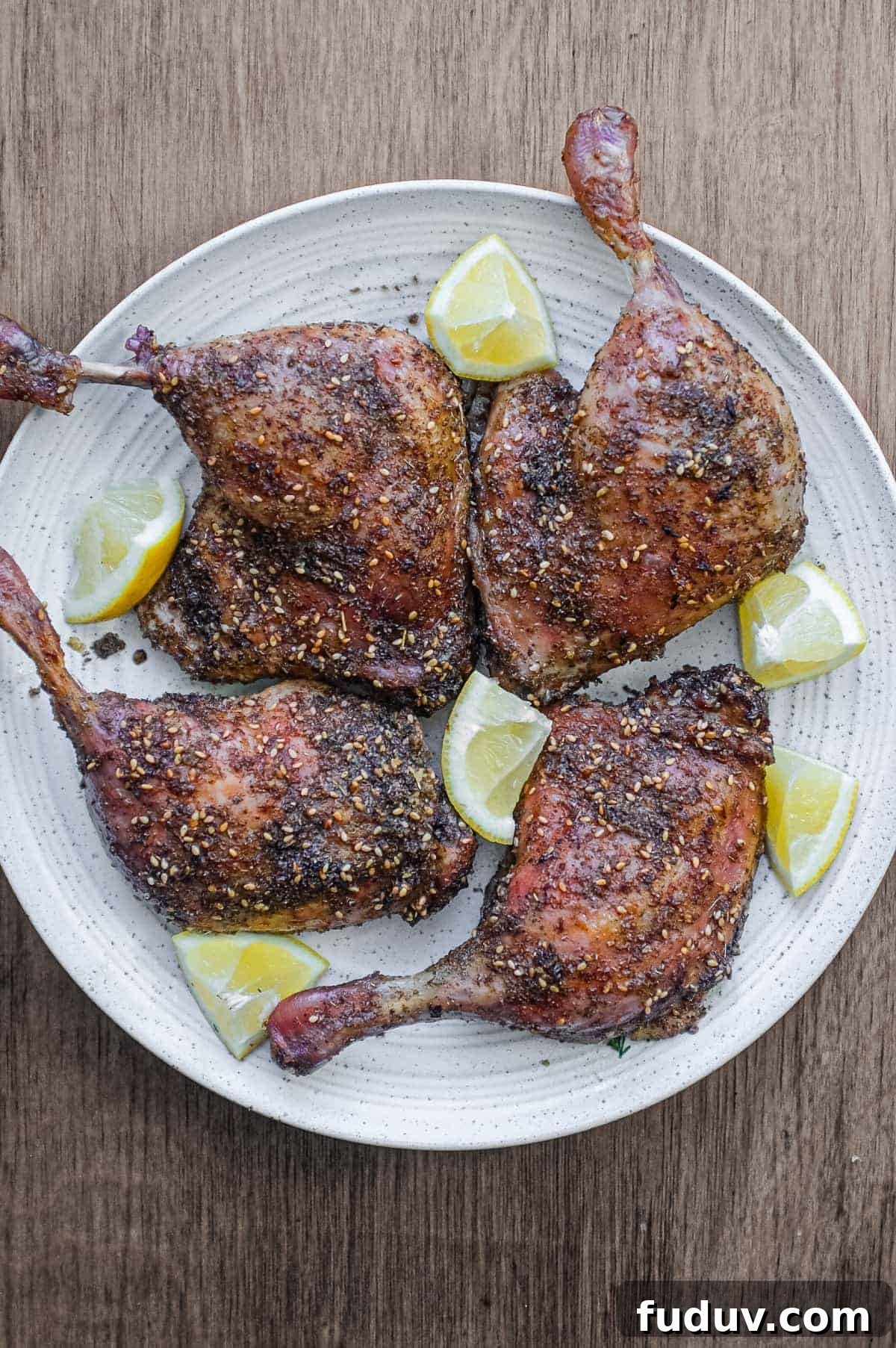
This roast duck recipe is inspired by Lebanese cooking and highlights zaatar—a warming, earthy blend that pairs beautifully with duck’s natural richness. Slow roasting renders the fat and keeps the meat tender while concentrating flavor. The finished legs are soft, fragrant, and perfect with a squeeze of lemon.
What’s Ahead?
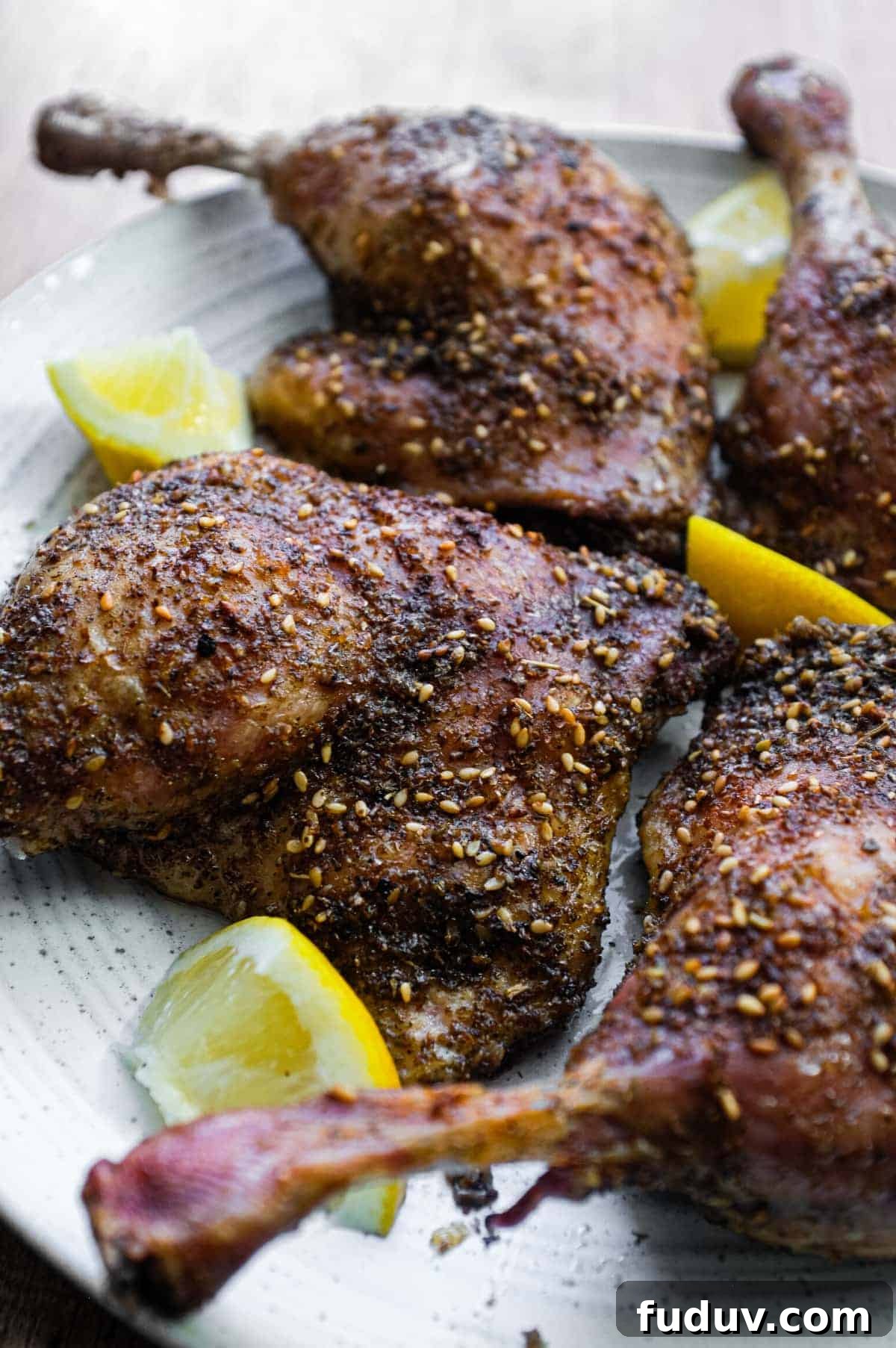
What is Zaatar?
Zaatar is a classic Middle Eastern herb blend most often spelled za’atar. It typically combines dried thyme, sumac, sesame seeds and salt, offering a tangy, herbaceous, aromatic profile. Variations may include marjoram or oregano. Zaatar is versatile: sprinkle it on bread, salads, vegetables or meats to add a distinct, savory note.
Why it works?
A weekend luxury: This dish is excellent when you have time to slow roast. Duck legs benefit from low, gentle heat to render fat and become fork-tender while the zaatar infuses the meat with aromatic, slightly tangy notes. The method is straightforward—coat, roast, baste—and the oven does most of the work.
Stuff You’ll Need
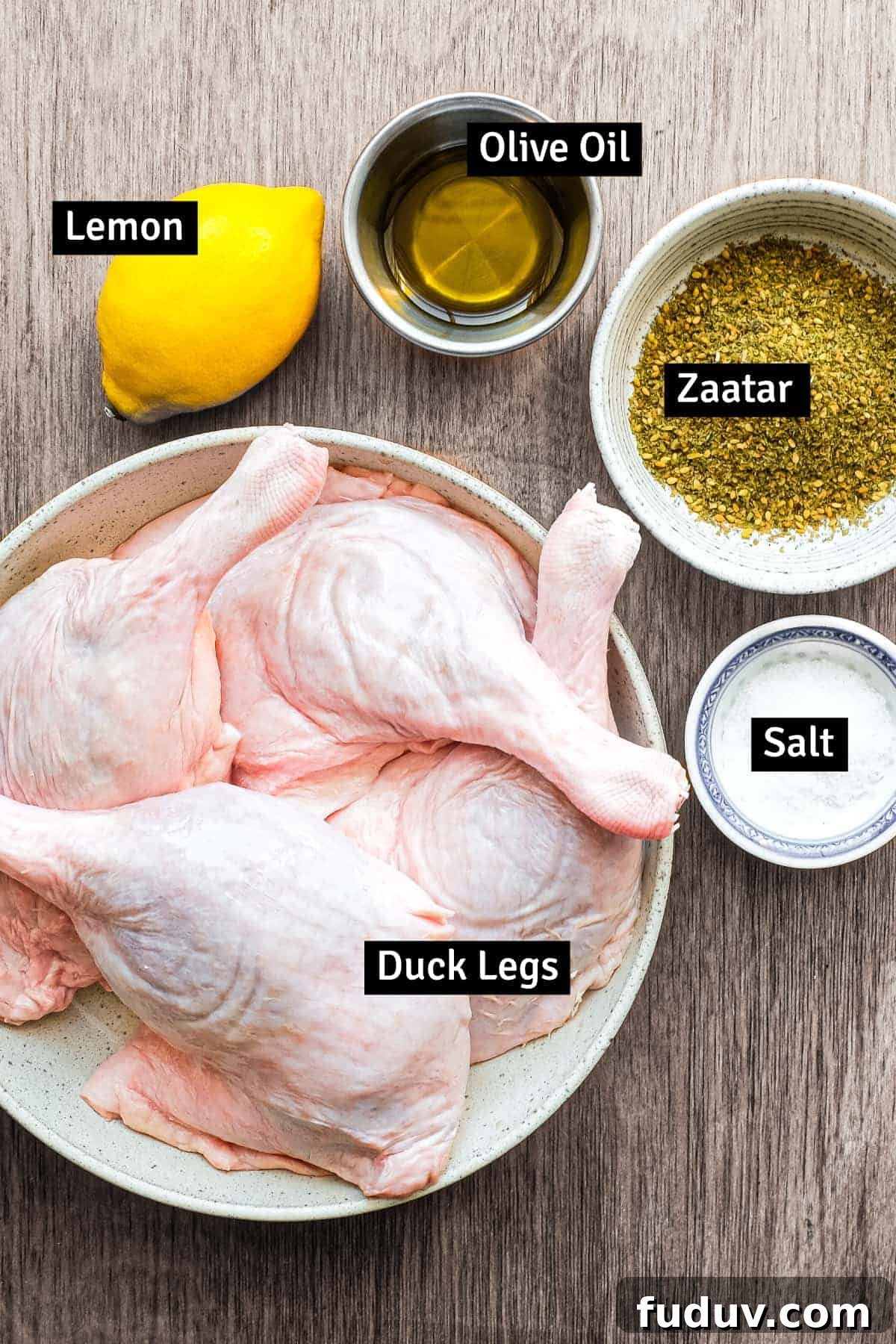
This recipe is simple and uses just five core ingredients:
- Duck legs – ideal for slow roasting; over a couple of hours they become very tender as the fat renders and the meat self-bastes.
- Zaatar – use store-bought or make your own blend of thyme, sumac, sesame and salt.
- Olive oil, salt and lemon – olive oil helps the spice adhere and lemon brightens the finished dish.
To cook the duck
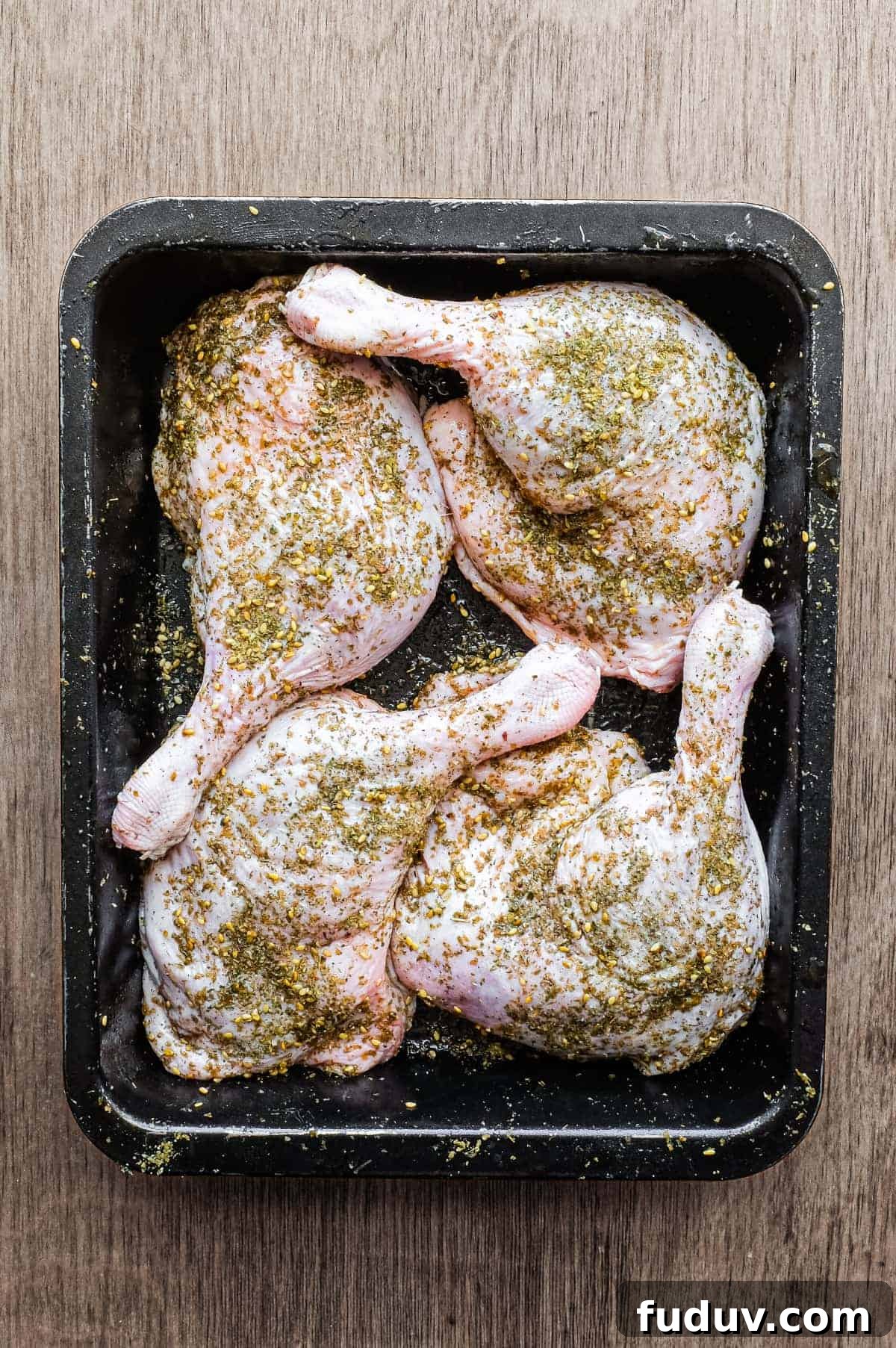
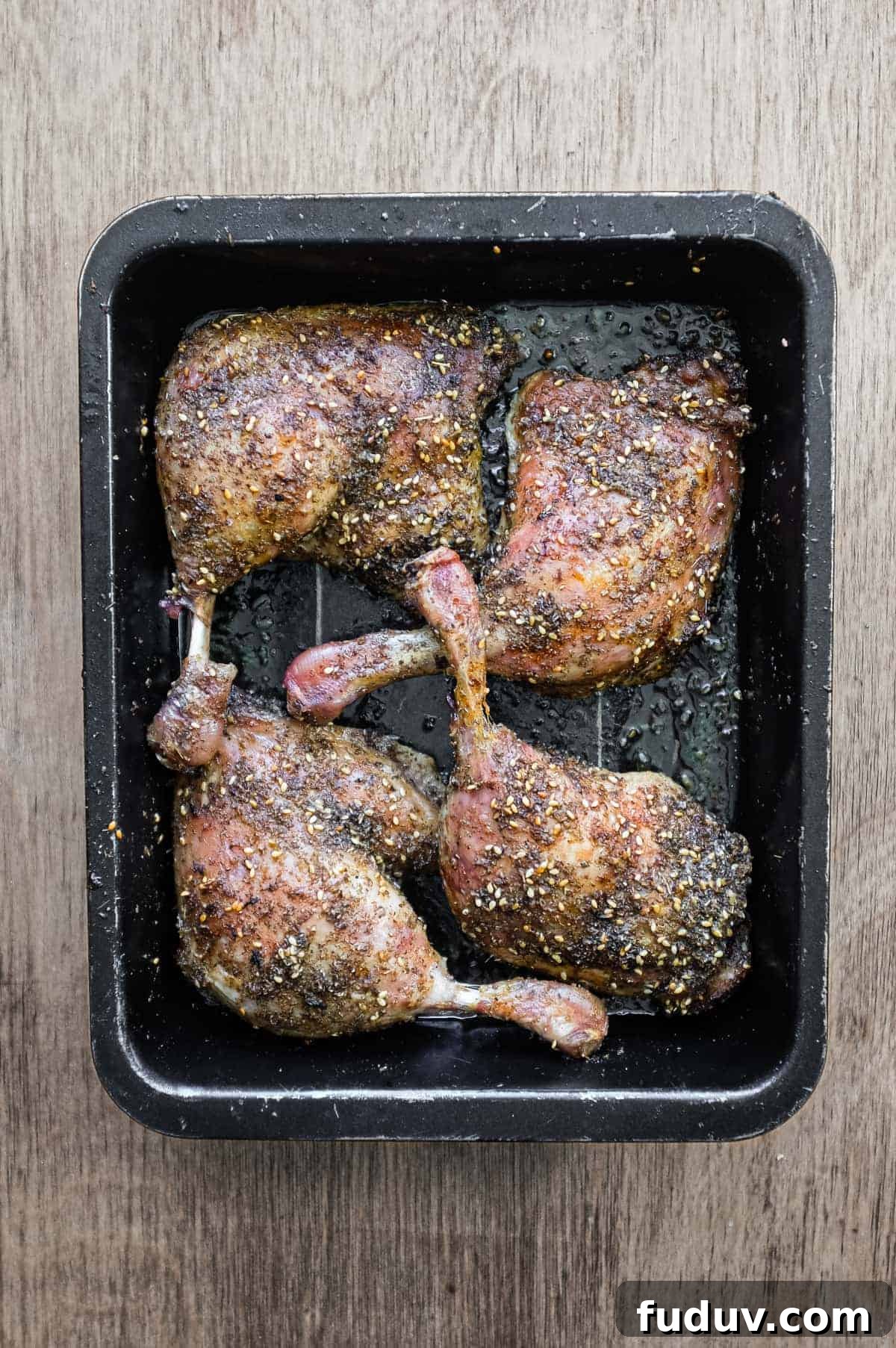
Coat the legs with oil, sprinkle and rub in the zaatar and season with salt. Roast low and slow for about 2½ hours, basting with the rendered fat a few times to keep the meat moist. The skin should crisp up by the end.
Serving & Storage Suggestions
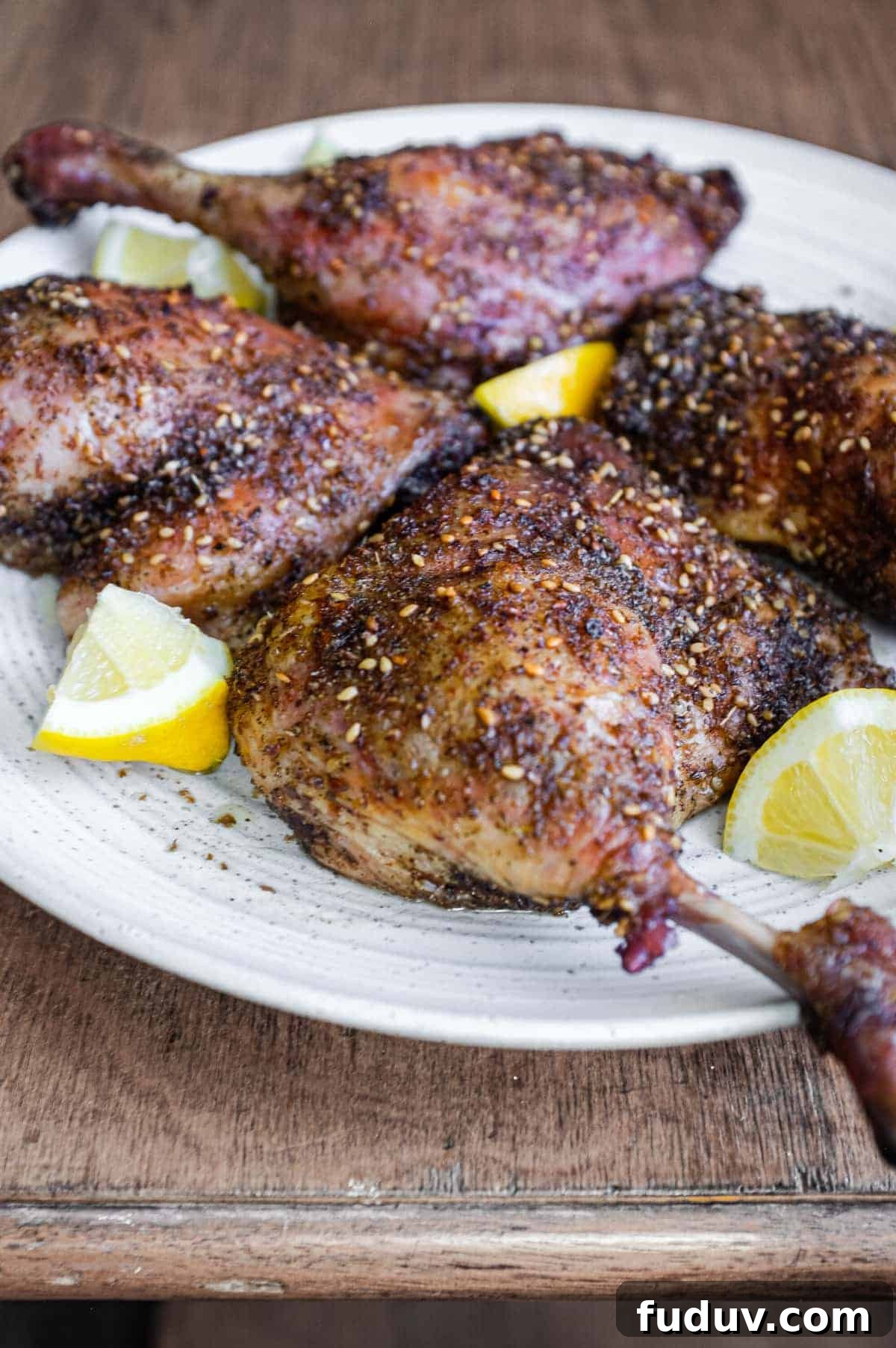
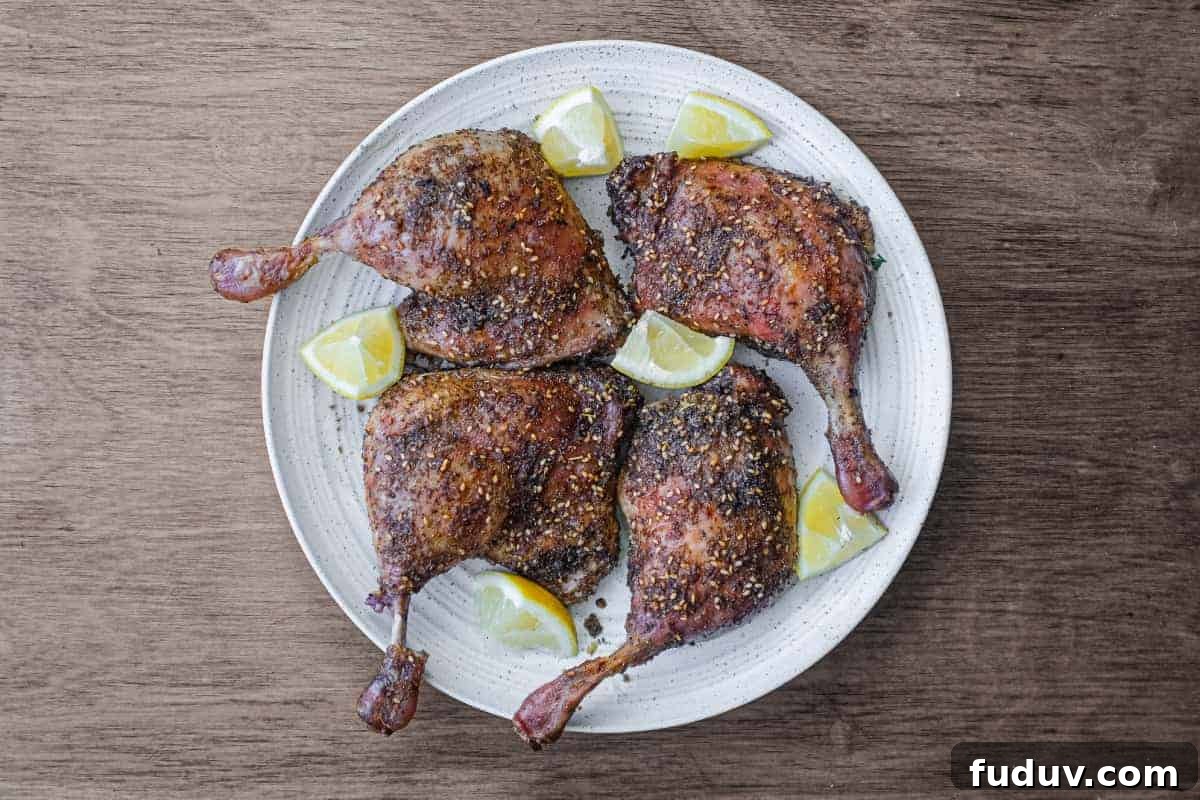
- Serving – Serve the duck hot with lemon wedges and extra zaatar to sprinkle. A simple green salad pairs well. You can also offer a yogurt-garlic sauce or a bright spicy green condiment alongside.
- Storage – Wrap leftovers tightly and refrigerate for 4–5 days. Reheat gently or enjoy cold. Freezing can dry the meat, so it’s not generally recommended.
Ready to get cooking?
This recipe is fuss-free and relies on slow roasting for its depth of flavor. A few basting turns keep the meat moist and the final dish is aromatic, warmly spiced and indulgent. Enjoy!
More Middle Eastern Recipes
If you enjoyed this roast duck with zaatar, consider exploring other Middle Eastern dishes for complementary flavors.
- Zaatar Lamb
- Cacik (Turkish Yoghurt & Cucumber)
- Turkish Bean Salad (Fasulye Piyaz)
- Freekeh Pilaf with Chickpeas
- Toum (Lebanese Garlic Sauce)
- Roasted Carrots with Tahini Sauce
- Borani Kadoo (Afghani Squash Salad)
- Beetroot Salad with Dukkah & Whipped Feta
- Palestinian Zucchini Dip
- Moroccan Matbucha – Tomato & Pepper Salad
- Shanklish Salad (Lebanese Breakfast Salad)
- Sumac Onions

This recipe uses affiliations and may receive a commission based on your activity.
Roast Duck with Zaatar
Rate this recipe
Print Recipe
Pin Recipe
Save Recipe
Ingredients
- 4 Duck legs
- 1 tbsp olive oil
- 4 tbsp zaatar
- 1 tsp salt
- 1 lemon (cut into wedges)
Instructions
-
Preheat the oven to 130°C / 265°F.
-
Place the duck legs in a roasting tin just large enough to hold them. Drizzle with the olive oil and rub it into the skin. Sprinkle each leg with about 1 tbsp zaatar, rubbing it in to coat, then season evenly with salt. Arrange the legs skin-side up.
-
Cook for about 2½ hours, basting with the rendered fat 3–4 times during cooking to keep the meat moist.
-
Remove from the oven and rest for 5 minutes. Serve with extra zaatar and lemon wedges to squeeze over.