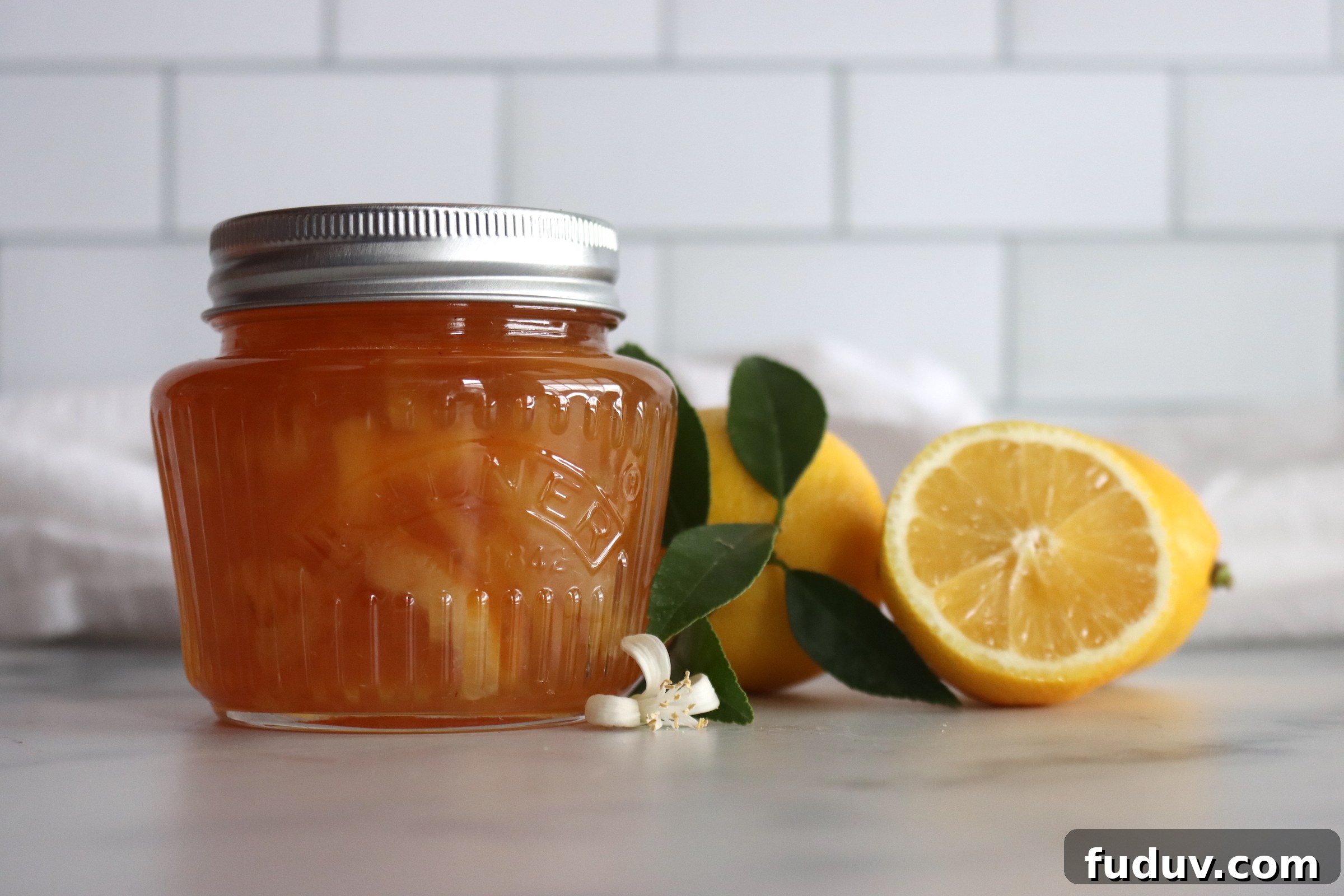
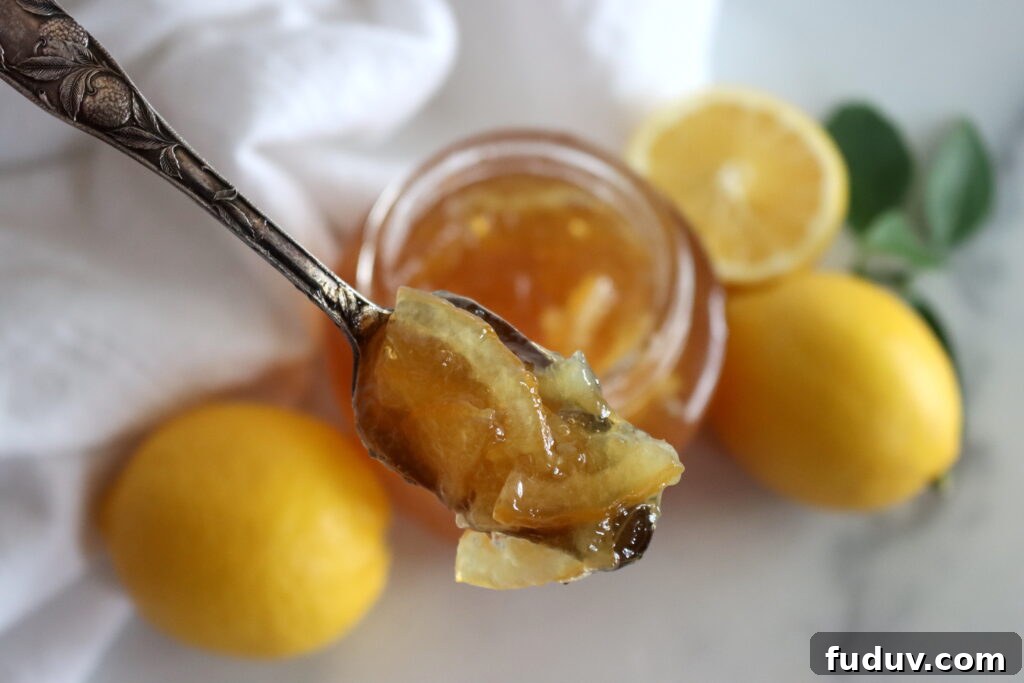
Lemon marmalade combines bright, tangy lemon flavor with the right amount of sugar, and the finely sliced peel adds a pleasant texture that keeps each bite interesting.
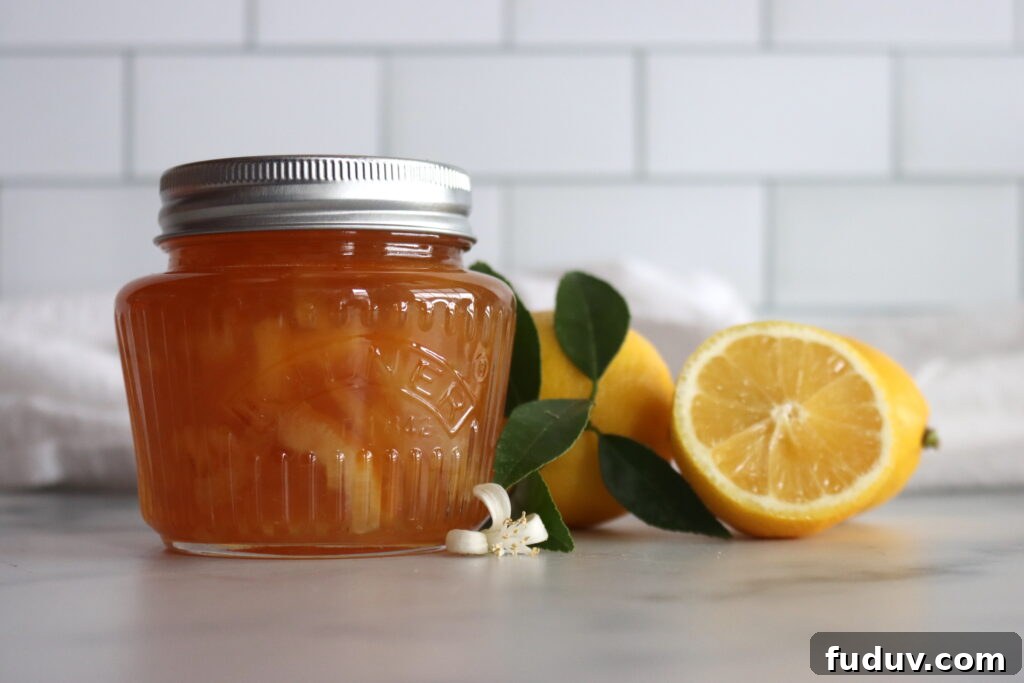
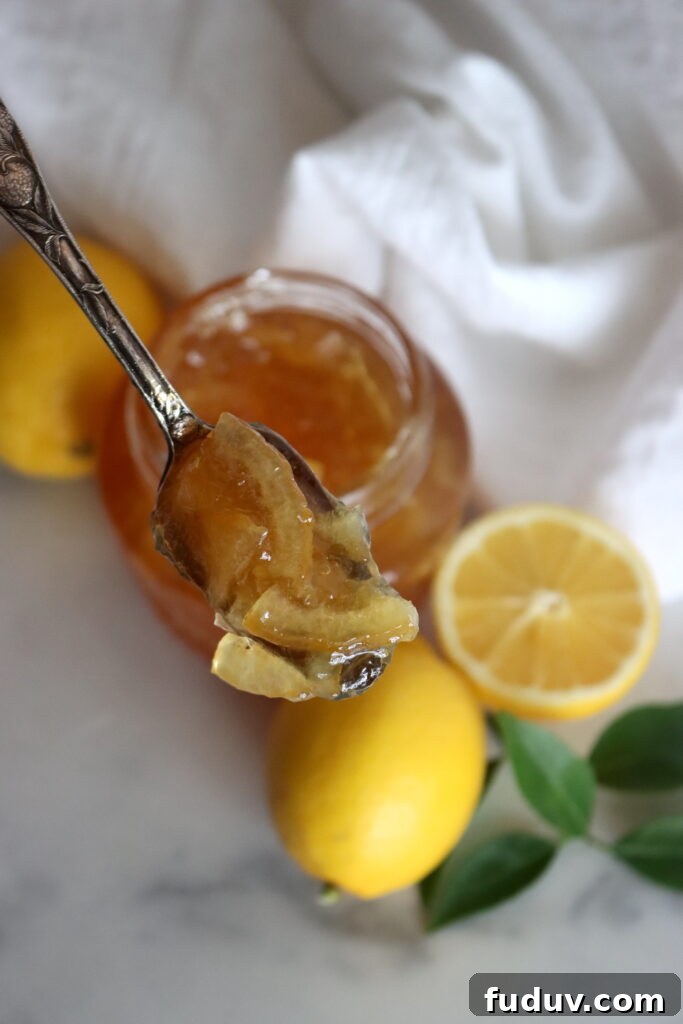
This traditional lemon marmalade preserves the lively acidity of fresh lemons while balancing it with sugar for a smooth yet textured spread. It’s excellent on toast, biscuits, or scones, and it also adds concentrated lemon flavor to dressings, marinades, or glazes.
The recipe uses a multi-day method to build depth of flavor and develop a stable set. Lemons are ideal for marmalade because their natural pectin encourages a gel-like consistency while their tartness gives the preserve a distinctive, refreshing bite.
Ingredients for Lemon Marmalade
Makes about ten 8-ounce (half-pint) jars. To scale down, halve all quantities.
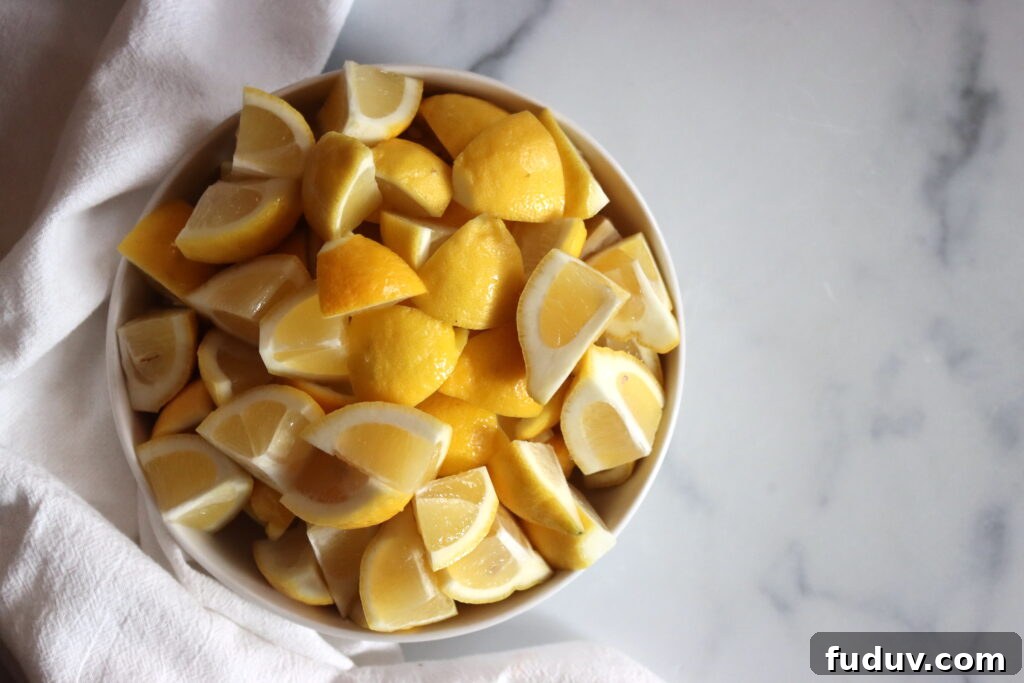
- 2 lbs lemons (preferably Lisbon), cut into eighths
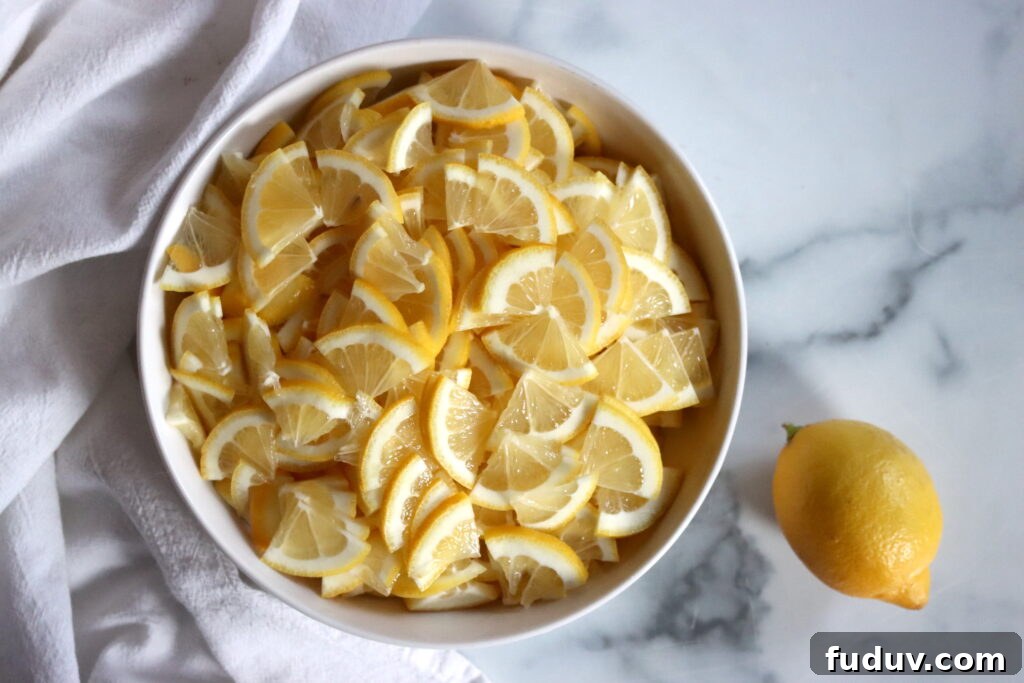
- 2 lbs lemons, cut into eighths and sliced thinly, seeds removed
- 4 lbs white cane sugar (about 8 cups)
- 1–2 extra lemons for 2 ounces (1/4 cup) freshly squeezed lemon juice
The lemons are handled in two batches: the coarsely cut fruit is cooked and strained to make the lemon “jelly” base, while the finely sliced fruit is cooked separately and becomes the preserved peel and flesh in the finished marmalade. Remove seeds from the sliced batch so the final product is not bitter.
This is a traditional marmalade recipe that relies on sugar both to set and to balance lemon tartness. If you prefer a lower-sugar version, add commercial pectin and reduce the sugar; that technique will require following the pectin manufacturer’s instructions for quantities and timing.
Making the Marmalade
The process is written over three days to develop flavor and soften the peel. You can shorten this to two days if you strain more quickly, but prepping the slices on day one will help keep the timeline manageable.
Day 1
Place the lemon eighths for the jelly portion into a nonreactive saucepan in a single layer. Add enough cold water for the fruit to float freely. Cover tightly and let rest at room temperature overnight.
Day 2
Bring the pan with the lemon eighths to a boil over high heat, then reduce to a lively simmer. Cook covered for 2–3 hours, until the lemons are very soft and the liquid is slightly syrupy. Press the fruit gently every 30 minutes and add water if needed to keep it submerged.
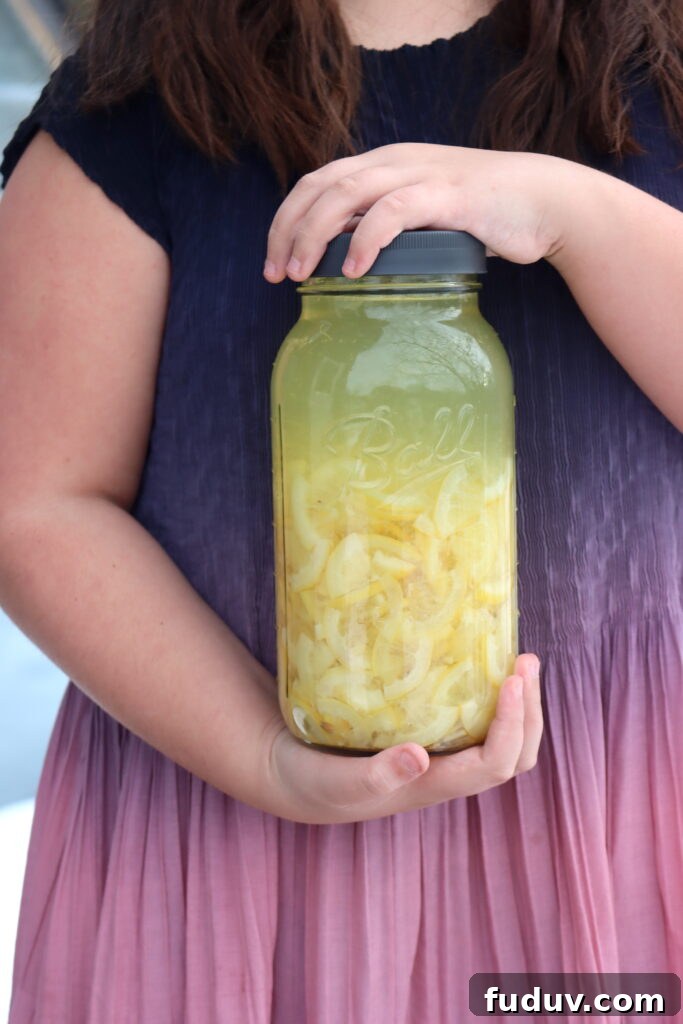
When the lemon pieces are soft, pour the hot fruit and liquid into a fine strainer set over a nonreactive saucepan. Cover and allow the juice to drain overnight at room temperature. This should yield roughly 4 cups of strained lemon liquid.
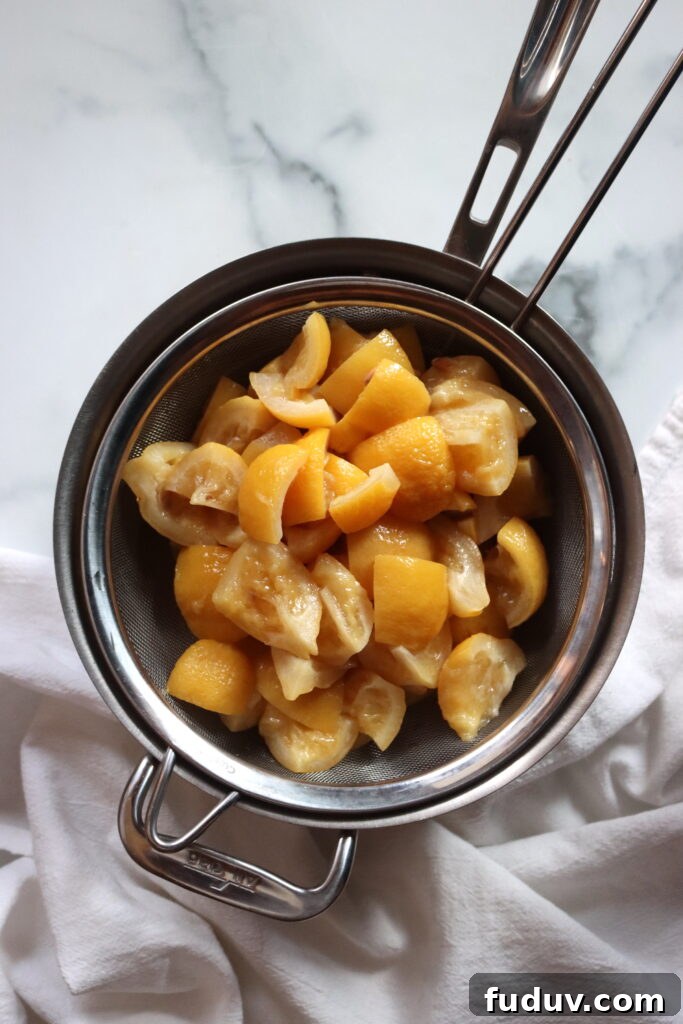
Meanwhile, prepare the sliced lemons for the marmalade body. Put the slices in a wide stainless-steel kettle, cover with cold water, bring to a boil, then simmer 5 minutes and drain. Return the slices to the kettle, add 1 inch of cold water, bring to a boil, then simmer 30–40 minutes until tender. Stir periodically and add water to keep the fruit covered. Remove from heat, cover tightly, and let rest overnight.
Day 3
Chill a saucer and several metal teaspoons in the freezer for testing the set later.
Strain the reserved lemon juice through a very fine sieve to remove any remaining solids. In a large bowl combine the sugar, strained cooked lemon juice, fresh lemon juice, and the prepared sliced lemons with their cooking liquid. Stir to dissolve the sugar, then transfer the mixture to an 11– or 12-quart preserving pan.
Bring the mixture to a rapid boil over high heat and cook until it reaches its setting point. Expect at least 25 minutes of vigorous boiling, though time varies. The mixture will move from gentle bubbling to foaming as moisture evaporates. Avoid stirring during the initial vigorous boil. Once the mixture foams, stir gently every few minutes with a heatproof spatula; as it nears completion, stir more frequently to prevent scorching.
Testing for Set
Use one of these reliable methods to check doneness:
Instant-read thermometer
Marmalade typically sets at about 220°F at sea level (roughly 8°F above water’s boiling point). Adjust for altitude—subtract about 1°F for every 500 feet above sea level.
Cold plate test
Drop a spoonful of marmalade onto a chilled plate. After a few seconds, run your finger through it—if it wrinkles and holds its shape, it’s set. If it flows back together, continue cooking and retest.
Cold spoon test
Spoon a small amount onto a frozen metal teaspoon and wait 1–2 minutes. Tilt the spoon: if the marmalade clings and no longer runs, it’s ready.
When the marmalade reaches set, turn off the heat without stirring. Skim any foam with a stainless-steel spoon and discard. Ladle the marmalade into hot, sterilized jars, leaving 1/4 inch headspace.
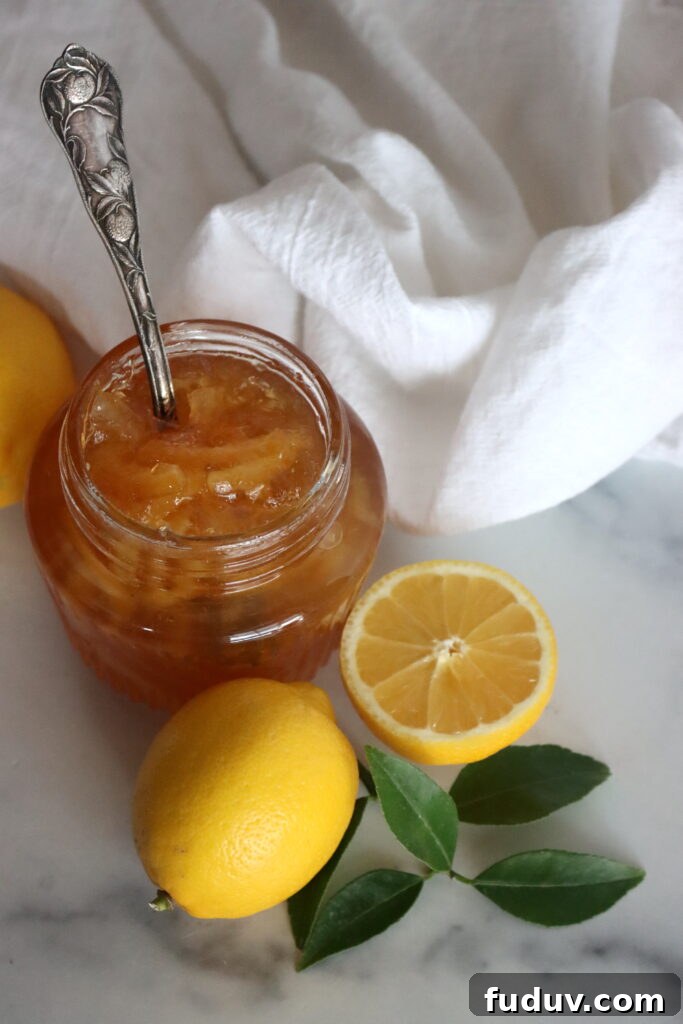
Canning Lemon Marmalade
Canning is optional. If you plan to water-bath can, prepare your canner and jars before starting the final cooking stage. Fill jars leaving 1/4 inch headspace, apply lids and bands, and process in a boiling water bath for 10 minutes (increase to 15 minutes if you live above 6,000 feet).
Remove jars and let cool undisturbed. After 12–24 hours check seals; refrigerate any jars that did not seal. Properly sealed jars will keep at peak quality in a cool pantry for 12–18 months.
Lemon Marmalade
Rate
Ingredients
- 2 lbs lemons, Preferably Lisbon, cut into eighths
- 2 lbs lemons, Cut into eighths and sliced thinly, seeds removed
- 4 lbs sugar, about 8 cups, white cane sugar
- 1/4 cup lemon juice, freshly squeezed, from 1 to 2 extra lemons
Instructions
Day 1:
-
Place lemon eighths in a nonreactive saucepan in a single layer and cover with cold water. Cover and let rest overnight at room temperature.
Day 2:
-
Bring the lemon eighths to a boil, then simmer covered 2–3 hours until very soft and slightly syrupy, pressing occasionally.
-
Strain hot fruit and liquid into a nonreactive pan, cover, and let drain overnight.
-
Boil the sliced lemons 5 minutes, drain, then simmer again in 1 inch of water for 30–40 minutes until tender. Cover and let rest overnight.
Day 3:
-
Chill a saucer and several metal teaspoons in the freezer for testing.
-
Strain the reserved lemon juice through a fine-mesh sieve. Combine sugar, strained juice, fresh lemon juice, and sliced lemons with their liquid in a preserving pan.
-
Boil rapidly until setting point is reached (minimum ~25 minutes). Test for set using the frozen spoon or cold plate method.
-
Skim foam, ladle into hot jars leaving 1/4-inch headspace, wipe rims, apply lids and bands, and process in a boiling water canner for 10 minutes (15 minutes above 6,000 ft).
-
Let jars cool 12–24 hours, check seals, and store sealed jars in a cool pantry.
Nutrition
Nutrition information is an approximation.
Marmalade Recipes
Once you’ve mastered this lemon marmalade, try other citrus varieties for different flavor profiles: Meyer lemon for a sweeter, delicate marmalade; grapefruit for bold, tangy results; or kumquat for a unique, tart preserve. You can also adapt this process for any citrus by adjusting cooking times and sugar to taste.