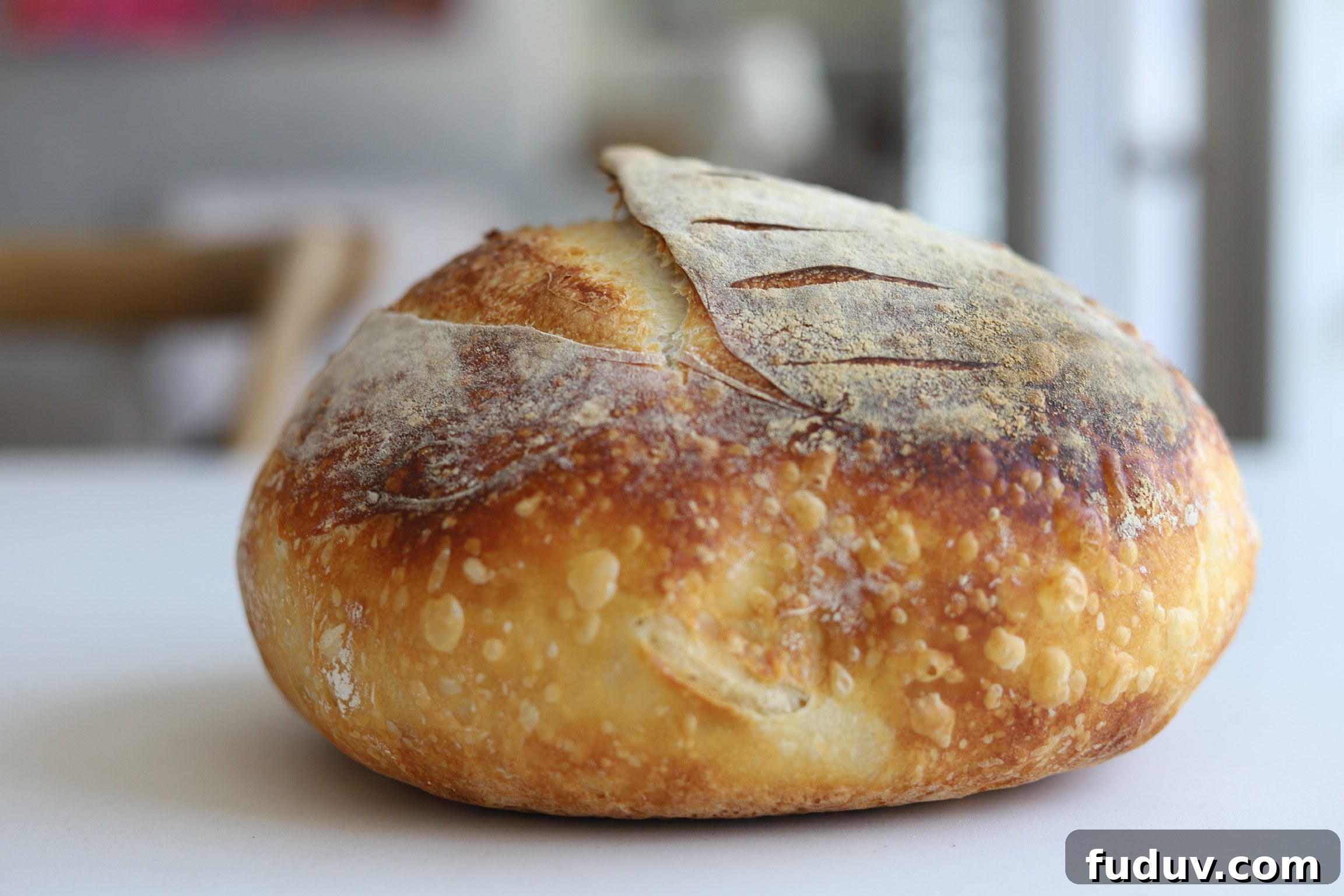
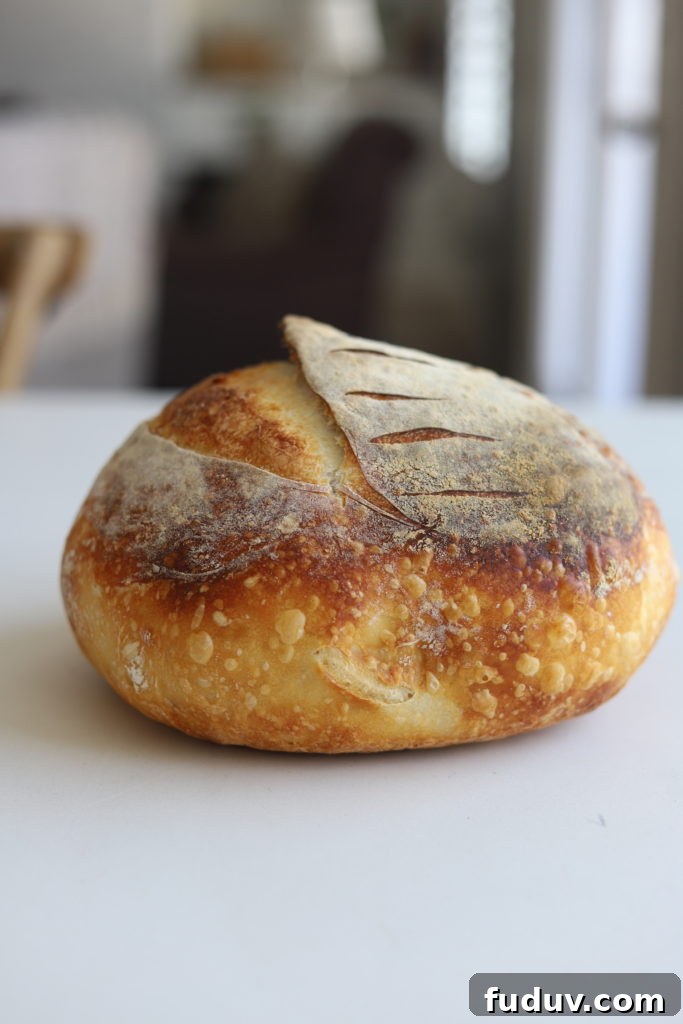
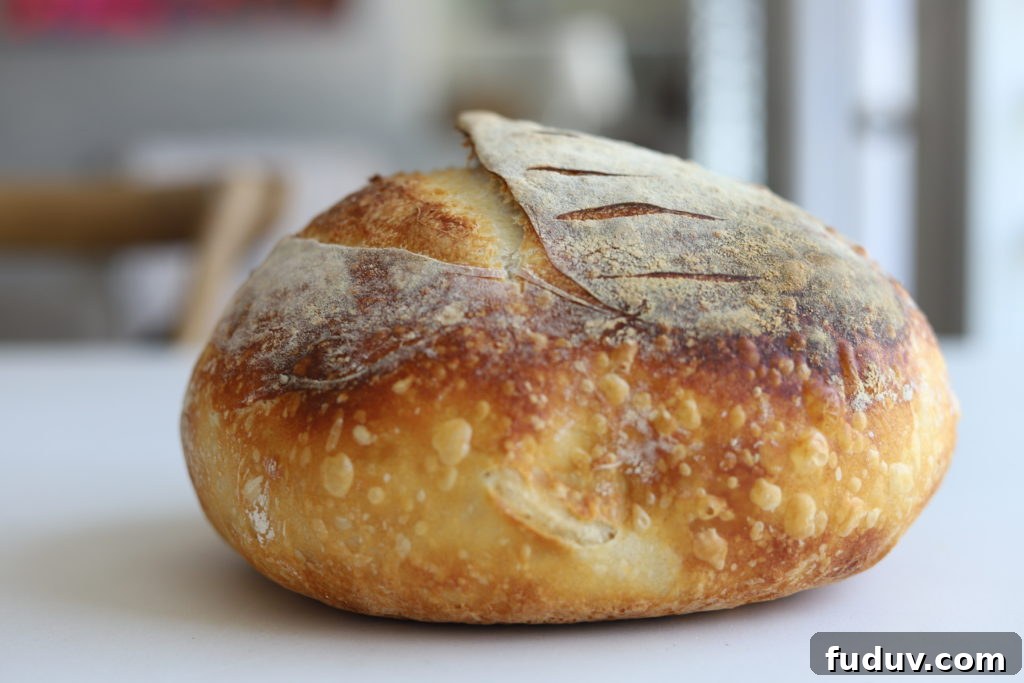
This iconic sourdough crusty artisan loaf is a thing of beauty. Crusty on the outside, soft and delicate crumb on the inside. Only four humble ingredients combine to make this classic masterpiece.
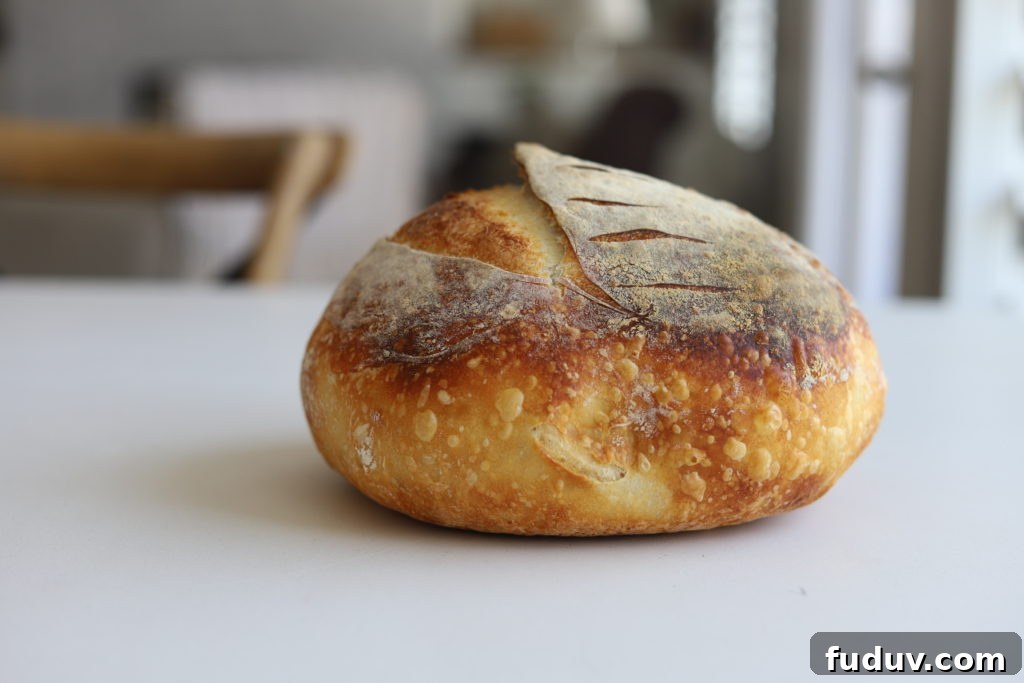
YOU CAN MAKE THIS BREAD!
This particular sourdough is the most technical recipe I offer. It’s not “fast and easy” — the full process can take up to 36 hours and requires a few specific tools. But the result is well worth it: a stunning artisan loaf created from just four ingredients. Even if you’re a beginner, you can make this bread. My instructions are clear and step-by-step. Follow them and you’ll end up with one of the most glorious loaves you’ve ever seen. The first time may feel intense, but with practice it becomes routine and you’ll be making wonderful loaves for friends and family.
LET’S CHAT SOURDOUGH…
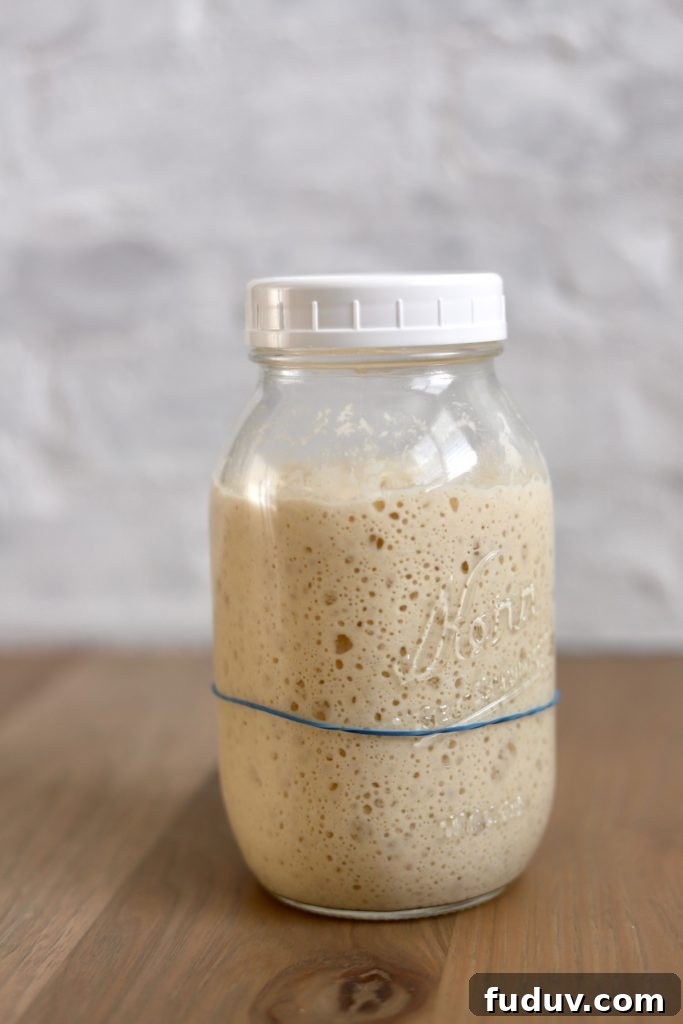
Some Sourdough Lingo
NATURAL YEAST = SOURDOUGH = WILD YEAST. These terms are interchangeable.
ACTIVE STARTER: Also called a levain. An active starter has been recently fed with flour and water, is bubbly, and has roughly doubled in volume. Active starter is needed to leaven bread. If it isn’t active and strong, your dough will not rise. A larger feed will take longer to become active; a smaller feed will activate faster.
DISCARD: Runny starter in an inactive state. You can feed it to reactivate or use it in recipes that accept discard.
HOOCH: The liquid that sometimes forms on top of hungry starter. It’s a sign the starter needs feeding. You can pour it off for a milder flavor or stir it back in if you prefer a tangier result.
FEED: Giving your starter equal weights of flour and water until it resembles thick pancake batter.
POWERFEED: A larger, more nourishing feed used to strengthen a sluggish starter. Ratios like 1:4:4 or 1:8:8 (starter:water:flour) repeated every 12–24 hours for several days will boost activity. Extra discard from powerfeeds can be used in discard recipes such as pancakes, German pancakes, or muffins.
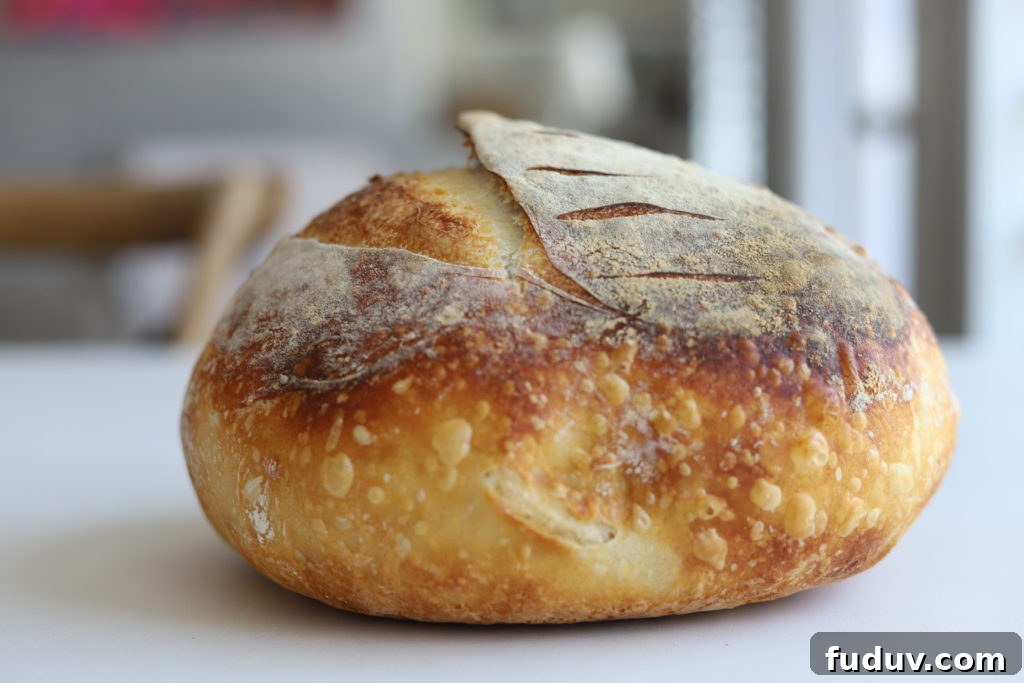
Special notes
- You can double this recipe. Do every step through bulk fermentation, then divide the dough and finish shaping and proofing in separate bannetons. You only need one Dutch oven—bake loaves sequentially.
- If loaves are dense or don’t rise, your starter likely needs strengthening through more consistent feeds or a series of powerfeeds.
- This dough is a great base for mix-ins: nuts, seeds, cheeses, herbs, garlic, or chilies. Add them during the lamination step just before folding and shaping.
Helpful supplies and tools
- Six-quart Dutch oven — ideal for this method. If you don’t have an enameled Dutch oven, an oven-proof pot with a lid will work.
- Kitchen scale — ingredients are given by weight, so a scale yields consistent results.
- Banneton basket — useful for shaping and supporting the dough during cold proofing. An 8.5–9″ banneton works well for this loaf.
- Parchment paper — needed to transfer the dough into the Dutch oven.
- Dough shower caps or lids — helpful to keep the dough airtight during proofing.
- Bread storage options — avoid plastic for crusty loaves; use paper, a towel, or a dedicated crusty-bread bag to preserve the crust.
- Lame or sharp blade — for scoring the loaf. You can also use a very sharp knife or razor.
- Large bowl with lid — useful for mixing and performing stretch-and-folds.
- Dough scraper — helpful for handling dough and cleaning your surface, though a knife can substitute.
- Sharp bread knife — for slicing a very crusty loaf cleanly.
What is a stretch and fold?
Stretch-and-fold replaces traditional kneading for wetter sourdough doughs. It develops gluten, builds structure, and encourages fermentation by redistributing food for the yeast. After mixing, rest the dough 30 minutes, then perform a series of stretch-and-folds: reach under the dough at one side, stretch it up and fold it over to the opposite side, rotate the bowl 90 degrees, and repeat for all four sides. Turn the dough ball over, cover, and repeat every 20–30 minutes for four cycles (about two hours total). The dough will become stronger and more elastic with each set.
What is lamination?
Lamination strengthens the dough before shaping. Gently flatten the dough on a clean surface and progressively stretch the edges outward until the dough forms a thin rectangle or square. Work slowly and repair any small holes by pressing the dough back together. If you’re adding mix-ins, spread them over the dough right after lamination, then fold and shape.
Other ways to use sourdough
Once you’re comfortable with sourdough, it’s incredibly versatile. Explore recipes for sandwich loaves, bagels, waffles, pancakes, and more. Experiment and make sourdough a staple in your kitchen.




More Sourdough Recipes>>
For more details on maintaining and using sourdough, see my Natural Yeast Sourdough Sandwich Bread post.
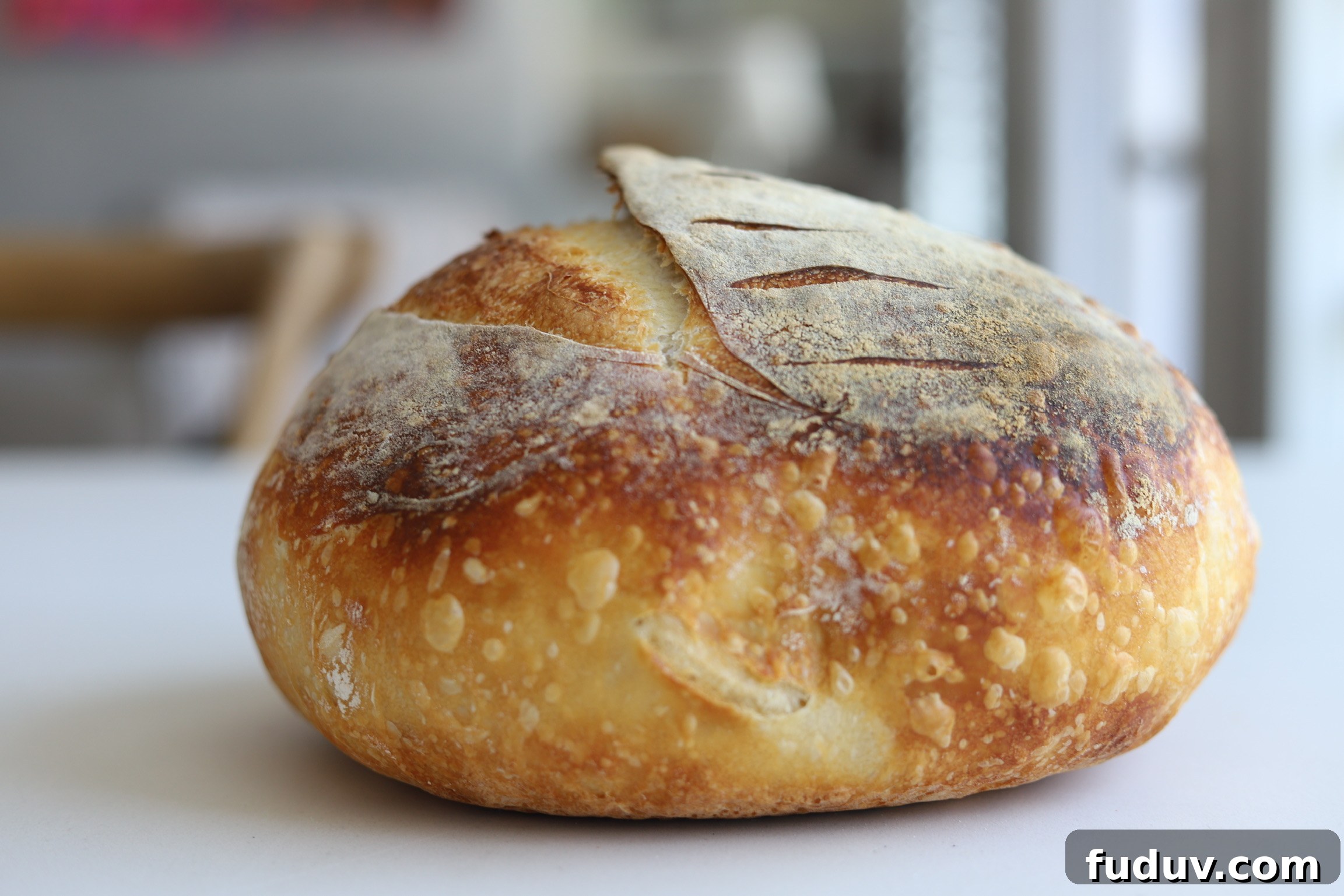
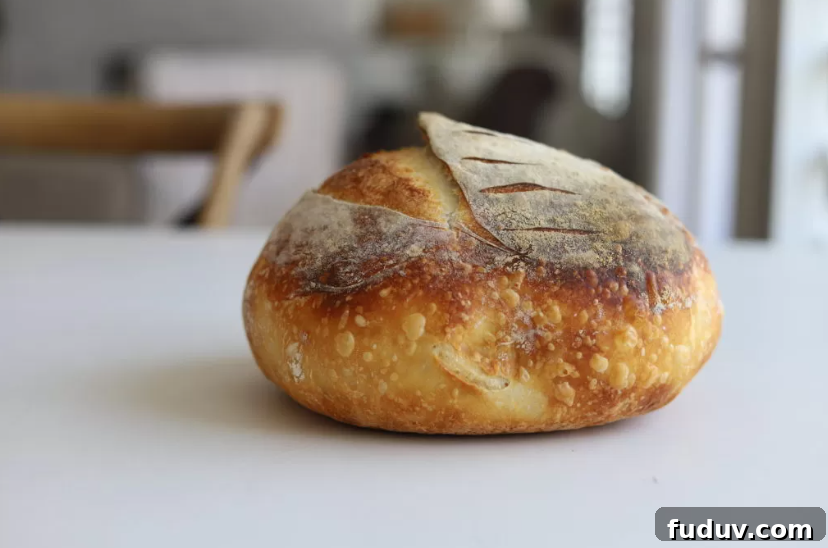
Crusty Dutch Oven Sourdough Bread
Ingredients
- 125 grams active starter
- 390 grams water
- 500 grams high-quality bread flour
- 12 grams fine sea salt
Instructions
- Activate your starter. Feed and wait for it to double and become bubbly. You’ll need 125 grams active starter.
- Combine water and starter. Mix 390 g water with 125 g active starter until milky.
- Add flour and salt; rest 30 minutes. Stir in 500 g flour and 12 g salt until a shaggy mass forms. Cover and rest 30 minutes.
- Stretch and fold. Perform the first stretch-and-fold, then repeat every 20–30 minutes for a total of four sets over about two hours.
- Bulk ferment. Cover and let dough rise at room temperature until volume increases ~50% (3–6 hours depending on temperature and starter strength).
- Lamination. On a clean surface, gently stretch the dough into a thin rectangle, avoiding tears. Add mix-ins now if using.
- Preshape. Fold the dough in thirds, then roll into a loose ball.
- Rest. Cover and rest the preshaped dough 30 minutes at room temperature.
- Shape. Tighten the dough into a smooth, tensioned ball using minimal flour.
- Transfer to banneton. Dust the dough top with flour, flip, and place seam-side up into a floured banneton. Cover to prevent drying.
- Cold proof. Refrigerate for 8–12 hours (up to 24 hours is fine) for better flavor and oven spring.
- Preheat. Place the Dutch oven in the oven with a pizza stone or cookie sheet underneath and preheat to 450°F. Hold at temperature 30 minutes.
- Transfer and score. Turn the dough onto parchment with the floured side up. Score confidently to control oven spring.
- Bake. Place dough (on parchment) into the hot Dutch oven, cover, and bake 30 minutes at 450°F. Remove lid and bake another 10–15 minutes until golden.
- Let cool. Cool on a wire rack at least one hour before slicing.
- Enjoy! Slice and savor with butter, olive oil, or your favorite toppings.
Notes
Special notes
- Double the recipe through bulk fermentation, then divide and finish in two bannetons. Bake loaves one after the other if you have a single Dutch oven.
- If loaves are dense, strengthen your starter with consistent feeds or powerfeeds.
- Add mix-ins during lamination before folding and shaping.
Stretch and fold
After mixing and resting 30 minutes, perform stretch-and-folds: pull dough from one side up and fold it over, rotate the bowl, and repeat around all sides. Turn dough over, cover, and repeat every 20–30 minutes for four cycles.
Lamination
Gently flatten and stretch the dough into a thin rectangle or square. Work slowly and patch any small holes. Add any additional ingredients while the dough is flat.
Starter terminology
NATURAL YEAST = SOURDOUGH = WILD YEAST. Active starter (levain) has been fed and is bubbly. Discard is runny, inactive starter. Hooch is the liquid that forms on hungry starter. Feed starter with equal weights of flour and water. Powerfeeds (ratios like 1:4:4 or 1:8:8) can revive a weak starter when repeated over a few days.