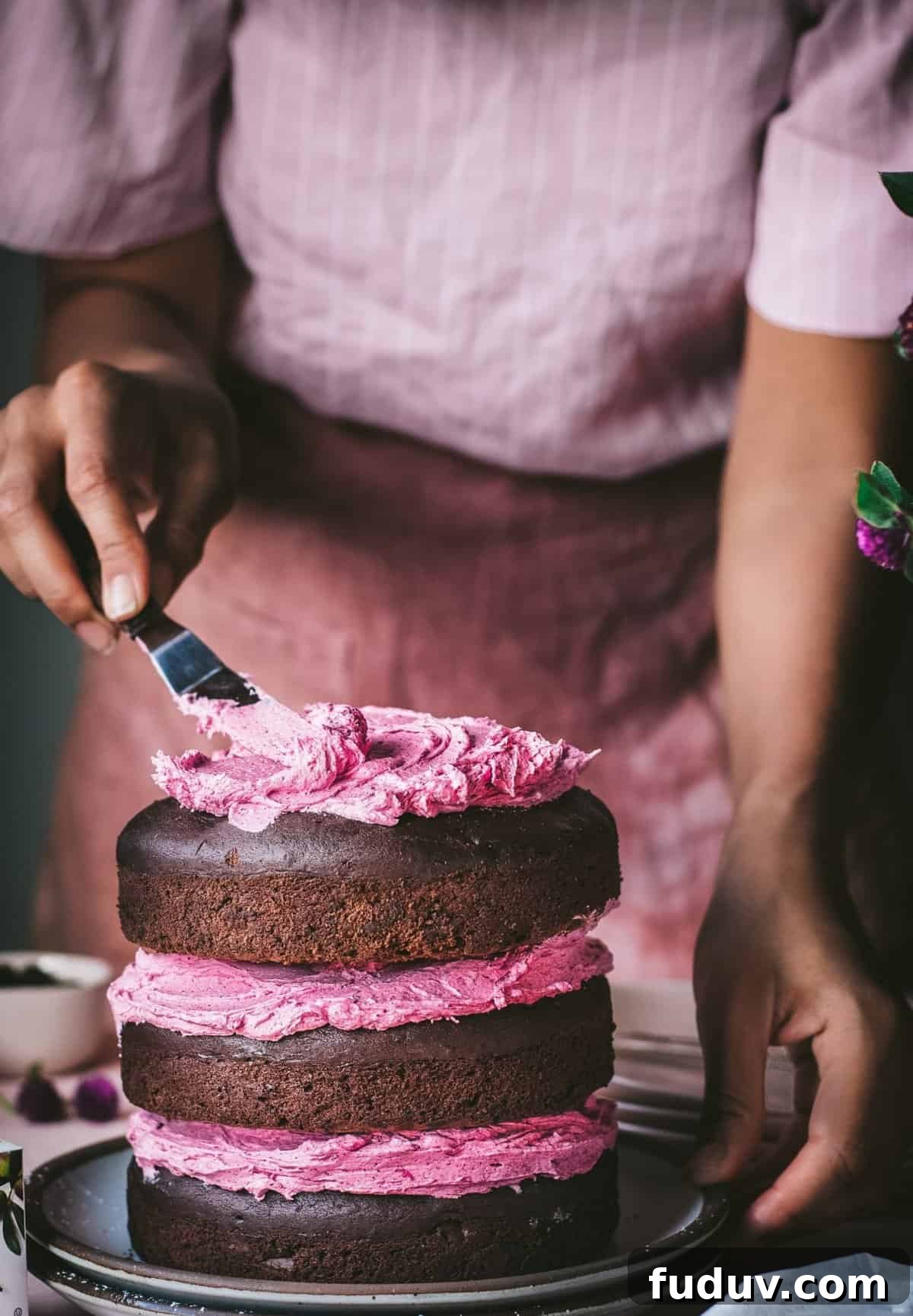
This Vegan Chocolate Layer Cake is my everything.
I enjoy making healthier takes on comfort food, but sometimes you want a full-on decadent dessert. I used to reach for brownies, cookies, pies, or tarts more than cake—because many cakes can be dry, dense, or lacking in texture and flavor. After years of testing, I finally learned how to make a truly great cake: tender and moist with satisfying texture and rich chocolate flavor.
Tips for Baking Vegan Chocolate Layer Cake
Flour
The type of flour you use affects crumb and texture. This recipe isn’t gluten-free—cakes made with gluten-containing flour generally yield a lighter crumb than most gluten-free flours. If you can tolerate gluten, use regular wheat flour for a lighter cake.
For the lightest, most tender result, use cake flour instead of all-purpose. I’ve tested both and both are delicious, but cake flour produces a softer, finer crumb. If you want the lightest texture possible, choose cake flour.
Leaveners
Vegan baking commonly relies on baking soda, baking powder, and an acid like apple cider vinegar. Apple cider vinegar mixed with plant-based milk creates a quick “buttermilk” that helps activate baking soda. Baking soda needs an acid to react, and the tang from the milk–vinegar mix helps the batter rise. The alkaline baking soda also neutralizes any overly sour notes from the buttermilk, so the cake won’t taste tangy.
If you want a subtle tang in the finished product—such as in a lemon cake—you can include baking powder as well. Baking powder contains its own mild acid, which preserves some tang that baking soda alone would neutralize.
Chocolate
There are simple tricks to intensify chocolate flavor. Many recipes call for adding boiling water to the batter because hot liquid helps “bloom” cocoa powder—dissolving it and releasing deeper chocolate flavor while preventing clumps.
Adding coffee (or espresso powder dissolved in boiling water) amplifies chocolate’s richness without imparting a strong coffee taste. I use espresso powder plus boiling water in this recipe; it deepens the chocolate notes.
I also like folding in chopped dark chocolate or vegan chocolate chips near the end. Some pieces melt into pockets of fudgy richness, while larger chunks stay intact and add pleasant texture and chocolate bites throughout the cake.
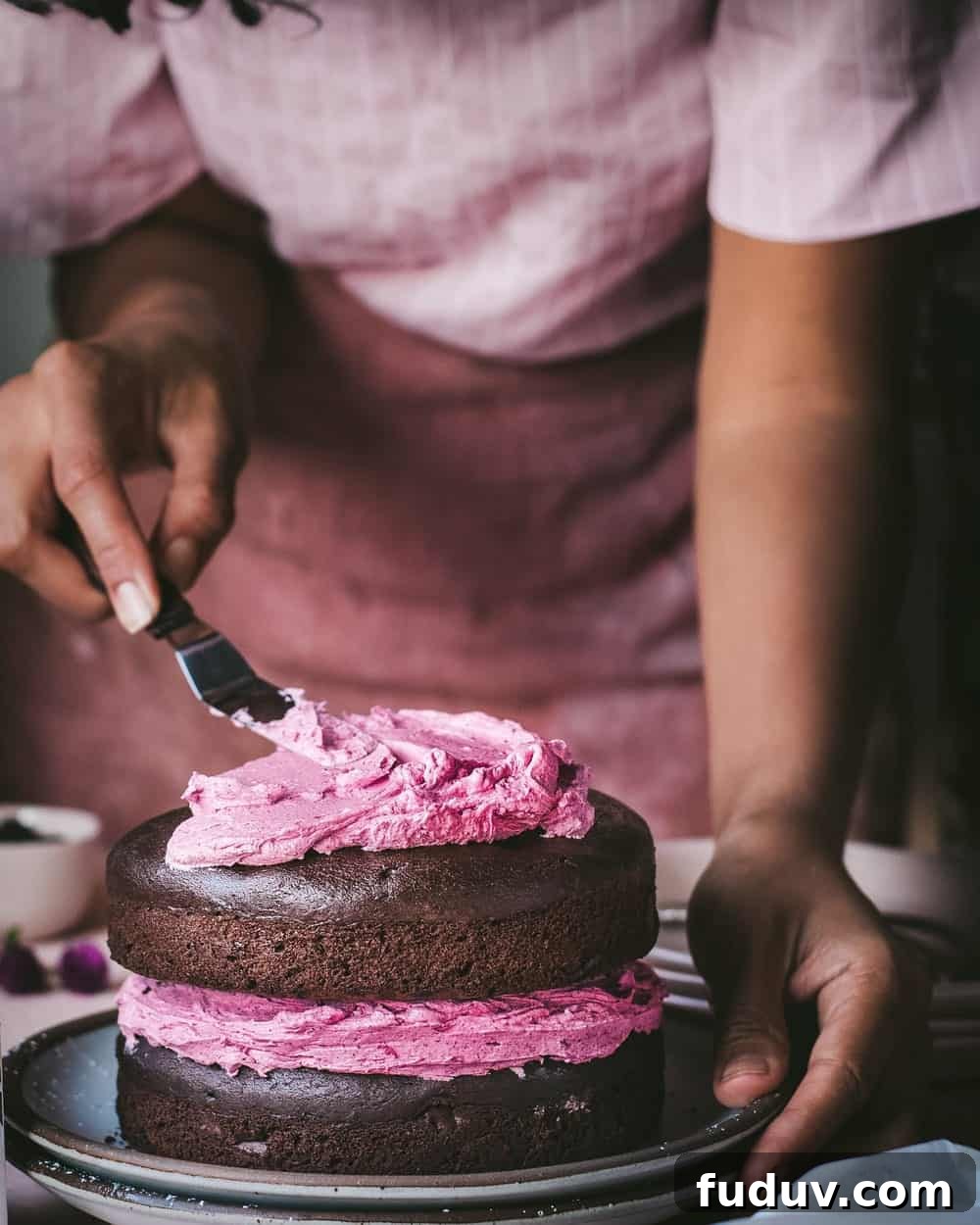
For the frosting, this recipe uses a straightforward vegan buttercream—just be sure the vegan butter is softened to room temperature so it whips up light and smooth.
The frosting gets a fruity-tart lift from hibiscus powder. If you don’t have hibiscus powder, crushed freeze-dried raspberries work as an alternative. The sweet-tart hibiscus balances the richness of the buttercream and adds a pretty color.
If you make this cake, tag me with your photos of the final result!
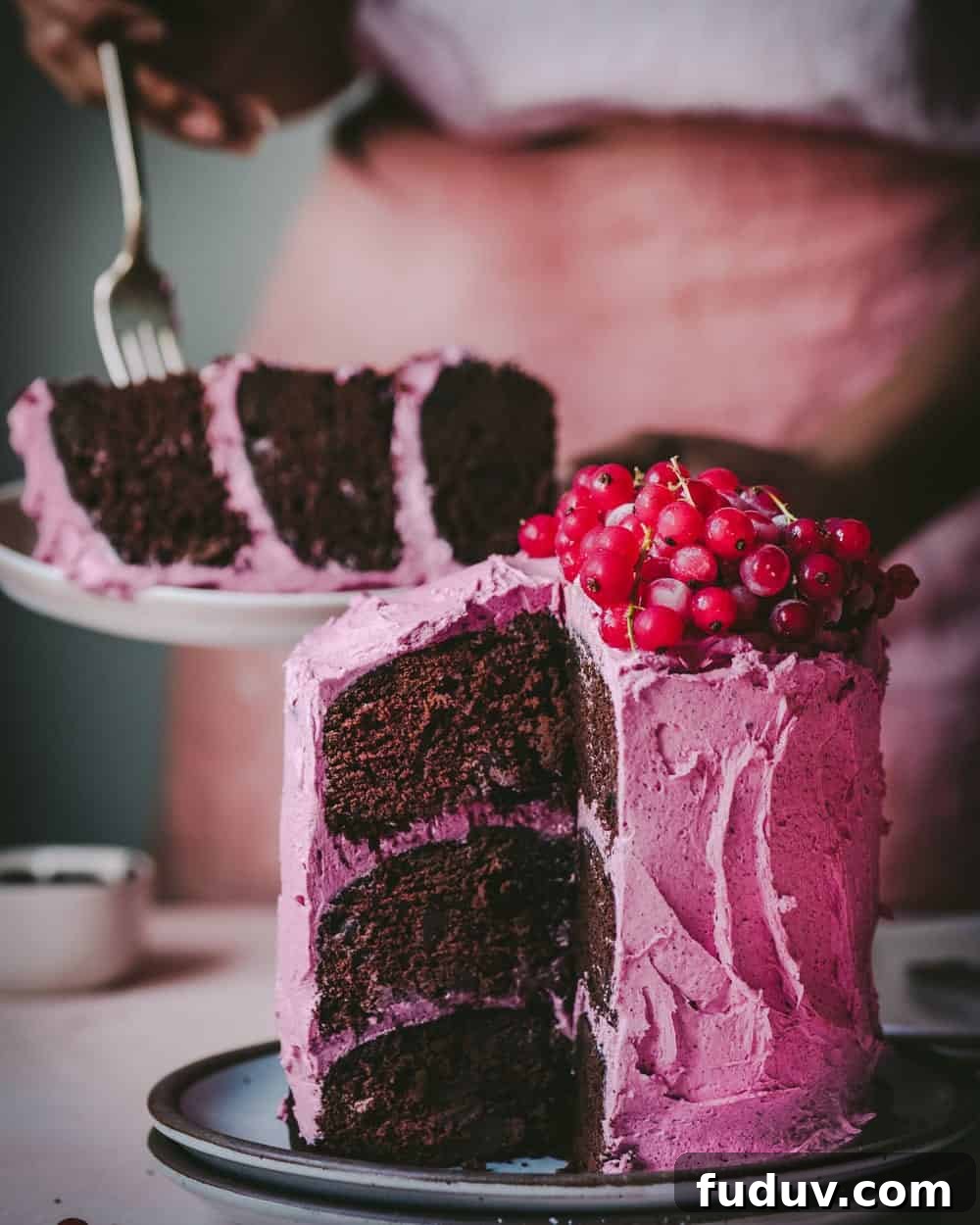
Vegan Chocolate Layer Cake with Hibiscus Frosting
Made it? Click the stars to leave a review!
Review
Ingredients
VEGAN CHOCOLATE LAYER CAKE
- 1 1/2 cups (~ 375 mL) unsweetened plant-based milk, at room temperature
- 1 tablespoon apple cider vinegar
- 2 3/4 cups (~ 330g) all-purpose flour or cake flour
- 1 1/2 teaspoons baking soda
- 1 teaspoon fine sea salt
- 1 cup (~ 125g) unsweetened cocoa powder
- 1/2 cup (~ 112g) vegan butter, softened
- 3/4 cup + 2 tablespoons (~168g) organic cane sugar
- 1/2 cup loosely packed (~96g) organic brown sugar
- 2 teaspoons pure vanilla extract
- 1 teaspoon espresso powder (or instant coffee powder)
- 1/4 cup (60 mL) boiling water
- 6 ounces (~170g) 65–80% dark chocolate chunks or vegan chocolate chips
HIBISCUS BUTTERCREAM FROSTING
- 1/2 cup (~112g) vegan butter, softened
- 2 cups (~240g) organic powdered sugar, sifted
- 1/2 teaspoon pure vanilla extract
- Pinch of sea salt
- 2 teaspoons hibiscus powder (more to taste or for color)
- 1–2 tablespoons unsweetened plant-based milk
Instructions
-
Preheat the oven to 350°F (175°C). Prepare three 6-inch round pans with parchment rounds and lightly grease the sides, or use two 8-inch pans instead.
-
Combine the plant-based milk and apple cider vinegar, stir, and set aside to curdle into a quick vegan buttermilk.
-
Whisk together the flour, cocoa powder, baking soda, and salt in a medium bowl. Sifting helps remove lumps.
-
In a large bowl, beat the softened vegan butter, cane sugar, and brown sugar on medium speed until light and fluffy, about 3 minutes. Add vanilla and espresso powder and mix to combine.
-
On low speed, add the milk–vinegar mixture until combined. Gradually add half the dry ingredients and mix on low until incorporated, scraping the bowl as needed. Finish mixing the remaining dry ingredients by hand with a wooden spoon; the batter will be thick.
-
Carefully stir in the boiling water until combined. Fold in the dark chocolate chunks or chips.
-
Divide the batter evenly among the prepared pans. Using a scale helps ensure equal layers.
-
Bake for about 25 minutes, until the centers are set and the cakes begin to pull away from the sides. A toothpick should come out with a few moist crumbs. If using two 8-inch pans, bake 30–35 minutes.
-
Cool the cakes in the pans for 10 minutes, then transfer to a wire rack to cool completely before inverting.
-
To make the hibiscus buttercream, beat softened vegan butter on medium speed until fluffy, about 1 minute. Gradually add sifted powdered sugar in 1/2 cup increments on low speed until smooth and fluffy. Add vanilla, salt, and hibiscus powder and beat until combined. If too thick, add plant-based milk 1 tablespoon at a time until you reach the desired consistency.
-
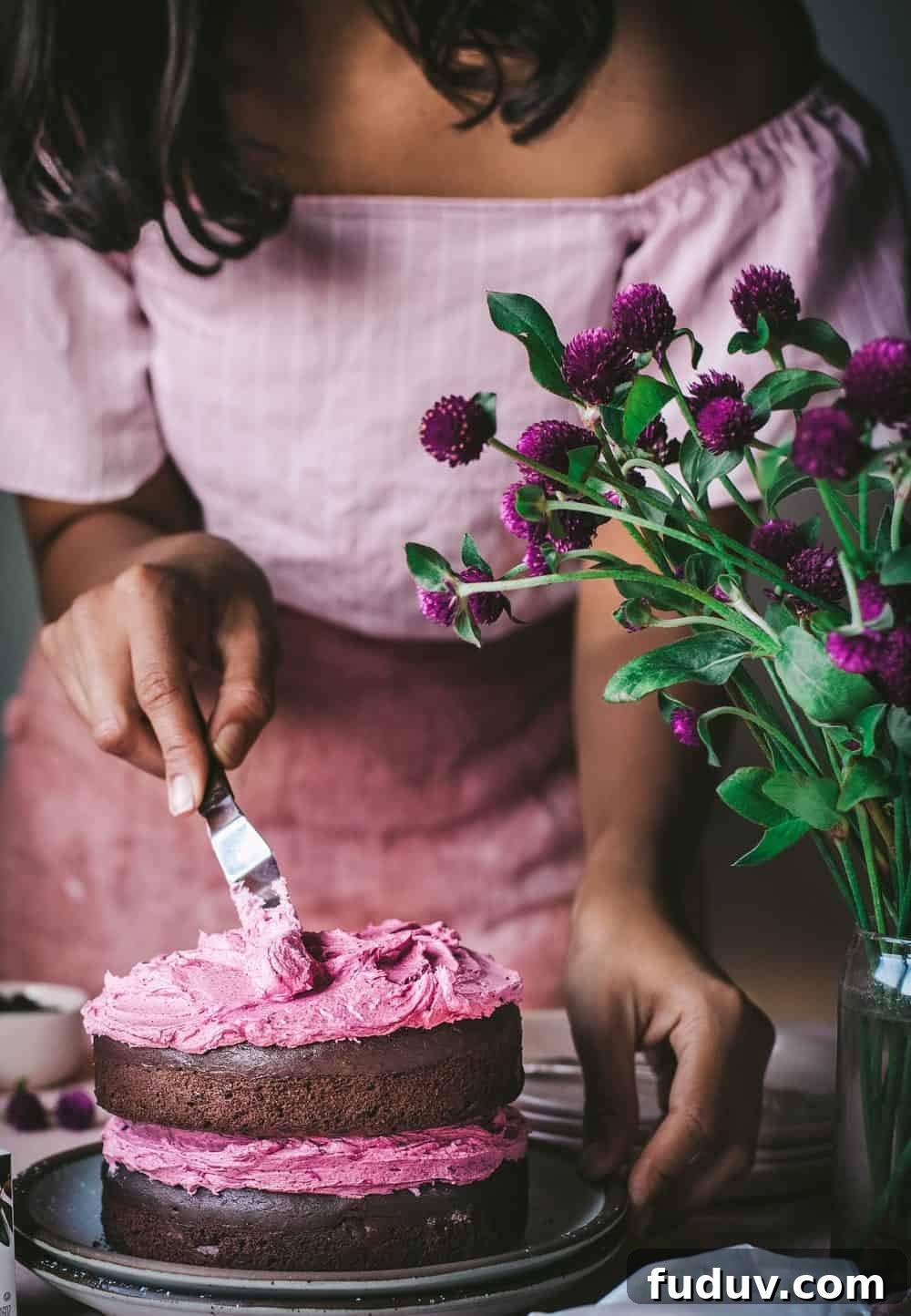
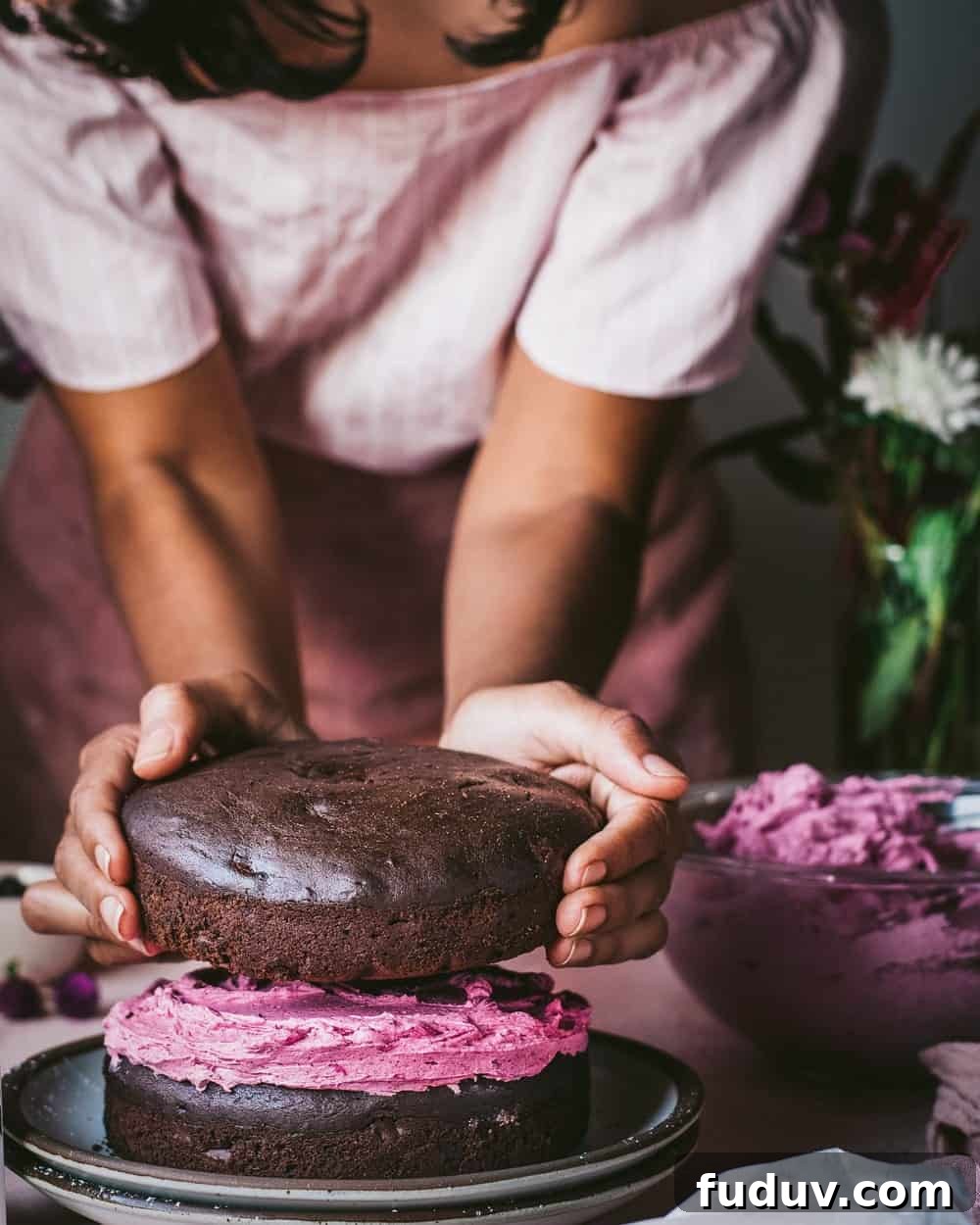
Assemble the cake: place one layer on a platter, spread 1/4 of the frosting, then top with the next layer and repeat. Use the remaining frosting to cover the sides and finish the cake.
Nutrition
Nutrition information is automatically calculated and should be used as an approximation.
 Love this? Leave a rating below!