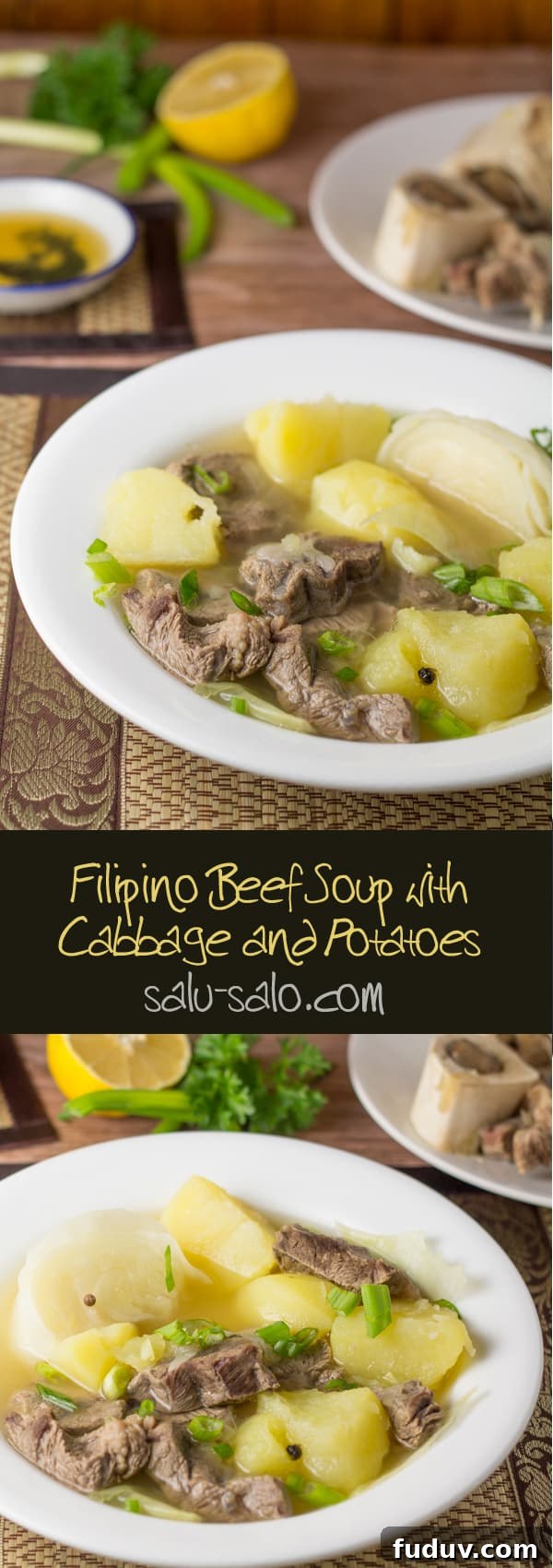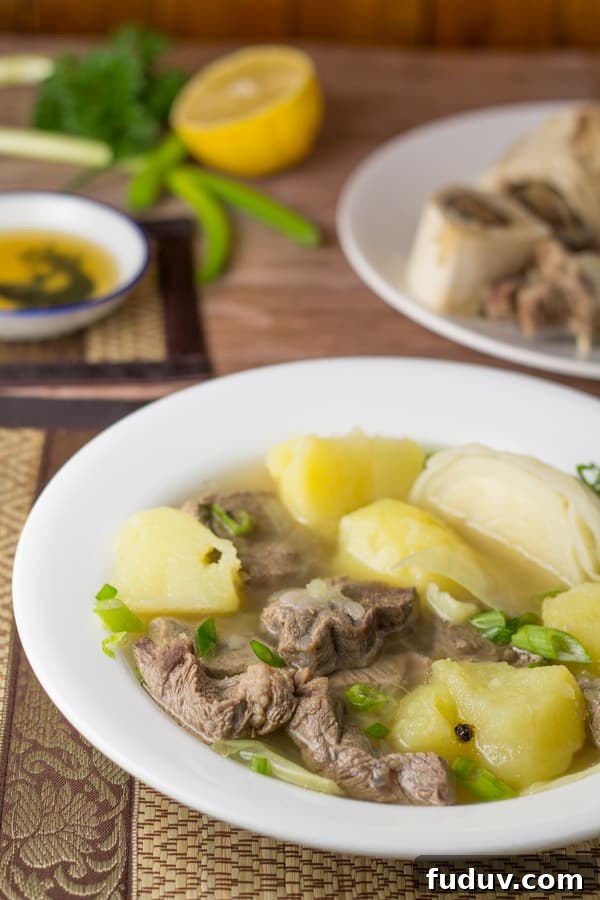
 My family and I have been enjoying this beef soup with cabbage and potatoes frequently during the colder months. Nilagang Baka is my go-to when I want a simple, comforting, and satisfying meal. This straightforward soup is ideal for home cooks of any skill level and was one of the first dishes I learned as a teenager. The beef simmers slowly with onions and whole peppercorns for at least two hours before the vegetables are added. I use bone-in beef shank for extra depth of flavor in the broth, but short ribs or brisket work well too. The finished dish is a complete meal—tender meat, hearty potatoes, and vibrant cabbage. Enjoy!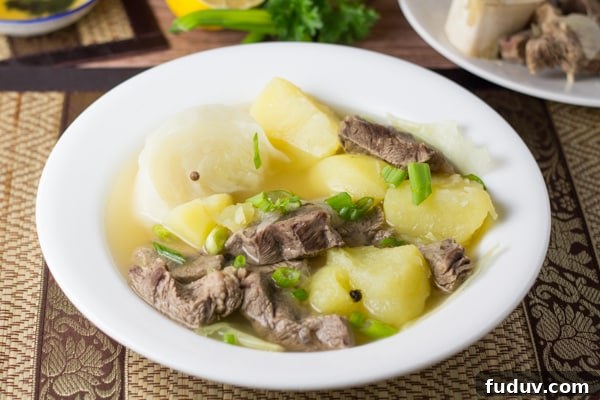
Cooking Tips for Nilagang Baka
For the best flavor, simmer the beef slowly to break down connective tissue and produce a tender result. During the first hour, skim any foam or impurities that rise to the surface to keep the broth clear. If you want a richer savory profile, add a small splash of fish sauce or soy sauce near the end of cooking to boost umami without masking the natural flavors. Season gradually—start with a little salt, taste as you go, and let the beef and vegetables shine.
Serving Suggestions and Pairings
Nilagang Baka is satisfying on its own, but it pairs especially well with steamed rice to soak up the broth. A squeeze of lime or lemon brightens the bowl. For texture contrast, some enjoy banana chips or fried plantain on the side. A cold glass of iced tea or lemonade complements the warm soup. Offer chili paste or hot sauce for anyone who prefers more heat.
Frequently Asked Questions
What can I use as a substitute for beef shank?
If beef shank is not available, beef short ribs or brisket are good substitutes; both develop great flavor when simmered slowly.
How should I store leftover Nilagang Baka?
Keep leftovers in an airtight container in the refrigerator for up to three days. For longer storage, freeze portions for up to three months and thaw in the fridge before reheating.
Can I make Nilagang Baka ahead of time?
Yes. Nilagang Baka often tastes better the next day after the flavors meld. Reheat gently on the stove over low heat to avoid overcooking the beef and vegetables.
What are some good sides to serve with Nilagang Baka?
Steamed white rice or warm crusty bread are classic accompaniments. A light salad or pickled vegetables can add a fresh contrast.
What are common mistakes to avoid when making Nilagang Baka?
Avoid rushing the simmering process. Slow cooking yields the best texture and a richer broth. Also, don’t over-salt early on—adjust seasoning near the end.
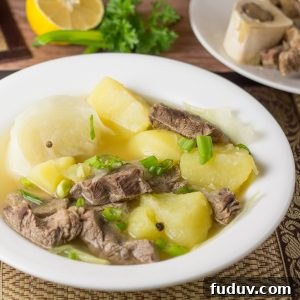
Nilagang Baka (Beef Soup with Cabbage and Potatoes)
 Liza Agbanlog
Pin Recipe
Ingredients
- 2 lbs bone-in beef shank, beef short ribs or beef brisket, cut into serving pieces
- 2 medium onions, peeled and halved
- 1 tsp kosher salt
- 1 tsp whole peppercorns
- 5 medium size yellow potatoes, peeled and quartered
- 1 medium green cabbage, quartered and cored
- 4 pieces ripe saba or plantain banana, peeled and cut in half (optional)
- Fish sauce or salt to taste
Instructions
-
Place the beef in a large pot and add enough water to cover. Bring to a boil over high heat and skim off any foam that rises to the surface.
-
Add the halved onions, salt, and whole peppercorns. Reduce heat to medium, cover, and simmer for about 2 hours or until the meat is fork-tender. Add more water if needed.
-
Increase heat to medium-high. Add the potatoes and cabbage and cook for about 10 minutes. If using plantain banana, add it and cook another 5 minutes or until the potatoes are tender.
-
Adjust seasoning with fish sauce or salt to taste. Serve hot with steamed rice and a small dish of fish sauce with lemon or calamansi on the side.
Nutrition
Calories from Fat 126