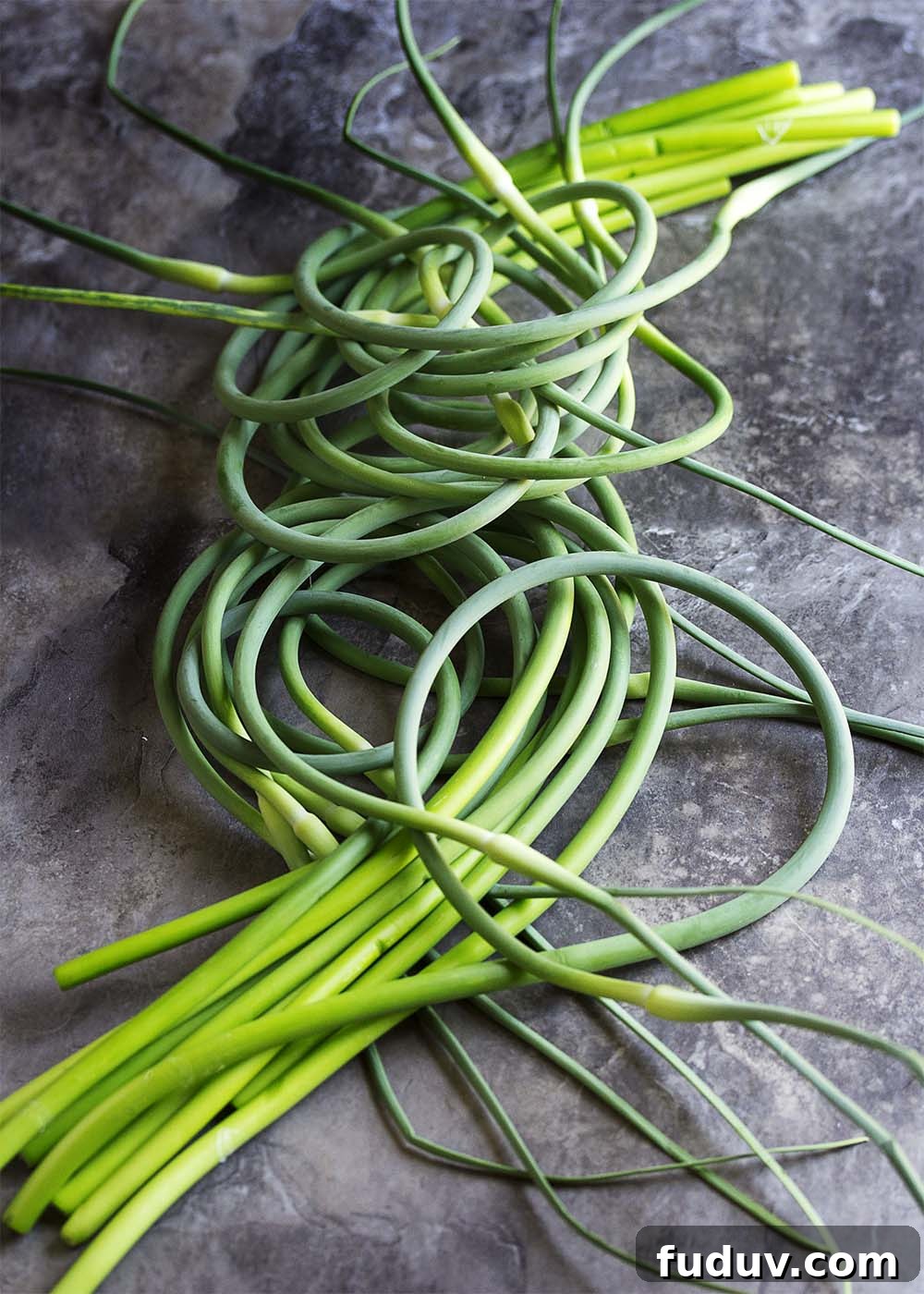
Did you find garlic scapes in your CSA box or at the farmers’ market and wonder what to do with them? This guide explains what garlic scapes are, how they taste, how to prepare them, and a variety of ways to use them in your cooking.
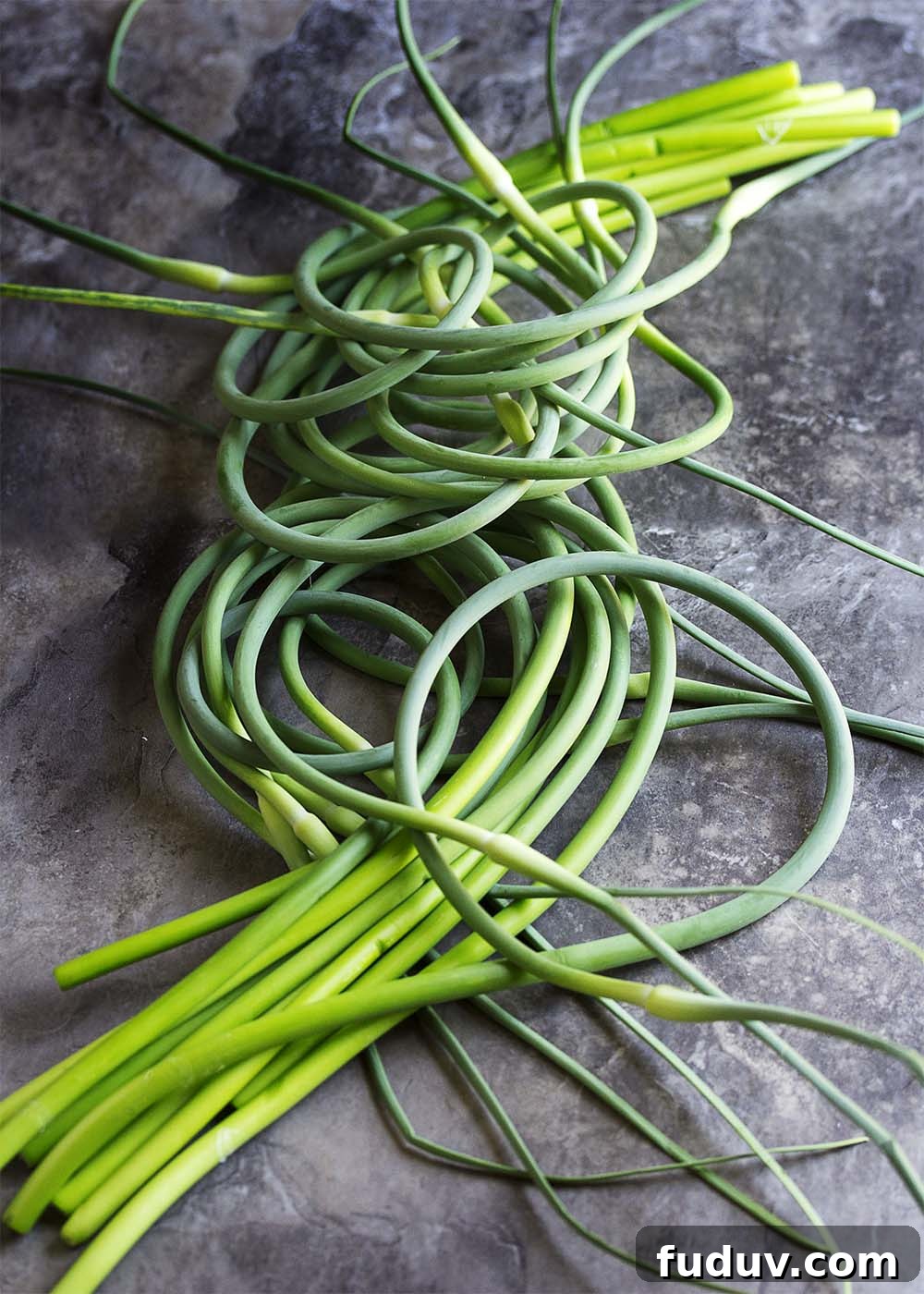
Garlic scapes quickly became a favorite specialty vegetable of mine the first time I spotted them at a market. They’re versatile: use them for pesto, risotto, dips, sautés, or grill them whole. If you enjoy garlic, garlic scapes are an easy way to add bright, garlicky flavor to many dishes.
What are Garlic Scapes?
In late spring and early summer you’ll see curly green shoots at farms and markets. Those shoots are garlic scapes—the flowering stalks produced by hardneck garlic plants. Unlike softneck garlic, which lacks a flowering stalk and produces more cloves per bulb, hardneck garlic sends up a scape that should be snipped off so the plant focuses energy on the bulb. That snipped scape is what you buy and eat.
Garlic scapes have a texture similar to asparagus stems. They are tender enough to eat raw yet sturdy enough to stand up to grilling, roasting, or sautéing.
Where do Garlic Scapes come from?
Garlic originates from Central Asia and has been cultivated for thousands of years. Hardneck garlic—the variety that produces scapes—does best in cooler climates and is common in regions with noticeable seasonal changes. In many areas, scapes appear in markets in mid to late spring. If your local market or CSA doesn’t list them, ask nearby farms or farmers’ market vendors; they’re often available for a limited season.
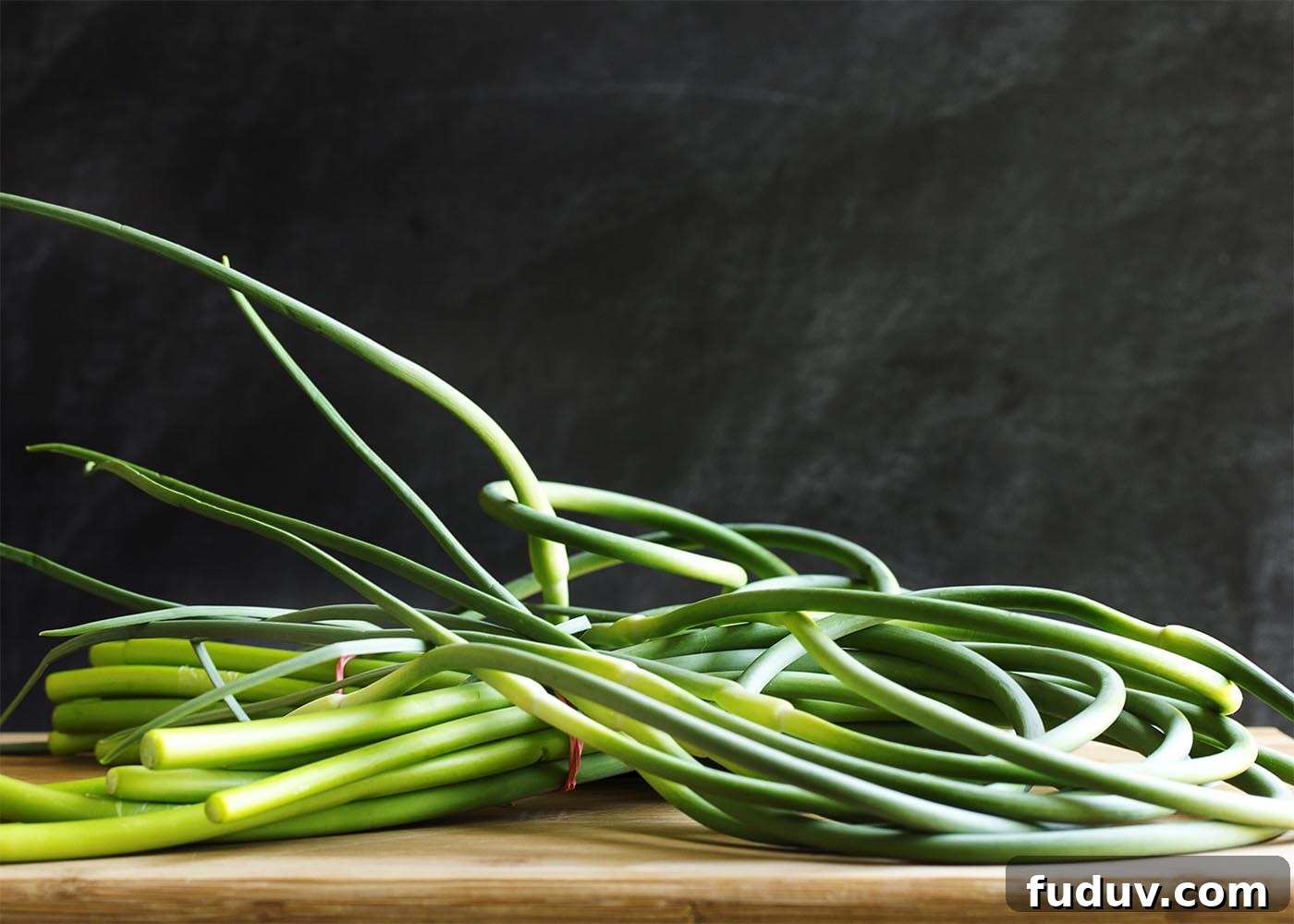
What do Garlic Scapes taste like?
They taste like garlic, but milder and more delicate, with a fresh, grassy note. Because their flavor is less intense than garlic cloves, you can use a generous amount without overwhelming a dish. Garlic scapes are best eaten raw or cooked briefly—overcooking softens and diminishes their flavor. I often enjoy them raw, blanched, quickly sautéed, or grilled.
Nutritional Benefits
Garlic scapes are low in fat and calories while providing minerals such as manganese, calcium, phosphorus, and selenium, plus vitamins B6 and C. Like other members of the Allium family, they contain sulfur-rich compounds and antioxidants associated with health benefits. Consuming raw scapes preserves many of these compounds. Potential benefits linked to garlic compounds include support for cardiovascular health, immune function, reduced inflammation, and some anticancer effects—many of which have stronger evidence for raw Allium consumption.
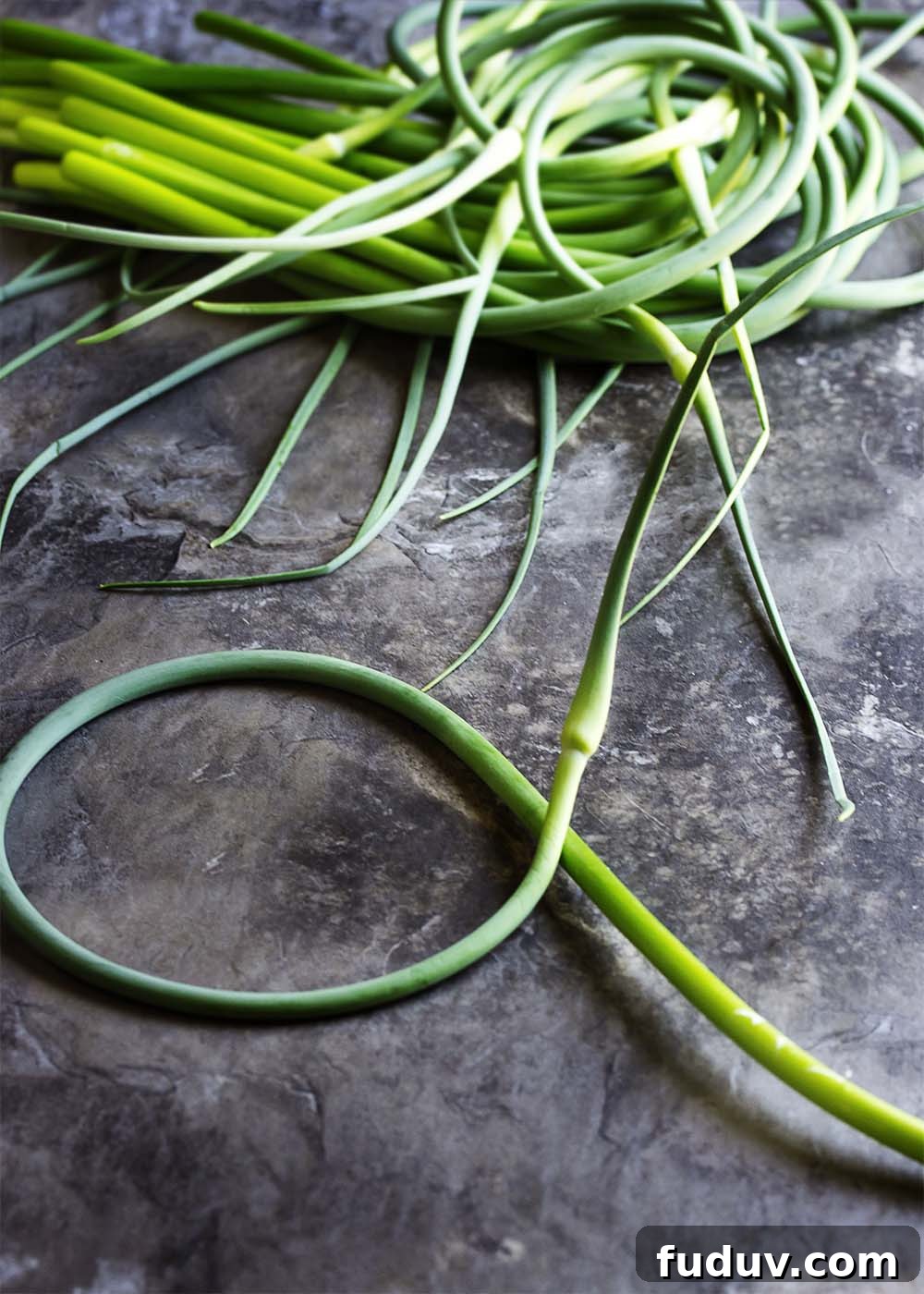
Which part of the garlic scape is edible?
The entire scape is edible and works well in pestos and purees. Some people find the thicker area near the bulge a bit tough or stringy and choose to discard it; taste a piece to decide. The cut end can be woody on older scapes—trim the end and remove any dry or fibrous portion until the scape looks fresh and green.
How to Use Garlic Scapes
Use garlic scapes anywhere you would use garlic, scallions, or leeks. They are excellent raw in salads or dressings, blended into pesto, stirred into risotto, tossed into sautés, grilled whole with a little oil and salt, or pureed into dips. Because their flavor is bright but mild, they pair well with beans, greens, pasta, potatoes, and grilled meats or vegetables.
Ideas to try:
- Brine-pickled garlic scapes for a tangy, crunchy condiment
- Smooth garlic scape and spinach soup for a light, seasonal starter
- Grilled garlic scapes simply tossed with oil and salt as a side or garnish
- Garlic scape pesto to toss with pasta or to spread on crusty bread
- Garlic scape vinaigrette for salads or roasted vegetables
- Sausage and Garlic Scape Risotto
- White Bean and Garlic Scape Dip
Garlic scapes are a short-season treasure—when you find them, buy extra if you can. Make a batch of pesto or pickle some scapes to extend their usefulness beyond the season. Their bright, garlicky flavor and pleasant texture make them an easy way to refresh familiar recipes.